
About Maurice Brodie
Lived 1903 – 1939 (aged 35). Maurice Brodie was a virologist and physician.
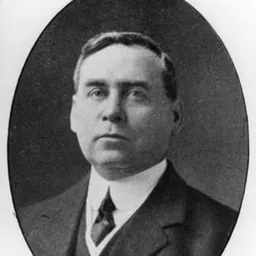
Maurice Brodie (1903–1939) was a British-born American virologist who developed a polio vaccine in 1935.
Early years and education Brodie was born in Liverpool, England, the son of Samuel Broude and Esther Ginsburg. The family immigrated to Ottawa, Canada, in 1910. Maurice graduated from Lisgar Collegiate Institute and McGill University Faculty of Medicine, Alpha Omega Alpha, in 1928; he was named a Wood Gold Medalist. He served as a medical intern, and in 1931 he received a Master of Science degree in physiology from McGill. Brodie belonged to the McGill chapter of Sigma Alpha Mu, and had been a staff reporter of the Ottawa Citizen, 1927–1928. At McGill 1932 he received a grant from the Banting Research Foundation for his studies of polio.
Polio research Maurice Brodie joined the New York City Health Department and the bacteriology department at New York University Medical College. In 1935, Brodie demonstrated induction of immunity in monkeys with inactivated polio virus. Isabel Morgan demonstrated the same phenomenon again a decade later.
Brodie was head of one of two separate teams that developed polio vaccines and reported their results at the annual meeting of the American Public Health Association in November 1935. Both projects were cancelled as a result of complications from vaccine trials resulting in the death of 6 participants and the paralysis of 10 others. The resulting public outrage delayed further research on the polio vaccine until the 1950s, when the Salk and Sabin vaccines were produced.
John Kolmer, of Temple University in Philadelphia, presented his findings first. He had developed an attenuated poliovirus vaccine, which he tested in about 10,000 children across much of the United States and Canada. Five of these children died of polio and 10 more were paralyzed, usually in the arm where the vaccine was injected, and frequently affecting children in towns where no polio outbreak had occurred. Dr William Hallock Park, director of the New York City Health Department Research Laboratories, thereupon decided to discontinue development of Brodie's vaccine, which he had sponsored. But some experts felt Brodie's vaccine deserved further study; the case against it was inconclusive and too hastily drawn.
Later career In 1936, Brodie moved to Detroit, where he became director of laboratories at Providence Hospital and hospital pathologist. He died suddenly while working in his laboratory, 3:45 pm, Tuesday, May 9, 1939. Cause of death was coronary thrombosis. His remains were sent to Ottawa for burial. He was interred in the Jewish Cemetery on Metcalfe Road (now the Jewish Memorial Gardens on Bank Street) in Ottawa.
Family Maurice Brodie was a brother of Bernard Beryl Brodie (7 August 1907 – 28 February 1989), a leading researcher on drug therapy.
Don’t just read it —
keep it.
Full-length biographies made to live with: read them, listen on the way to work, watch them tonight.
- E-book
- Audio
- Video
Instant download · yours to keep · every purchase keeps this site free
Important facts
People in Maurice Brodie's life
Named in this biography and alive at the same time



Related people
Same field, nearest in time




Contemporaries
People whose lives overlapped Maurice Brodie's

Frequently asked questions
Who was Maurice Brodie?
British-born American virologist
When was Maurice Brodie born?
Maurice Brodie was born on 19 August 1903 in Liverpool.
When did Maurice Brodie die?
Maurice Brodie died on 9 May 1939 in Detroit, Michigan.
What was Maurice Brodie's occupation?
Maurice Brodie was a virologist and physician.
Sources & further reading
Cite this page
APA: Biography.guide. (2026). Maurice Brodie. https://biography.guide/maurice-brodie/
MLA: "Maurice Brodie." Biography.guide, https://biography.guide/maurice-brodie/.
Chicago: "Maurice Brodie." Biography.guide. https://biography.guide/maurice-brodie/.
Data last updated: 2026-09-22 · Spot an error? Report a correction.
Page generated 2026-09-27 05:19 UTC