
Maulana Sherwani
Indian Islamic scholar, minister, and academic administrator
About Maulana Sherwani
Lived 1867 – 1950 (aged 83). Maulana Sherwani was an Indian scholar, minister of religious affairs and academic administrator.
Maulana Habibur Rahman Khan Sherwani (5 January 1867 – 11 August 1950) also known as Nawab Sadr Yar Jung Bahadur was an Islamic scholar, author, and statesman in British India. He is recognized for his literary relationship with Maulana Abul Kalam Azad and his administrative role as the Sadr-us-Sudur (Minister of Religious Affairs) in the Hyderabad State.
Early life and education Born into a Afghan lineage in the village of Bhikam Pur, near Aligarh, Uttar Pradesh, he received his formal early education at Agra College. Concurrently, he completed religious and theological training under the guidance of the scholar Maulana Lutfullah Aligarhi. He was a linguist who spoke Urdu, Arabic, and Persian, and was one of the Persian-knowing scholars of the Indian subcontinent.
In 1918, he transitioned to the princely state of Hyderabad, where he participated in establishing Osmania University, serving as its first Vice-Chancellor from 1918 to 1919. He then spent thirteen years serving as Hyderabad's Sadr-us-Sudur (Minister for Religious Affairs). In 1922, the Nizam of Hyderabad conferred upon him the title of Nawab Sadr Yar Jung Bahadur.
As an author, he published roughly two dozen books covering Islamic history and theology, including Ulama-e-Salaf, Sirat-us-Siddiq, and Tazkira Babar. His personal library, Kutub Khana Ganj, contained a collection of rare manuscripts which he later donated to the Maulana Azad Library at AMU.
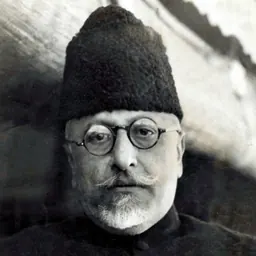
Relationship with Abul Kalam Azad Sherwani shared intellectual ties with public figures of the era, including Allama Shibli Nomani and Maulana Abul Kalam Azad. He is noted in Urdu literature as the sole addressee of Azad's book Ghubar-e-Khatir (The Dust of Memories) . The book consists of 24 philosophical letters written by Azad to Sherwani while Azad was imprisoned by the British Raj at Ahmednagar Fort between 1942 and 1946.
Legacy His biography and scholarly work are documented in historical and academic publications. Historian Shams Tabrez Khan authored his biography in the 1972 book Sadr-e-Yaar Jang. In November 2025, the Department of Arabic at Aligarh Muslim University published Maqālāt-e-Shirwani, a volume compiling scholarly essays about his life and contributions that were originally presented at a national seminar in November 2023.
Don’t just read it —
keep it.
Full-length biographies made to live with: read them, listen on the way to work, watch them tonight.
- E-book
- Audio
- Video
Instant download · yours to keep · every purchase keeps this site free
Important facts
People in Maulana Sherwani's life
Named in this biography and alive at the same time


Related people
Same field, nearest in time


Contemporaries
People whose lives overlapped Maulana Sherwani's



Frequently asked questions
Who was Maulana Sherwani?
Indian Islamic scholar, minister, and academic administrator (1867–1950)
When was Maulana Sherwani born?
Maulana Sherwani was born on 5 January 1867 in Aligarh district.
When did Maulana Sherwani die?
Maulana Sherwani died on 11 August 1950 in Aligarh district.
What was Maulana Sherwani's occupation?
Maulana Sherwani was a scholar, minister of religious affairs and academic administrator.
What nationality was Maulana Sherwani?
Maulana Sherwani was Indian.
Sources & further reading
Cite this page
APA: Biography.guide. (2026). Maulana Sherwani. https://biography.guide/maulana-sherwani/
MLA: "Maulana Sherwani." Biography.guide, https://biography.guide/maulana-sherwani/.
Chicago: "Maulana Sherwani." Biography.guide. https://biography.guide/maulana-sherwani/.
Data last updated: 2026-09-20 · Spot an error? Report a correction.
Page generated 2026-09-27 05:30 UTC