About Maues
Lived 200 BC – 100 BC. Maues was a statesperson.
Maues (Greek: ; (epigraphic); Kharosthi: , , called , on the Taxila copper plate; also called , in the Mathura lion capital inscription, ) was the first Indo-Scythian king, ruling from 98/85 to 60/57 BCE. He invaded India and established Saka hegemony by conquering Indo-Greek territories.
Name Maues's name primarily attested from his coins appear under the Gandhari form and the Ancient Greek form , Other scholars have theorised that he could be an Iranian from the east (Parthian, Sistani Persian or Saka) and that he imitated the tittle of the Shahanshah of Persia.
Maues Campaigns Maues is the first recorded ruler of the Sakas in the Indus. He is first mentioned in the Moga inscription:
"In the seventy eighth, 78, year the Great King, the Great Moga, on the fifth, 5, day of the month Panemos, on this first, of the Kshaharata and Kshatrapa of Chukhsa - Liaka Kusuluka by name - his son Patika - in the town of Takshasila..."
Mauses is possibly mentioned the Maira inscription in the Salt Range in Pakistan as 'Moasa'.
Maues vastly expanded his domain by conquering key cities along the Indus. This included seizing Taxila in Punjab, and Gandharas capital city Pushkalavati from the Indo-Greek Kingdoms. Maues has overstruck coins belonging to Archebius as well as Apollodotus II in Taxila.
The Sakas extend their power up to Mathura during his reign.
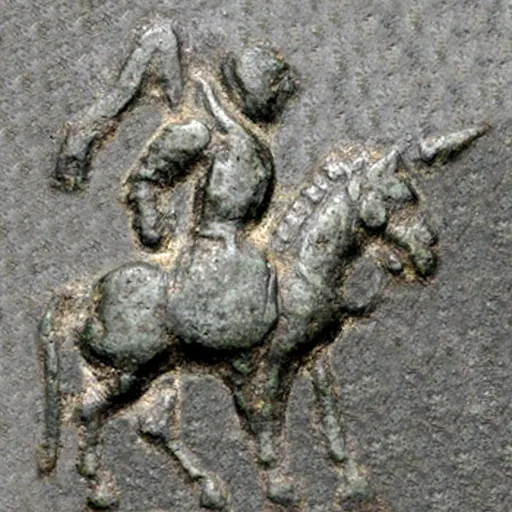
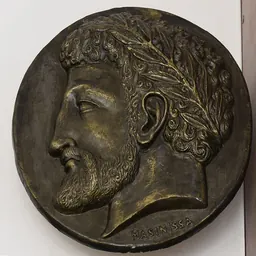
Coins Coin of Maues depicting Balarama, 1st century BCE. British Museum. Coin of Machene, Queen of Maues. Obv. Tyche, wearing mural crown. Legend ΒΑΣΙΛΙΣΣΗΣ ΘEOTPOΠOY MAXHNHΣ "Godlike Queen Machene". Rev. Zeus with Nike, legend "Rajatirajasa mahatasa Moasa" in Kharoshthi "Great king of kings, Maues". Maues issued joint coins mentioning a queen Machene ("ΜΑΧΗΝΗ"). Machene may have been a daughter of one of the Indo-Greek houses.
An Indo-Greek king, Artemidoros, also issued coins where he describes himself as "Son of Maues".
Buddhist Coins A few of the coins of Maues, struck according to the Indian square standard, seemingly depict a King in a cross-legged seated position. This may represent Maues himself, or possibly one of his divinities. It has been suggested that this might also be one of the first representations of the Buddha on a coin, in an area where Buddhism was flourishing at the time, but the seated personage seems to hold a sword horizontally, which favors the hypotheses of the depiction of the king Maues himself.
Also, Maues struck some coins incorporating Buddhist symbolism, such as the lion, symbol of Buddhism since the time of the Mauryan king Ashoka.
The symbolism of the lion had also been adopted by the Buddhist Indo-Greek king Menander II. Maues therefore probably supported Buddhism, although whether sincerely or for political motives is unclear. His coins also included a variety of other religious symbols such as the bull of Shiva, indicating wide religious tolerance.
Don’t just read it —
keep it.
Full-length biographies made to live with: read them, listen on the way to work, watch them tonight.
- E-book
- Audio
- Video
Instant download · yours to keep · every purchase keeps this site free
Important facts
Related people
Same field, nearest in time



Contemporaries
People whose lives overlapped Maues's

Frequently asked questions
Who was Maues?
Indo-Schythian king
When was Maues born?
Maues was born in 200 BC.
When did Maues die?
Maues died in 100 BC.
What was Maues's occupation?
Maues was a statesperson.
Sources & further reading
Cite this page
APA: Biography.guide. (2026). Maues. https://biography.guide/maues/
MLA: "Maues." Biography.guide, https://biography.guide/maues/.
Chicago: "Maues." Biography.guide. https://biography.guide/maues/.
Data last updated: 2026-09-22 · Spot an error? Report a correction.
Portrait: Wikimedia Commons · author & licence
Page generated 2026-09-27 05:02 UTC