
About Maud Cunnington
Lived 1869 – 1951 (aged 81). Maud Cunnington was a British archaeologist and anthropologist.
Maud Edith Cunnington ( Pegge; 24 September 1869 – 28 February 1951) was a Welsh archaeologist, best known for her pioneering work on some of the most important prehistoric sites of Salisbury Plain.
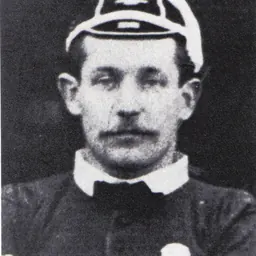
Early life, education, and marriage Maud Pegge was born at Briton Ferry in Glamorgan, to Catherine Milton Leach and her husband Charles Pegge, a doctor who ran Vernon House, the last privately owned asylum in Wales. She was one of seven children. Her older brother Edward Pegge followed their father into medicine as a doctor; he was also a notable rugby player and Welsh international.
Pegge was educated briefly at Cheltenham Ladies' College. In 1889, she married Ben Cunnington. An archaeologist, he served for years as a volunteer, honorary curator of Devizes Museum. They had a son, Edward, who was killed in the First World War.
Career From 1897, Maud Cunnington carried out early rescue archaeology work during development in Wiltshire, England. Together with her husband Ben, an archaeologist, she participated in conducting full excavations in that county at some of the most important sites in British archaeology. These included the first known Neolithic causewayed enclosure at Knap Hill, the Iron Age village at All Cannings Cross, West Kennet Long Barrow, Figsbury Ring, Woodhenge (near Stonehenge), and The Sanctuary. This last monument she rediscovered, as it had been lost since William Stukeley saw it in the eighteenth century. The Cunningtons bought the sites of Woodhenge and The Sanctuary, and gave these properties to the nation.
In 1912, near Avebury, she excavated and re-erected one of the two surviving stones (the Longstones) in the Beckhampton Avenue, and one of the stones in the West Kennet Avenue.
In 1931, Cunnington was elected president of the Wiltshire Archaeological and Natural History Society, the first woman to hold that position. In addition to technical reports, she published a short handbook, Avebury: A Guide (1931). She also wrote and published a children's guide to Devizes Museum.
Excavations
In 1912, Cunnington worked with her husband Ben to supervise the re-erection of the last standing stone at Beckhampton Cove at Avebury, which had fallen the previous year. While working at the Beckhamptom Cove site, she discovered the skeleton of a "middle-aged man" buried with a pottery beaker, dating from 2385 to 2230 BC. The same year she and her husband, working with a team, re-erected a fallen stone on West Kennet Avenue.
Cunnington excavated Woodhenge between 1926 and 1928, after a set of concentric rings darker than the surrounding turf was first observed through aerial photography in 1925. The site is approximately south of Durrington Walls and north east of Stonehenge. The excavation revealed six concentric rings of post-holes. The entire post-hole structure is approximately in diameter, and the surrounding henge, barely visible today due to farming, was originally approximately across, with a single entrance that faced Durrington Walls. Cunnington completely excavated the ditch structure of the henge, discovering large amounts of Grooved ware pottery, animal and human bones, charcoal and a stone axe that was carved from polished greenstone originating from Cornwall, approximately away. A few shards of Beaker ware were also discovered along with antler picks, marine shells and the remnants of a flint-knapping industry.
Following the excavation of Woodhenge, in 1930 Cunnington discovered and worked on The Sanctuary site on Overton Hill at the terminus of Beckhampton Avenue near Avebury Henge. for services to archaeology, the first woman archaeologist to receive the honour. However, she had limited mobility since 1947, and had developed Alzheimer's disease, so she never knew of the accolade. When she died at home a few years later, she left almost all her property (worth £14,000) to Devizes Museum (now Wiltshire Museum). This provided for a salaried curator to be appointed for the first time. Her husband had died in 1950.
Don’t just read it —
keep it.
Full-length biographies made to live with: read them, listen on the way to work, watch them tonight.
- E-book
- Audio
- Video
Instant download · yours to keep · every purchase keeps this site free
Important facts
more
ME Cunnington, M E CunningtonPeople in Maud Cunnington's life
Named in this biography and alive at the same time

Related people
Same field, nearest in time



Contemporaries
People whose lives overlapped Maud Cunnington's



Frequently asked questions
Who was Maud Cunnington?
British archaeologist (1869-1951)
When was Maud Cunnington born?
Maud Cunnington was born on 24 September 1869 in Neath.
When did Maud Cunnington die?
Maud Cunnington died on 28 February 1951 in Devizes.
What was Maud Cunnington's occupation?
Maud Cunnington was an archaeologist and anthropologist.
What nationality was Maud Cunnington?
Maud Cunnington was British.
Sources & further reading
Cite this page
APA: Biography.guide. (2026). Maud Cunnington. https://biography.guide/maud-cunnington/
MLA: "Maud Cunnington." Biography.guide, https://biography.guide/maud-cunnington/.
Chicago: "Maud Cunnington." Biography.guide. https://biography.guide/maud-cunnington/.
Data last updated: 2026-09-20 · Spot an error? Report a correction.
Page generated 2026-09-27 05:30 UTC