
About Matvei Golovinski
Lived 1865 – 1920 (aged 54–55). Matvei Golovinski was a Russian journalist, writer and political activist.
Matvei Vasilyevich Golovinski (alternatively, Mathieu) (6 March 1865 – 1920) was a Russian-French writer, journalist and political activist. He is a leading suspected writer of The Protocols of the Elders of Zion a work of black propaganda to convince the public they were being targeted by International Jewry. Scholars supporting Golovinski's authorship include modern Russian historian Mikhail Lepekhine, who in 1999 studied previously closed French archives stored in Moscow containing information supporting the claim. Golovinski was a colleage of Pyotr Rachkovsky, who was similarly linked to the Protocols in the Berne Trial.
Life Matvei Golovinski was born into an aristocratic family in the village of Ivashevka (Ивашевка), in the Syzransky Uyezd of the Simbirsk Governorate of the Russian Empire. His father, Vasili Golovinski (Василий Головинский) was a friend of Fyodor Dostoyevsky. Both were members of the progressive Petrashevsky Circle, sentenced to the capital punishment as conspirators and both were pardoned later. Vasili Golovinski died in 1875 and Matvei Golovinski was reared by his mother and the French nanny.
While studying jurisprudence, Golovinski joined an antisemitic counter-revolutionary group Holy Brotherhood ("Святое Братство"). Upon graduation, he worked for the Okhrana, secretly arranging pro-government coverage in the press. Golovinski's career almost collapsed and he had to leave the country after his activities were publicly exposed by Maxim Gorky. In France, he wrote and published articles on assignments of the Chief of Russian secret service in Paris, Pyotr Rachkovsky.
After the October Revolution of 1917, Golovinsky switched sides and worked for the Bolsheviks until his death in 1920.
Authorship of the Protocols On 19 November 1999, Patrick Bishop reported from Paris:
Research by a leading Russian historian, Mikhail Lepekhine, in recently opened archives has found the forgery to be the work of Mathieu Golovinski, opportunistic scion of an aristocratic but rebellious family that drifted into a life of espionage and propaganda work. After working for the czarist secret service, he later changed sides and joined the Bolsheviks. Mr. Lepekhine’s findings, published in the French magazine L'Express, would appear to clear up the last remaining mystery surrounding the Protocols. that the hypothesis of Golovinski's authorship was based on a statement by Princess Catherine Radziwill, who claimed that she had seen a manuscript of the Protocols written by Golovinsky, Rachkovsky and Manusevich in 1905, but in 1905 Golovinsky and Rachkovsky had already left Paris and moved to Saint-Petersburg. Princess Radziwill was known to be an unreliable source. Also, the protocols had been mentioned already in the press in 1902.
Golovinski had been linked to the work before; the German writer Konrad Heiden identified him as an author of the Protocols in 1944.
Books A New English-Russian and Russian-English Dictionary. London, 1912. (Many later editions.)
Published under the pen-name of Doctor Faust: From a Writer's Notebook. M. M. Levin edition. Moscow, 1910. [Belles-lettres and autobiographical prose] The Black Book of German Atrocities. Saint Peterburg, 1914. An Experience of Criticism of Bourgeois Morals. A. Karelin's translation from French. With a preface by the author. 1919. (The supposed 1910 French original has not been discovered.) Conversations with My Grandfather about Typhus. Published by V.M. Bonch-Bruevich (Velichkinoj).
In popular culture
Golovinsky appears in Umberto Eco's novel The Cemetery of Prague, in which he receives the first draft of Protocols from the unreliable narrator, Simonini, who has created them at the behest of Rachkovsky.
Don’t just read it —
keep it.
Full-length biographies made to live with: read them, listen on the way to work, watch them tonight.
- E-book
- Audio
- Video
Instant download · yours to keep · every purchase keeps this site free
Important facts
People in Matvei Golovinski's life
Named in this biography and alive at the same time

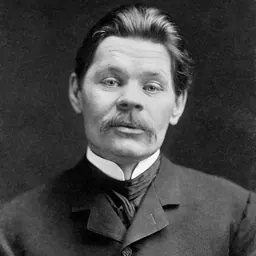

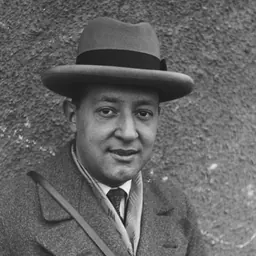
Related people
Same field, nearest in time
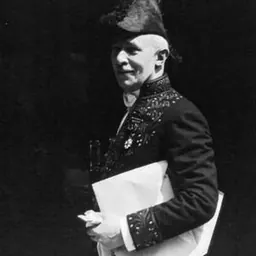
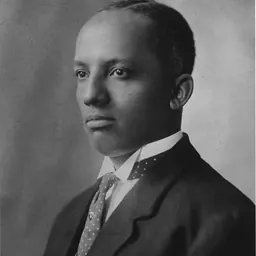

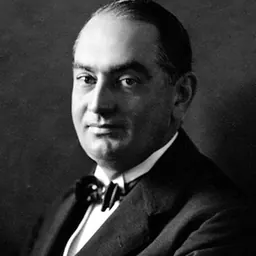

Contemporaries
People whose lives overlapped Matvei Golovinski's
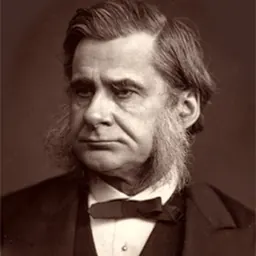

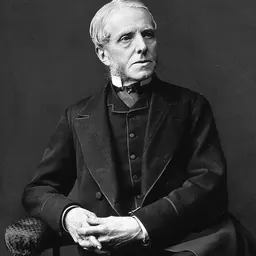
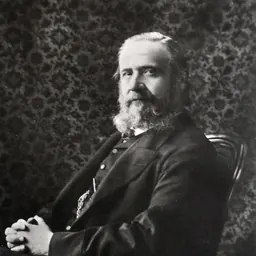

Frequently asked questions
Who was Matvei Golovinski?
Russian- French writer and forger (1865-1920)
When was Matvei Golovinski born?
Matvei Golovinski was born on 6 March 1865 in Ivashevka.
When did Matvei Golovinski die?
Matvei Golovinski died in 1920 in Saint Petersburg.
What was Matvei Golovinski's occupation?
Matvei Golovinski was a journalist, writer and political activist.
What nationality was Matvei Golovinski?
Matvei Golovinski was Russian.
Sources & further reading
· Wikipedia: Matvei Golovinski
Cite this page
APA: Biography.guide. (2026). Matvei Golovinski. https://biography.guide/matvei-golovinski/
MLA: "Matvei Golovinski." Biography.guide, https://biography.guide/matvei-golovinski/.
Chicago: "Matvei Golovinski." Biography.guide. https://biography.guide/matvei-golovinski/.
Data last updated: 2026-09-20 · Spot an error? Report a correction.
Page generated 2026-09-27 05:19 UTC