
About Matthew Mullineux
Lived 1867 – 1945 (aged 77). Matthew Mullineux was a South African rugby union player.
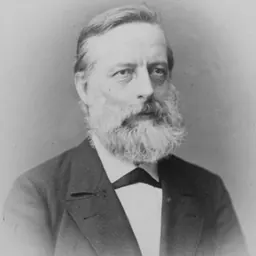
Matthew Mullineux MC (8 August 1867 – 13 February 1945) was an English rugby union scrum-half who, although not capped for England, was selected for two British Lions tours. He gained one cap during the 1896 tour to South Africa and captained the 1899 tour of Australia. An Anglican minister, he later became a chaplain in the British Army, and was awarded the Military Cross for his actions during the First World War.
Early life Mullineux was born in Barton-upon-Irwell, Eccles, Lancashire, though some sources record his birthplace as nearby Worsley, to Matthew Mullineux, an insurance-inspector, and his wife, Elizabeth (Derbyshire) Mullineux. He was educated at Manchester Grammar School and then Matriculated to St John's College, Cambridge.
He earned his BA in 1896, and the next year was ordained as a Deacon at Southwark Cathedral. The next year he was ordained as a priest and took his orders at the Church of Mottingham, also becoming the Assistant Master at the nearby Royal Naval School in Eltham. On 9 May 1899, he left England for Australia as part of the British Isles rugby tour and left both his posts.
Rugby career
Mullineux first came to note as a rugby player when he represented Cambridge University as a student, playing at scrum-half, before turning out for Blackheath. In 1896 he was selected to play in Johnny Hammond's British Isles team to tour South Africa; although Mullineux only played in one of the Test matches, the opening win over South Africa at Port Elizabeth. He played in twelve games in total on the tour scoring four tries, including two against Queenstown, and a dropped goal in the win over Grahamstown.
In 1899, the first official British team to tour Australia was selected, and Mullineux was not only chosen to captain the team, but also to manage it. Mullineux again represented the British team in the opening game, but the tourists lacked cohesion and lost to the Australians 13–3. The British Isles had under-performed in the few invitational games leading up to the first Test, and after the defeat to the Wallabies, Mullineux dropped himself from the team for the remaining Tests, and brought in Charlie Adamson as his replacement. The captaincy was given to Frank Stout, and the tourists play began to improve. After Mullineux's decision the British Isles played far better rugby and won the last three tests to take the series 3–1. Although no longer a part of the Test team, Mullineux continued to represent the British team against the invitational and regional teams. He played in ten games on the tour, his only points came from a try in the loss against Queensland.
A reflection of Mullineux's character was seen during the 1899 tour, when after the third Test in Sydney he undiplomatically embarrassed the Australian hosts at the after-match dinner.
Despite only playing in the first Test, Mullineux was honoured when bush poet, Banjo Paterson wrote a poem about his playing prowess, entitled The Reverend Mullineux..
Military career
Mullineux followed a career in the Anglican church from an early age, and was the Reverend Mr Mullineux during the British Isles tours; even preaching at local churches after the matches. After the British Isles tour, he served in the British Army as an acting Chaplain to the Forces during the Second Boer War. On 7 August 1902 he became a Royal Navy chaplain, and served on several ships; (1902–04), (1904), (1904–06), (1905–06) and (1906–07). The citation for his MC, which appeared in The London Gazette in September 1918, reads as follows:
Later life After the war, Mullineux continued his connections with the armed forces and Australasia, when he toured churches and Red Cross Societies throughout Australia, giving public lectures on the war cemeteries of Europe..
In 1919, Mullineux set up the St Barnabas Society, a charity which helped finance those too poor to visit the graves of family members who had died in the First World War. The society also placed wreaths at graves on behalf of relatives, and soon became the most important organisation providing subsidised war grave pilgrimages from Britain. After his military service came to an end, Mullineux became the vicar of Marham in Norfolk, a post he held from 1935 until his death in 1945.
Don’t just read it —
keep it.
Full-length biographies made to live with: read them, listen on the way to work, watch them tonight.
- E-book
- Audio
- Video
Instant download · yours to keep · every purchase keeps this site free
Important facts
People in Matthew Mullineux's life
Named in this biography and alive at the same time




Related people
Same field, nearest in time



Contemporaries
People whose lives overlapped Matthew Mullineux's
Frequently asked questions
Who was Matthew Mullineux?
English rugby union player (1867-1945)
When was Matthew Mullineux born?
Matthew Mullineux was born on 8 August 1867 in Barton upon Irwell.
When did Matthew Mullineux die?
Matthew Mullineux died on 13 February 1945 in Kensington.
What was Matthew Mullineux's occupation?
Matthew Mullineux was a rugby union player.
What nationality was Matthew Mullineux?
Matthew Mullineux was South African.
Sources & further reading
· Wikipedia: Matthew Mullineux
Cite this page
APA: Biography.guide. (2026). Matthew Mullineux. https://biography.guide/matthew-mullineux/
MLA: "Matthew Mullineux." Biography.guide, https://biography.guide/matthew-mullineux/.
Chicago: "Matthew Mullineux." Biography.guide. https://biography.guide/matthew-mullineux/.
Data last updated: 2026-09-20 · Spot an error? Report a correction.
Page generated 2026-09-27 05:18 UTC