
About Matija Divković
Lived 1563 – 1631 (aged 68). Matija Divković was a Turkish writer, philosopher, catholic theologian and monk.
Matija Divković (1563 – 21 August 1631) was a Bosnian Franciscan and writer. He is considered to be the founding father of the Bosnia and Herzegovina literature.
Life
Not much is known of Divković's life. He probably joined the Franciscans in the nearest monastery in Olovo and was schooled there. He continued his studies in Italy, but then returned to Bosnia to work there. In 1609 he was a chaplain in Sarajevo. It is plausible that he also performed other duties, since the monasteries of that age usually had schools. It was there that Divković wrote his first work, Christian Doctrine for the Slavic People, and started to translate One Hundred Miracles or Signs of the Blessed and Glorious Virgin. In 1611 Matija Divković traveled to the Republic of Venice, where he first had the Cyrillic letters molded, and then printed both works.
In 1612, Divković came to the monastery of Kreševo and started writing his greatest and most important book, Divković's Words on Sunday Gospel All Year Round, completed in Olovo (1614). It was printed in Bosnian Cyrillic that he referred to as 'Serbian letters' in Venice 1616 (2nd edition in 1704), as well as Christian Doctrine with Many Spiritual Matters (1616, several later editions). Veliki nauk from 1611 was intended for clerics, while Mali nauk from 1616 became a textbook for the people. The former is made up of several unidentified Latin works (the sermons of John Herolt, Bernardine Bastio, etc.). The latter looks like a dialog between a teacher and a student, mixing verses and prose, with various religious and educational themes. Mali nauk was one of the most popular books in Bosnia and Herzegovina and widely used in neighboring Dalmatia.
Mali nauk had as many as eight editions. Divković had its content "made into one from Ledezmo's and Bellarmino's learning". More precisely, Divković used the translation of the catechism of James Ledezmo (1578), the Italian original of Roberto Bellarmino and the translation of his book by A. Komulović. Mali nauk includes the Tears of the Blessed Virgin Mary in eight-syllable verses, written as a variation on the "crying" literature from the age of glagolitic literature. Verses on Abraham and Isaac are a paraphrase of the Abraham of Mavro Vetranović; the life of St Catherine, also in verses, is a paraphrase of an older peoples legend.
One Hundred Miracles… is a loose translation of the medieval legends of John Herolt (Promptuarium discipuli de miraculis B. M. Virginis, Venice, 1598). Words... is a collection of sermons for priests and nuns, mostly after the collections of Herolt (Sermones discipuli de tempore et de Sanctis) and some other Catholic authors.
Analysis Matija Divković is distinguished with the historical title of the founder of the Bosnia and Herzegovina literature. This means that he was Bosnian Franciscan who wrote in narodni jezik , which, beside Bosnian, was a common name for the South Slavic language, Štokavian dialect, among Bosnians at the time. Such medieval writings, found in Bosnia and Herzegovina, Dalmatia, Old Herzegovina, like the Gršković's Apostle, the Hrvoje's Missal, the Hval's Codex, the Venetian Apocalypse, belong to the Bosnian literature, and are considered the written heritage,
The above analysis shows that Divković was not always an original writer, but a translator and compiler. As a translator, he was not meticulous about being faithful to his sources, which means that he modified them to bring them closer to the folk mixed idiom of the Eastern-Bosnian Štokavian dialect and Ikavian–Ijekavian accent, spoken between Olovo and Kreševo in Bosnia.
Considering the sources, he used within the Counter-Reformation, his choice was already obsolete in his age, since during the Catholic Baroque period, he found his models in Catholic literature of the late Middle Ages, which doesn't mean that he was not well versed in the literature of his time. His works and his style have been widely and continually researched as part of the Bosnian and Herzegovinian, Croatian, Montenegrin and Serbian written heritage, as the Shtokavian-Iekavian dialect of his native language eventually became the basis of the literary languages developed in all these countries in the 19th century. Many writers influenced by him followed his style and used his language, for instance, in Bosnia Stjepan Margitić and Stjepan Matijević, in Croatia Toma Babić from Skradin, Pavao Stošić from Lika, Antun Depope from Krk, and Đuro Matijašević from Dubrovnik. This prevalence of the Shtokavian among writers and public intellectuals of that time, especially ones belonging to Illyrian movement, was the main reason dialect prevailed as the basis for the development of standard language in all the variants of Serbo-Croatian, i.e. Bosnian, Croatian, Montenegrin and Serbian.
In his homeland Bosnia and Herzegovina, Divković's legacy and importance, beside the religious doctrine and church teachings that he spread, is signified by his reputation as the first Bosnian typographer who printed the first Bosnian book, written in Bosnian using Bosančica, the language and the alphabet people in Bosnia spoke and could read.
Don’t just read it —
keep it.
Full-length biographies made to live with: read them, listen on the way to work, watch them tonight.
- E-book
- Audio
- Video
Instant download · yours to keep · every purchase keeps this site free
Important facts
People in Matija Divković's life
Named in this biography and alive at the same time

Related people
Same field, nearest in time

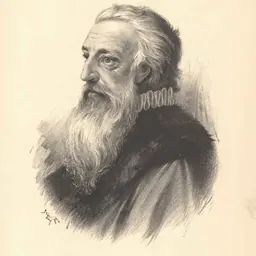
Contemporaries
People whose lives overlapped Matija Divković's



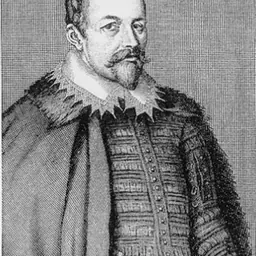

Frequently asked questions
Who was Matija Divković?
Bosnian Franciscan and writer
When was Matija Divković born?
Matija Divković was born on 21 August 1563 in Jelaške.
When did Matija Divković die?
Matija Divković died on 21 August 1631 in Olovo.
What was Matija Divković's occupation?
Matija Divković was a writer, philosopher, catholic theologian and monk.
What nationality was Matija Divković?
Matija Divković was Turkish.
Sources & further reading
Cite this page
APA: Biography.guide. (2026). Matija Divković. https://biography.guide/matija-divkovic/
MLA: "Matija Divković." Biography.guide, https://biography.guide/matija-divkovic/.
Chicago: "Matija Divković." Biography.guide. https://biography.guide/matija-divkovic/.
Data last updated: 2026-09-22 · Spot an error? Report a correction.
Page generated 2026-09-27 05:14 UTC