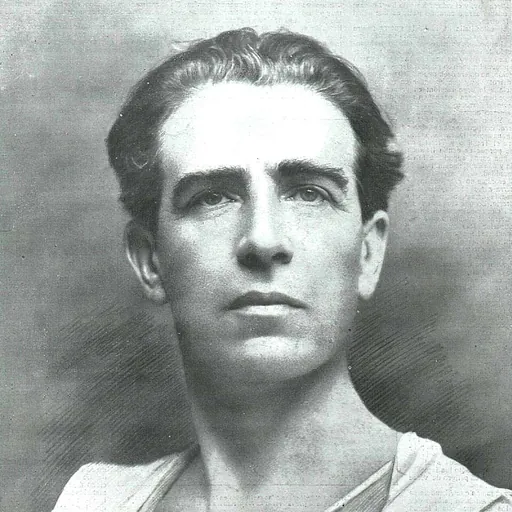
About Mateo Inurria
Lived 1867 – 1924 (aged 56). Mateo Inurria was a Spanish sculptor and artist.
Mateo Inurria Lainosa (25 March 1867, Córdoba - 21 February 1924, Madrid) was a Spanish sculptor.
Biography He began his artistic studies in his father's workshop. Until 1883, he attended the "Escuela Provincial de Bellas Artes" under Rafael Romero Barros. From 1883 to 1885, he studied at the "Escuela Especial de Pintura, Escultura y Grabado" in Madrid.
His academic achievements were noted by members of the "Diputación Provincial de Córdoba" (the regional government) who granted him a scholarship so he could continue his studies at the Real Academia de Bellas Artes de San Fernando until 1890, when he had his first showing at the National Exhibition of Fine Arts with "The Castaway", which was done so realistically that some jurors suspected it of having been cast from life.
Between 1891 and 1901, he lived in the countryside, oblivious to critics and the public, becoming established as a teacher and art restorer. His many projects included the Mosque–Cathedral of Córdoba and the Medina Azahara. During these years, his work took on greater simplicity and he always spoke of himself as having been self-taught. He produced mostly religious and commemorative sculptures, in Córdoba and Madrid, receiving many commissions to create monuments for local and national celebrities, many of which were not erected. Eventually, he became a professor of modelling and figure drawing at the "Escuela Municipal de Artes y Oficios" (Arts & Crafts) in Córdoba and, in 1901, was appointed Director. From 1905, he was occasionally a member of the jury at the National Exhibition.
In 1911, he was named Professor of modelling and casting at the "Escuela de Artes y Oficios" in Madrid. Now that he was in the capital, he was able to make more connections to promote his work and he concentrated on his preferred theme; idealizing the nude female form. He obtained the gold medal at the National Exhibition in 1920 and, two years later, became an Academician at the Real Academia de Bellas Artes de San Fernando. He died suddenly in 1924. An art school and a major street in Córdoba have been named after him.
Public monuments
Monument to Lope de Vega, 1902, Madrid. Group representing the Spanish Navy for the Monument to Alfonso XII, 1905, Madrid. Monument to Eduardo Rosales, 1922, Madrid. Monument to the "Gran Capitán" (Gonzalo Fernández de Córdoba), 1923, Córdoba.
Don’t just read it —
keep it.
Full-length biographies made to live with: read them, listen on the way to work, watch them tonight.
- E-book
- Audio
- Video
Instant download · yours to keep · every purchase keeps this site free
Important facts
People in Mateo Inurria's life
Named in this biography and alive at the same time

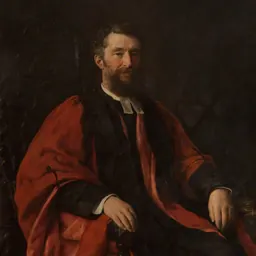
Related people
Same field, nearest in time


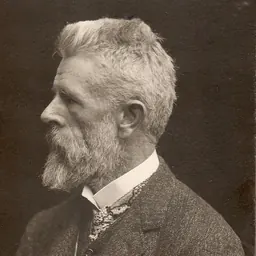

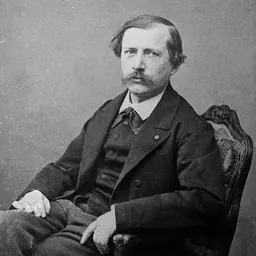
Contemporaries
People whose lives overlapped Mateo Inurria's




Frequently asked questions
Who was Mateo Inurria?
Spanish sculptor (1867-1924)
When was Mateo Inurria born?
Mateo Inurria was born on 25 March 1867 in Córdoba.
When did Mateo Inurria die?
Mateo Inurria died on 21 February 1924 in Madrid.
What was Mateo Inurria's occupation?
Mateo Inurria was a sculptor and artist.
What nationality was Mateo Inurria?
Mateo Inurria was Spanish.
Sources & further reading
Cite this page
APA: Biography.guide. (2026). Mateo Inurria. https://biography.guide/mateo-inurria/
MLA: "Mateo Inurria." Biography.guide, https://biography.guide/mateo-inurria/.
Chicago: "Mateo Inurria." Biography.guide. https://biography.guide/mateo-inurria/.
Data last updated: 2026-09-22 · Spot an error? Report a correction.
Portrait: Wikimedia Commons · author & licence
Page generated 2026-09-27 05:04 UTC