
About Masud Khan
Lived 1924 – 1989 (aged 64). Masud Khan was a British psychoanalyst.
Mohammed Masud Raza Khan (21 July 1924 – 7 June 1989) was a Pakistani-British psychoanalyst. His training analyst was Donald Winnicott. Masud Raza Khan was a protege of Sigmund Freud's daughter Anna Freud, and a long-time collaborator with Donald Winnicott.
Biography
Family background Named Ibrahim at birth, Khan was born in Jhelum in the Punjab, then part of British India, now in Pakistan. His father, Fazaldad (c. 1846-1943), was a Shiite Muslim of peasant birth who had been richly rewarded by the British for the family's support and military service during the conquest of the region, and became a wealthy landowning zamindar, adopting the name "Khan Bahadur Fazaldad Khan." He farmed, specializing in the breeding and sale of horses to the British in the army and for polo. He married four times (his first wife was a cousin, from whom he divorced due to infertility; the third wife died at a fairly young age), and had nine sons and several daughters.
Masud Khan's mother, Khursheed Begum (1905-1971) was Fazaldad's fourth wife, whom he married when he was 76 and she was claiming to be seventeen. Masud Khan was ashamed of the marriage because she was an opium-addicted courtesan and "former dancing girl" with an illegitimate son. Khan referred to his father as "normally a cruel and authoritative feudal lord", observing him to be "a gaunt, bleak, monumental presence, either utterly still or raging in wild temper" for whose affection his sons competed and by whom they were disciplined with beatings, Masud, the youngest, was the only one to escape this form of punishment but nevertheless subjected to his father's high expectations and verbal chastisement. Khan, however, never criticized his harsh parenting, observing himself to have been "brought up an indulged child under an iron discipline". The marriage of Fazaldad Khan and Khursheed Begum — considered inappropriate due to his old age — caused friction with Fazaldad's second wife and their eldest son and heir, Akbar, who took her to live with him at Lahore. At age four, he became selectively mute because "an indisposition of his mother caused him so much anxiety," a state that lasted three years.
They moved to Lyallpur when Khan was 13, where, at seventeen, an "attachment to a Hindu girl" was sufficiently controversial that he was no longer allowed to see her. At this time, he briefly entered psychotherapy, which he said did not help. His sister Mahmooda died of tuberculosis in 1942. While he actually sought a personal analyst, when he met John Bowlby in London, the latter assumed he was applying to the British Psychoanalytic Association to be trained as an analyst. Khan was devastated to discover after Winnicott's death that he had not been made the analyst's literary executor. On this subject, Khan writes:... cumulative trauma is the result of the breaches in the mother's role as a protective shield over the whole course of the child's development, from infancy to adolescence - that is to say, in all those areas of experience where the child continues to need the mother as an auxiliary ego to support his immature and unstable ego-functions. Khan built on Winnicott's work, and proposed ideas such as that of secrecy as a potential space. Another concept is that of "lying fallow", a state of mind entered by the patient after prolonged clinical work in which a metabolization of psychic transformation occurs.
Reception Khan was protegé of Anna Freud and a long-time collaborator with D. W. Winnicott. Anna Freud insisted that Khan understood her father's work better than anyone else and spoke in defense of her star pupil whenever he aroused the British Psycho-Analytical Society's ire.
Controversy Khan's position in the British Psychoanalytical Society as training analyst gave him legitimacy, while at the same time he became less and less adherent to psychoanalytic guidelines with boundary violations, including socialising and entering sexual relationships with some of his students and analysands. A crisis at the 1965 Amsterdam Congress, the annual meeting of the International Psychoanalytical Association, "produced the wrath of many senior colleagues" and marked the beginning of his professional decline. He had a slight deformity, a "deformed and oversized" right ear that stuck out, of which he was very conscious, later taking to wearing a beret to hide it, until Winnicott persuaded him to have it fixed in 1951.
Don’t just read it —
keep it.
Full-length biographies made to live with: read them, listen on the way to work, watch them tonight.
- E-book
- Audio
- Video
Instant download · yours to keep · every purchase keeps this site free
Important facts
People in Masud Khan's life
Named in this biography and alive at the same time
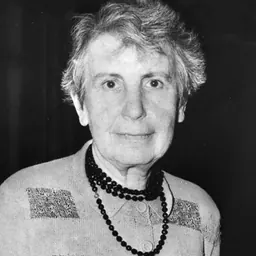
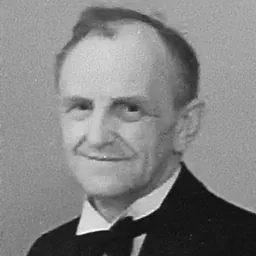


Related people
Same field, nearest in time

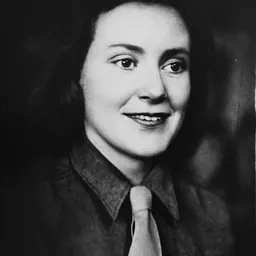


Contemporaries
People whose lives overlapped Masud Khan's


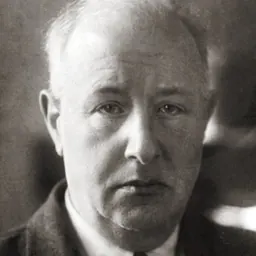

Frequently asked questions
Who was Masud Khan?
British psychoanalyst (1924-1989)
When was Masud Khan born?
Masud Khan was born on 21 July 1924 in Jhelum.
When did Masud Khan die?
Masud Khan died on 7 June 1989 in London.
What was Masud Khan's occupation?
Masud Khan was a psychoanalyst.
What nationality was Masud Khan?
Masud Khan was British.
Sources & further reading
Cite this page
APA: Biography.guide. (2026). Masud Khan. https://biography.guide/masud-khan/
MLA: "Masud Khan." Biography.guide, https://biography.guide/masud-khan/.
Chicago: "Masud Khan." Biography.guide. https://biography.guide/masud-khan/.
Data last updated: 2026-09-20 · Spot an error? Report a correction.
Page generated 2026-09-27 05:13 UTC