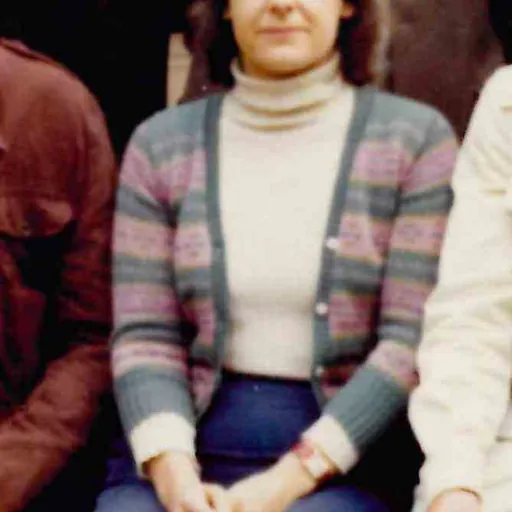
Mary Susan McIntosh
British sociologist, feminist, political activist and LGBTQ+ rights campaigner
About Mary Susan McIntosh
Lived 1936 – 2013 (aged 76). Mary Susan McIntosh was a British sociologist, criminologist, lGBTQ rights activist, political activist, university teacher and feminist.
Mary Susan McIntosh (13 March 1936 – 5 January 2013) was a British sociologist, feminist, and political activist for LGBTQ rights in the United Kingdom.
Early life and education Mary Susan McIntosh was born on 13 March 1936 in Hampstead, North London, to Helena Agnes (Jenny) Britton and her Albert William McIntosh, a Jedburgh-born businessman and professor at the London Business School. Both of her parents were socialists, members of the 1917 Club and later the Communist Party. Her elder brother, Andrew Robert McIntosh, was a Labour politician and minister who was created a life peer, Lord McIntosh of Haringey, in 1982.
McIntosh was educated at High Wycombe School for Girls and St Anne's College, Oxford, where she read Philosophy, Politics and Economics. In 1960, she was deported from the United States for speaking out against the House Un-American Activities Committee.
Academic career On her return to the UK, McIntosh worked as a researcher for the Home Office from 1961 to 1963 before taking up the post of lecturer in sociology at the University of Leicester from 1963 to 1968. She later worked at Borough Polytechnic from 1968 to 1972, and as a research fellow studying prostitution at Nuffield College, Oxford, from 1972 to 1975.
Criminology research McIntosh's earliest research was in the field of criminology and the sociology of homosexuality. Based on a survey of gay men in Leicester and London, this paper argues that rather than being a psychiatric or clinical pathology, homosexuality and same-sex relationships are influenced by historical and cultural factors, This paper has been described as being crucial in the shaping of social constructionism.
McIntosh was critical of the orthodox view of criminology and in 1967 became one of the co-founders of the National Deviancy Symposium following the Third National Conference of Teaching and Research on Criminology at the University of Cambridge. Influenced by sociological approaches and American symbolic interactionism, the symposium aimed to challenge dominant orthodoxies of crime and deviance and to instigate radical and critical approaches to criminology.
Although McIntosh moved away from the field of academic criminology in the mid-1970s, she was a member of the Policy Advisory Committee to the Criminal Law Revision Committee from 1976 to 1985, which reviewed legislation relating to sexual offences. were among a small group of lesbians who contributed to founding and shaping the direction of the London Gay Liberation Front at the London School of Economics. in 1971.
Along with a group of feminist colleagues, McIntosh founded the journal Feminist Review in 1979, and remained an active member of the journal collective until the early 1990s. McIntosh was committed to campaigning for the legal and financial rights of married and co-habiting women, a cause she pursued with the Fifth Demand Group. McIntosh was also an active member of Feminists Against Censorship, a group of sex-positive feminists founded in 1989, who argued against censorship of pornography and defended sexual expression and the right to produce sexually explicit material. McIntosh argued against radical separatist feminist critiques of pornography.
Retirement Following her retirement from the University of Essex in 1996, McIntosh worked with the Citizens Advice Bureau in Islington, North London.
Selected publications The Organisation of Crime (1975) Deviance and Social Control (1974), co-authored with Paul Rock. Sex Exposed: Sexuality and the Pornography Debate (1992), co-authored with Lynne Segal. The Antisocial Family (1982), co-authored with Michèle Barrett. "Dependency Culture? Women, Welfare and Work", in Radical Philosophy 91 (1998)
Don’t just read it —
keep it.
Full-length biographies made to live with: read them, listen on the way to work, watch them tonight.
- E-book
- Audio
- Video
Instant download · yours to keep · every purchase keeps this site free
Important facts
People in Mary Susan McIntosh's life
Named in this biography and alive at the same time




Related people
Same field, nearest in time


Contemporaries
People whose lives overlapped Mary Susan McIntosh's





Frequently asked questions
Who was Mary Susan McIntosh?
British sociologist, feminist, political activist and LGBTQ+ rights campaigner
When was Mary Susan McIntosh born?
Mary Susan McIntosh was born on 13 March 1936 in Hampstead.
When did Mary Susan McIntosh die?
Mary Susan McIntosh died on 5 January 2013 in Queen Square.
What was Mary Susan McIntosh's occupation?
Mary Susan McIntosh was a sociologist, criminologist, lGBTQ rights activist, political activist, university teacher and feminist.
What nationality was Mary Susan McIntosh?
Mary Susan McIntosh was British.
Sources & further reading
· Wikipedia: Mary Susan McIntosh
· DBpedia: Mary Susan McIntosh
Cite this page
APA: Biography.guide. (2026). Mary Susan McIntosh. https://biography.guide/mary-susan-mcintosh/
MLA: "Mary Susan McIntosh." Biography.guide, https://biography.guide/mary-susan-mcintosh/.
Chicago: "Mary Susan McIntosh." Biography.guide. https://biography.guide/mary-susan-mcintosh/.
Data last updated: 2026-09-23 · Spot an error? Report a correction.
Portrait: Wikimedia Commons · author & licence
Page generated 2026-09-27 05:06 UTC