
About Mary Sheldon Barnes
Lived 1850 – 1898 (aged 47). Mary Sheldon Barnes was an American educator, historian and writer.
Mary Downing Sheldon Barnes (September 15, 1850 – August 27, 1898) was an American educator and historian. Her teaching style and publications were considered ahead of their time. She used a method that encouraged students to develop their own research skills utilizing primary sources and their own problem solving skills. Sheldon was teacher of and major influence on author and socialist Anna Strunsky.
Biography
Youth and education Mary Downing Sheldon was born in Oswego, New York, the oldest of five children, to Frances Stiles and Edward Austin Sheldon. Her father was the founder of the Oswego State Normal and Training School, known for its Pestalozzian principles. Her upbringing drastically deviated from traditional nineteenth-century norms, as both her parents encouraged scholarly education and fostered her inquisitive spirit. Sheldon attended Oswego public schools and a dual program at Oswego Normal, graduating in 1869 as a certified teacher with specialized training in classical studies.
After graduation, she taught there for two years, before becoming enrolled in the first coeducational class at University of Michigan in 1871. Sheldon was a founding member of the Quadrantic Circle, a precursor to sororities. While at Michigan, she studied extensively under the direction of Moses Coit Tyler, a professor of English language and literature within historical and political contexts. She also studied under Charles Kendall Adams, a proponent of the German seminar method of teaching history However, she also took particular interest in the natural sciences. She graduated with an AB in classical studies in 1874.
Teaching and career Sheldon returned to Oswego State Normal after her graduation to teach history, Latin, Greek and botany. In January 1877 she began teaching at Wellesley College in the English and history departments for two and a half years. Her teaching style was considered unorthodox at the time, using the case method process introduced by her father in the Oswego Movement. Drawing from the teachings of Pestalozzi and Leopold von Ranke, Sheldon encouraged helping students build problem-solving skills while learning historical inquiry. She encouraged her students to move beyond rote memorization. Rather than a textbook, she used a collection of primary source reproductions. With firsthand reading of powerful documents of history, students could generate a dialogue about history's biggest questions. However, faculty at Wellesley disapproved of her methods. In 1879 she resigned due to poor health and internal conflicts at the college, leaving behind teaching to travel abroad and rest. In 1882 she returned to Oswego Normal to write her work Studies in General History, which was published in 1885 for secondary-school students.
Her teaching method encouraged students to "study the primary sources in an 'independent and solitary' way using her questions as guides to problem solving...in order to develop the students abilities to observe, weigh evidence, to generalize and to exercise creative historical imagination." This approach was described as progressive for the time, utilizing a case method that "hastened the improvement of more conventional history textbooks." Though largely ignored in print, her teaching philosophy, especially in relation to critical thinking for students, influenced the curricular structure of general education courses in the mid-twentieth century. However, modern critics of Sheldon's work note her limited sociocultural views and blinding patriotism.
List of works
Books Barnes, Mary Sheldon (1885). Studies in General History. Boston, Health & Co., 1885. Studies in American History. Boston, Heath & Co., 1891. Studies in Greek and Roman History, 1894. Studies in Historical Method, 1896.
Essays Barnes, Mary Sheldon (1879). — (May 1882). "Poor White Trash". Cornhill Magazine 45: 579–584. — (July 1895). "History: A Definition and a Forecast". Annals of the American Academy of Political and Social Science 6 (5): 285–290. — (July 1889). "General History in the High School". The Academy: Journal of Secondary Education 4 (5): 285–290. Barnes, Earl and Mary Sheldon (April 1898). "Collections of Sources in English for History Teachers". Educational Review 15: 331–338.
Don’t just read it —
keep it.
Full-length biographies made to live with: read them, listen on the way to work, watch them tonight.
- E-book
- Audio
- Video
Instant download · yours to keep · every purchase keeps this site free
Important facts
People in Mary Sheldon Barnes's life
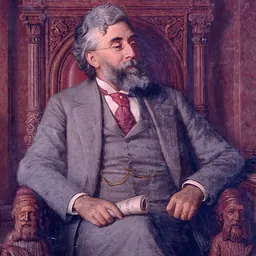
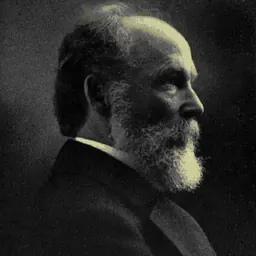
Named in this biography and alive at the same time




Related people
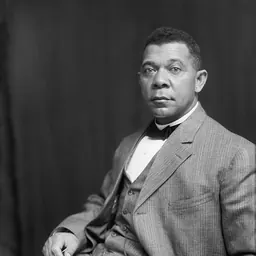
Same field, nearest in time



Contemporaries
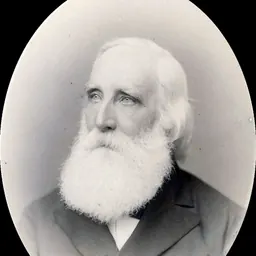
People whose lives overlapped Mary Sheldon Barnes's




Frequently asked questions
Who was Mary Sheldon Barnes?
American educator and historian (1850–1898)
When was Mary Sheldon Barnes born?
Mary Sheldon Barnes was born on 15 September 1850 in Oswego.
When did Mary Sheldon Barnes die?
Mary Sheldon Barnes died on 27 August 1898 in London.
What was Mary Sheldon Barnes's occupation?
Mary Sheldon Barnes was an educator, historian and writer.
What nationality was Mary Sheldon Barnes?
Mary Sheldon Barnes was American.
Sources & further reading
· Wikipedia: Mary Sheldon Barnes
· DBpedia: Mary Sheldon Barnes
Cite this page
APA: Biography.guide. (2026). Mary Sheldon Barnes. https://biography.guide/mary-sheldon-barnes/
MLA: "Mary Sheldon Barnes." Biography.guide, https://biography.guide/mary-sheldon-barnes/.
Chicago: "Mary Sheldon Barnes." Biography.guide. https://biography.guide/mary-sheldon-barnes/.
Data last updated: 2026-09-27 · Spot an error? Report a correction.
Page generated 2026-09-27 05:17 UTC