
About Mary Livermore
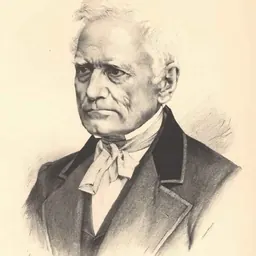
Lived 1820 – 1905 (aged 84). Mary Livermore was an American nurse, journalist, suffragette, writer, abolitionism in the United States and women's rights.
Mary Ashton Livermore ( Rice; December 19, 1820 – May 23, 1905) was an American journalist, abolitionist, and advocate of women's rights. In addition to articles, she published numerous books of poetry, essays, and stories.
When the American Civil War broke out, Livermore volunteered at the regional headquarters of the United States Sanitary Commission at Chicago and worked extensively for it as a nurse and also an organizer. She helped to organize the 1863 North-western Sanitary Fair and in 1887 published her reminiscences of nursing during the war as My Story of the War.
After the war, she instituted a newspaper advocating for women's suffrage called the Agitator, where she continued as an associate editor after its merger with the Woman's Journal. She also lectured widely, mostly on behalf of the women's suffrage and temperance movements. She delivered the historical address for the centennial celebration of the first settlement in the Northwest Territory in Marietta, Ohio on July 15, 1788. For many years, she traveled annually and spoke five nights each week for five months of the year.
Early life and education Mary Ashton Rice was born in Boston, Massachusetts on December 19, 1820, to Timothy Rice and Zebiah Vose Glover (Ashton) Rice. The first of their children to survive infancy, she was directly descended from Edmund Rice, an early Puritan immigrant to the Massachusetts Bay Colony. As her family was extremely religious, she read the entire Bible every year until the age of 23.
Career After graduating from the seminary, she remained there for two years teaching Latin and French. In 1839, she was hired as a family teacher on a Virginia plantation, where she became an abolitionist after witnessing the treatment of slaves.
American Civil War Following the outbreak of the Civil War in 1861, she volunteered as an associate member of the United States Sanitary Commission, devoting her full time to it. As an agent of its Chicago branch, later named the Northwestern branch, she attended a council of the National Sanitary Commission at Washington in December 1862, organized many aid societies, visited army posts and hospitals, and in 1863, helped to organize the North-western Sanitary Fair in Chicago, which raised $86,000. President Lincoln donated his own copy of the Emancipation Proclamation, which was auctioned off for $3,000, funding the building of the Soldiers' Home. Livermore eventually became the co-director of the Chicago branch with Jane Hoge, another soldier's aid advocate. With a thorough understanding of the needs of the hospitals, Hoge and Livermore sent $1 million worth of food and supplies to hospitals and battlefields most in need.
Although Livermore had to sacrifice much of her social justice work for nursing, she still managed to publish some kind of content once a week throughout the entirety of the war. She summarized her experience in her 1887 book, My Story of the War. A Woman's Narrative of Four Years' Personal Experience as Nurse in the Union Army, and in Relief Work at Home, in Hospitals, Camps and at the Front during the War of the Rebellion.
Suffrage and temperance activities
Livermore had long been active in the temperance movement, publishing temperance stories from the 1840s. After the war, she devoted herself to promoting temperance and also to the women's suffrage movement. In 1868, she co-founded the Chicago Sorosis Club with Myra Bradwell and Kate Doggett. This was the first women's group in Chicago to advocate for woman suffrage. The group organized the first woman suffrage convention in Chicago, also in 1868.
In 1869, the year that women suffragists in the Equal Rights Association split over the issue of voting rights for Black men, Livermore sided with Lucy Stone and those founding the American Woman Suffrage Association. Also in 1869, she founded and edited a suffragist journal called The Agitator, which was "devoted to the interests of women". She published 37 issues of the journal that year. In 1870, the Livermores moved to Boston, and she became active in suffrage activities there. The Agitator was merged into the Woman's Journal, the suffrage journal founded by Lucy Stone, and Livermore became associate editor. She served in that role for two years.
Spiritualism Livermore was interested in spiritualism, which grew in popularity after the Civil War, especially among Unitarians. After her husband died in 1899, she believed she was able to continue to communicate with him through a medium.
The Mary A. Livermore School in Melrose, operational from 1891 to 1933, was an elementary school named for her. In 1943, nearly four decades after her death, she became the namesake of a World War II Liberty ship, the SS Mary A. Livermore.
Selected works The Children's Army (1844), temperance stories. "The Twin Sisters: or, The History of Two Families," collected in The Two Families; and The Duty that Lies Nearest. Prize Stories (1848), a temperance story. A Mental Transformation (1848). Nineteen Pen Pictures (1863), short stories. Thirty Years Too Late: A True Story: and, One in a Thousand (1878) What Shall We Do With Our Daughters? Superfluous Women, and Other Lectures (1883) My Story of the War. A Woman's Narrative of Four Years' Personal Experience as Nurse in the Union Army, and in Relief Work at Home, in Hospitals, Camps and at the Front during the War of the Rebellion (1887); republished 1995 as My Story of the War: The Civil War Memories of the Famous Nurse, Relief Organizer and Suffragette, with introduction by Nina Silber. New York: Da Capo Press; A Woman of the Century (1893) (ed. Willard, Frances E. & Livermore, Mary A.) – online available in 16px The Story of My Life; or, The Sunshine and Shadow of Seventy Years (1897). Cooperative Womanhood in the State (1891). North American Review 153:4, pp. 283–295.
Don’t just read it —
keep it.
Full-length biographies made to live with: read them, listen on the way to work, watch them tonight.
- E-book
- Audio
- Video
Instant download · yours to keep · every purchase keeps this site free
Important facts
People in Mary Livermore's life
Named in this biography and alive at the same time
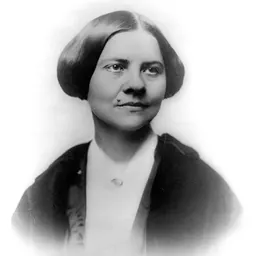
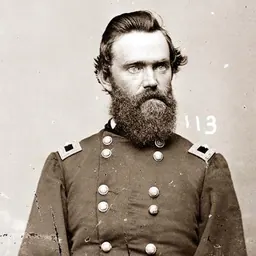

Related people
Same field, nearest in time


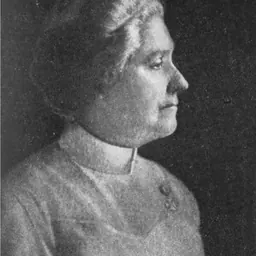



Contemporaries
People whose lives overlapped Mary Livermore's
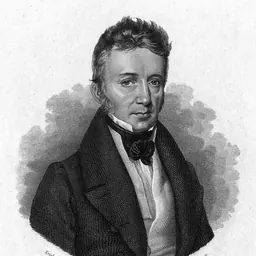



Frequently asked questions
Who was Mary Livermore?
American journalist
When was Mary Livermore born?
Mary Livermore was born on 19 December 1820 in Boston.
When did Mary Livermore die?
Mary Livermore died on 23 May 1905 in Melrose.
What was Mary Livermore's occupation?
Mary Livermore was a nurse, journalist, suffragette, writer, abolitionism in the United States and women's rights.
What nationality was Mary Livermore?
Mary Livermore was American.
Sources & further reading
Cite this page
APA: Biography.guide. (2026). Mary Livermore. https://biography.guide/mary-livermore/
MLA: "Mary Livermore." Biography.guide, https://biography.guide/mary-livermore/.
Chicago: "Mary Livermore." Biography.guide. https://biography.guide/mary-livermore/.
Data last updated: 2026-09-25 · Spot an error? Report a correction.
Page generated 2026-09-27 05:11 UTC