
About Mary Corkling
Lived 1850 – 1938 (aged 88). Mary Corkling was a British writer and painter.
Mary Ann Yates Corkling (18 May 1850 – 30 May 1938), also known as May Yates, was an English painter and food reformer. She campaigned for wholemeal bread, vegetarianism and temperance, and was associated with the Bread Reform League, the London Vegetarian Society and the Women's Vegetarian Union.
Biography
Early life Corkling was born in Withington, Manchester, to Mary Anne Corkling and Robert Yates Corkling, a cashier and aspiring merchant.
According to Ellen Creathorne Clayton, Corkling's parents were concerned by her severe myopia and she was excused from drawing at school to avoid straining her eyes. After she copied a painting and drew from life, her ability was recognised and she enrolled at Dudley School of Art. The family later moved to a house where her work could be encouraged, and she was sent to Sicily for further practice.
Painting Corkling mainly painted flowers and figures. She exhibited with the Society of Lady Artists in 1875, and in 1878 had a painting shown at the Royal Academy.
Food reform
Corkling's membership of the Ladies' Sanitary Association was followed by work in food reform. At her parents' request, she used the name May Yates because they considered public work unsuitable for a woman of the Corkling family. T. H. Huxley and others supported the campaign. The league had little money, and Corkling used her own income to fund pamphlets. Her interest in food reform led her to vegetarianism. She was secretary of the London Vegetarian Society from 1890 to 1893.
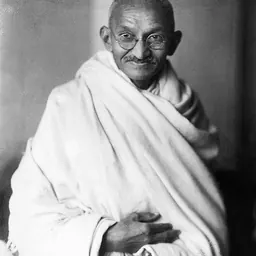
The Bread Reform League later merged with the London Vegetarian Society. Corkling promoted whole grains and vegetarianism, and opposed alcohol and white bread. Nico Slate writes that she influenced Mahatma Gandhi's support for the whole grain movement. The paper was published in The Vegetarian Messenger in 1891 and criticised the views of Emmet Densmore. She described meat-eating as "opposed to the highest ideal of humanity, which is horrified at the thought of our daily food being associated with the bloodshed, cruelty, and death inseparably connected with the slaughter-house". During the First World War, the introduction of "war bread" drew on recipes that Corkling had supplied. In 1932, she received a government grant in recognition of her food reform work.
Publications
Don’t just read it —
keep it.
Full-length biographies made to live with: read them, listen on the way to work, watch them tonight.
- E-book
- Audio
- Video
Instant download · yours to keep · every purchase keeps this site free
Important facts
People in Mary Corkling's life
Named in this biography and alive at the same time

Related people
Same field, nearest in time

Contemporaries
People whose lives overlapped Mary Corkling's



Frequently asked questions
Who was Mary Corkling?
English painter and food reformer (1850–1938)
When was Mary Corkling born?
Mary Corkling was born on 18 May 1850 in Withington.
When did Mary Corkling die?
Mary Corkling died on 30 May 1938.
What was Mary Corkling's occupation?
Mary Corkling was a writer and painter.
What nationality was Mary Corkling?
Mary Corkling was British.
Sources & further reading
Cite this page
APA: Biography.guide. (2026). Mary Corkling. https://biography.guide/mary-corkling/
MLA: "Mary Corkling." Biography.guide, https://biography.guide/mary-corkling/.
Chicago: "Mary Corkling." Biography.guide. https://biography.guide/mary-corkling/.
Data last updated: 2026-09-22 · Spot an error? Report a correction.
Page generated 2026-09-27 05:31 UTC