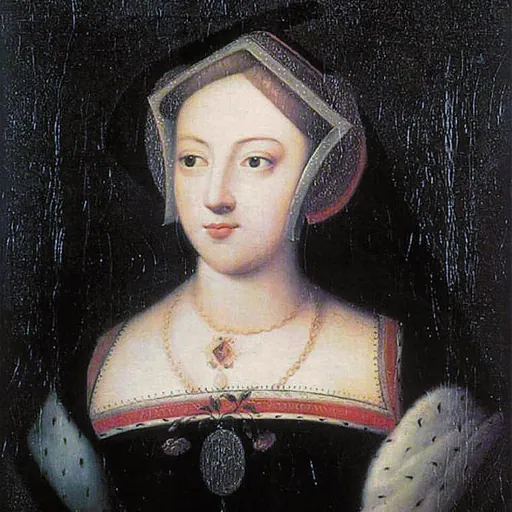
About Mary Boleyn
Lived 1499 – 1543 (aged 43–44). Mary Boleyn was an English lady-in-waiting.
Mary Boleyn ( – 19 or 30 July 1543), also known as Lady Mary, was an English noblewoman and courtier. She was the sister of English queen consort Anne Boleyn, whose family enjoyed considerable influence during the reign of King Henry VIII.
Mary was one of the mistresses of Henry VIII for an unknown period. It has been rumoured that she bore two of the King's children, though Henry did not acknowledge either. Mary was also rumoured to have been a mistress of Henry VIII's rival, King Francis I of France, for some period between 1515 and 1519.
Mary Boleyn was married twice: in 1520 to William Carey and again, secretly, in 1534, to William Stafford, a soldier from a good family but with few prospects. This secret marriage to a man considered beneath her station angered King Henry VIII and her sister, Queen Anne, and resulted in Mary's banishment from the royal court. She died seven years later, having spent the remainder of her life in obscurity. She was the daughter of a wealthy diplomat and courtier, Thomas Boleyn, later Earl of Wiltshire, by his marriage to Elizabeth Howard, the eldest daughter of Thomas Howard, then Earl of Surrey and future 2nd Duke of Norfolk, and his first wife, Elizabeth Tilney. and first cousin of poet and soldier Lord Henry Howard, styled Earl of Surrey (his courtesy title as heir apparent to the Dukedom of Norfolk), and Lady Mary Howard, wife of Henry VIII's illegitimate son, Henry FitzRoy, Duke of Richmond and Somerset, as well as Henry VIII's future fifth wife, Catherine Howard, daughter of Mary's uncle, Lord Edmund Howard.
There is no evidence of Mary's exact date of birth but it occurred sometime between early 1499 and late 1500. Evidence suggests that the Boleyn family treated Mary as the eldest child; in 1597 her grandson George Carey, 2nd Baron Hunsdon claimed the earldom of Ormond on the grounds that he was the Boleyns' legitimate heir. Many ancient peerages can descend through female heirs without an immediate male heir. If Anne had been the elder sister the better claim to the title would have belonged to her daughter, Queen Elizabeth I. However it appears that Queen Elizabeth offered Mary's son, Henry, the earldom as he was dying, although he declined it. If Mary had been the elder Boleyn sister, Henry would have the better claim to the title, regardless of a new grant from the Queen. There is more evidence to suggest that Mary was older than Anne. She was married first, on 4 February 1520; an elder daughter traditionally married before a younger sister. Moreover in 1532, when Anne was created Marchioness of Pembroke, she was referred to as "one of the daughters of Thomas Boleyn". Were she the elder, that status would probably have been mentioned. Most historians now accept Mary as the eldest child, placing her birth sometime in 1499.
Mary remained in England for most of her childhood until she was sent abroad in 1514 around the age of fifteen when her father secured her a place as maid-of-honour to the King's sister, Princess Mary, who was going to Paris to marry King Louis XII of France.
She returned to England in 1519, where she was appointed a maid-of-honour to Catherine of Aragon, the queen consort of Henry VIII.
Royal mistress
Soon after her return Mary was married to William Carey, a wealthy and influential courtier of the privy chamber, on 4 February 1520. Henry VIII was a guest at the couple's wedding.
It was rumoured that the King fathered one or both of Mary's children. However even if this were so Henry did not acknowledge either of them as his children, although he had previously acknowledged Henry FitzRoy, his son by another mistress, Elizabeth Blount.
Henry VIII's wife, Catherine of Aragon, had first been married to Henry's older brother, Arthur, when he was a little over fifteen years old, but he died just a few months later. Henry later used this to justify the annulment of his marriage to Catherine, arguing that her marriage to Arthur had created an affinity between Henry and Catherine; as his brother's wife, under canon law, she became his sister. In 1527, during his initial attempts to obtain a papal annulment of his marriage to Catherine, Henry similarly requested a dispensation to marry Anne, the sister of his former mistress.
Sister's rise to power Anne returned to England in January 1522 and soon joined the royal court as one of Queen Catherine's maids-of-honour. Anne achieved considerable popularity at court, although the sisters moved in different circles and were not considered close.
Although Mary is said to have been more attractive than her sister, Anne seems to have been more ambitious and intelligent. When the King took an interest in Anne she refused to become his mistress. By the middle of 1526 Henry was determined to marry her. This gave him further incentive to seek the annulment of his marriage to Catherine of Aragon. When Mary's husband died during an outbreak of sweating sickness Henry granted Anne Boleyn the wardship of her nephew, Henry Carey. Mary's husband had left her with considerable debts and Anne arranged for her nephew to be educated at a respectable Cistercian monastery. Anne also interceded to secure an annual pension of £100 for her widowed sister.
Second marriage In October 1532 Mary was one of her companions when Anne accompanied Henry to the English Pale of Calais on his way to a state visit to France. or 30 July 1543, most likely at Rochford Hall, Essex.
Edward Stafford (1535–1545). Anne Stafford (b. 1536?), possibly named in honour of Mary's sister, Queen Anne Boleyn.
Depictions in fiction Mary has been the central character in three novels based on her life: Court Cadenza (later published under the title The Tudor Sisters) by Aileen Armitage (Aileen Quigley) (1974) The Last Boleyn by Karen Harper (1983) The Other Boleyn Girl by Philippa Gregory (2001)
Mary is featured in the following novels: Brief Gaudy Hour: A Novel of Anne Boleyn by Margaret Campbell Barnes (1949) Anne Boleyn by Evelyn Anthony (1957) The Concubine: A Novel Based Upon the Life of Anne Boleyn by Norah Lofts (1963) Anne, the Rose of Hever by Maureen Peters (1969) Anne Boleyn by Norah Lofts (1979) Mistress Anne: The Exceptional Life of Anne Boleyn by Carolly Erickson (1984) The Lady in the Tower by Jean Plaidy (1986) I, Elizabeth: the Word of a Queen by Rosalind Miles (1994) The Secret Diary of Anne Boleyn by Robin Maxwell (1997) Dear Heart, How Like You This? by Wendy J. Dunn (2002) Doomed Queen Anne by Carolyn Meyer (2002) Wolf Hall by Hilary Mantel (2009) “The Boleyn Secret” by Alison Weir (2026)
Mary is a character in several films and television series: In the film Anne of the Thousand Days (1969), she is played by Valerie Gearon. In the BBC television film The Other Boleyn Girl (2003), based on the novel of the same name by Philippa Gregory, she is played by Natascha McElhone. In the Showtime television series The Tudors (2007–2010), she is played by Perdita Weeks. In the film The Other Boleyn Girl (2008), also based on Gregory's novel, she is played by Scarlett Johansson. In the miniseries Wolf Hall (2015), the television adaptation based on Hilary Mantel's novel of the same name, Mary is portrayed by Charity Wakefield.
Non-fiction Mary is also a central subject in three non-fiction books: Mary Boleyn: The Mistress of Kings by Alison Weir (2011) The Mistresses of Henry VIII by Kelly Hart (2009) Mary Boleyn: The True Story of Henry VIII's Mistress by Josephine Wilkinson (2010)
Family tree
Don’t just read it —
keep it.
Full-length biographies made to live with: read them, listen on the way to work, watch them tonight.
- E-book
- Audio
- Video
Instant download · yours to keep · every purchase keeps this site free
Important facts
Family & relationships
People in Mary Boleyn's life
Named in this biography and alive at the same time



Related people
Same field, nearest in time

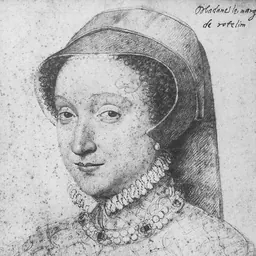
Contemporaries
People whose lives overlapped Mary Boleyn's
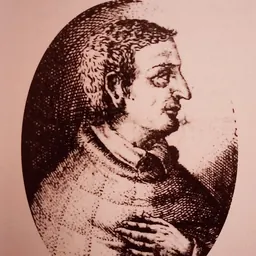





Frequently asked questions
Who was Mary Boleyn?
sister of the queen of England Anne Boleyn
When was Mary Boleyn born?
Mary Boleyn was born in 1499 in Blickling Hall.
When did Mary Boleyn die?
Mary Boleyn died on 19 July 1543 in Essex.
What was Mary Boleyn's occupation?
Mary Boleyn was a lady-in-waiting.
What nationality was Mary Boleyn?
Mary Boleyn was English.
Sources & further reading
Cite this page
APA: Biography.guide. (2026). Mary Boleyn. https://biography.guide/mary-boleyn/
MLA: "Mary Boleyn." Biography.guide, https://biography.guide/mary-boleyn/.
Chicago: "Mary Boleyn." Biography.guide. https://biography.guide/mary-boleyn/.
Data last updated: 2026-09-24 · Spot an error? Report a correction.
Portrait: Wikimedia Commons · author & licence
Page generated 2026-09-27 05:08 UTC