
Mary Ann Moran
American marine microbial ecologist and bacteriologist
About Mary Ann Moran
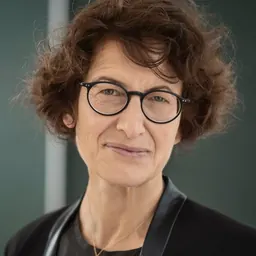
Mary Ann Moran was an American researcher, bacteriologist and microbial ecologist.
Mary Ann Moran is a distinguished research professor of marine sciences at the University of Georgia in Athens. She studies the role of bacteria in Earth's marine nutrient cycles, and is a leader in the fields of marine sciences and biogeochemistry. By defining the roles of diverse bacteria in the carbon and sulfur cycles, she connects the biogeochemical and organismal approaches in marine science.
For her leadership and contributions to science, Moran is a recipient of many awards and honors including a Creative Research Medal from the University of Georgia She was elected to the National Academy of Sciences in 2021.
Education Mary Ann Moran received her Bachelor of Arts degree in biology in 1977 at the Colgate University in Hamilton, New York. After receiving her Ph.D. she stayed at the University of Georgia to pursue her research.
Research and discoveries Mary Ann Moran's research focuses on the role of bacteria in the marine carbon and sulfur cycles. In order to decipher the role of bacteria and better understand the diverse metabolisms occurring in the ocean, she uses ecological genomics, metagenomics and metatranscriptomics to study the genes and activity of marine bacteria in nature.
Carbon and sulfur cycle As she progressed in her career, Moran's research focused on organic compounds and metabolic interactions that occur between dissolved organic matter and marine microbial communities. This field of science is what she remains studying to this day. Her major contributions have been in the research of dissolved organic matter (DOM) and the role of bacteria in marine biogeochemical cycles. She focuses mainly on the carbon and sulfur cycle. Organic matter is composed of carbon based compounds made by biological organisms. Organic matter can be found in soil, sediments, and water and is an important component of all ecosystems. It provides habitat, food and nutrients for organisms, controls nutrient exchange, aids in soil water retention, and can store significant amounts of carbon. Understanding the degradation of organic matter is critical to understanding the carbon cycle. Despite the importance of DOM in freshwater and marine ecosystems, the chemical make up is poorly understood.
As described in her 2015 Proceedings of the National Academy of Sciences paper, a large amount of organic matter is released by phytoplankton and then degraded by heterotrophic bacteria in the ocean surface. Compounds important for the trophic link are poorly known because there are thousands of chemicals making up marine DOM. Using DNA and RNA sequencing methods developed by Moran for use in marine environments, Moran's research group demonstrated that a large portion of coastal and mixed-layer ocean bacterioplankton fall into the Roseobacter clade of Alphaproteobacteria. In addition, she has studied the physiology, genetics, and ecology of the Roseobacter clade extensively, firmly establishing their importance in many marine ecosystems.
Another major finding of her research is related to cloud formation. In order for a cloud to form, water must condense into droplets. Organic sulfur compounds in the atmosphere create aerosols that serve as cloud condensation nuclei. An organic sulfur compound known as DMSP (dimethylsulfoniopropionate) is produced in large quantities by photosynthetic plankton in ocean. If DMSP is converted to dimethyl sulfide (DMS), the DMS rises into the atmosphere and increases cloud formation. Moran's research group discovered key genes in Roseobacter and Pelagibacteria that breakdown DMSP into methanethiol instead, a chemical compound that does not enter the atmosphere or increase cloud formation. Basically, Moran's research group made a major discovery that explains connections between the marine microbial food web and cloud formation over the oceans. That research also helped in identifying the biochemical pathway that controls how bacteria release methanethiol into the microbial food web, making it available to other bacteria as well. and in 2016 she received a second award from this foundation to study the movement of carbon between marine microbes. She was the first to receive the White Research and Mentoring Award from the American Society for Microbiology in 2008 to recognize her commitment to mentoring and being a role model for young scientists at the undergraduate, graduate, and postdoctoral levels. To date, she has mentored eight graduate students, nine postdoctoral students, 25 undergraduate students, and five high school interns.
She is a member of multiple boards and committees, including the Scientific Advisory Board of the Max Planck Institute for Marine Microbiology since 2009, the Joint Genome Institute (JGI) Prokaryotic Super Program Advisory Committee since 2011, the JGI Scientific Advisory Committee since 2012, the Science Board of Reviewing Editors since 2015, and the American Academy of Microbiology Board of Governors since 2014.
Don’t just read it —
keep it.
Full-length biographies made to live with: read them, listen on the way to work, watch them tonight.
- E-book
- Audio
- Video
Instant download · yours to keep · every purchase keeps this site free
Important facts
Related people
Same field, nearest in time





Frequently asked questions
Who was Mary Ann Moran?
American marine microbial ecologist and bacteriologist
What was Mary Ann Moran's occupation?
Mary Ann Moran was a researcher, bacteriologist and microbial ecologist.
What nationality was Mary Ann Moran?
Mary Ann Moran was American.
Sources & further reading
Cite this page
APA: Biography.guide. (2026). Mary Ann Moran. https://biography.guide/mary-ann-moran/
MLA: "Mary Ann Moran." Biography.guide, https://biography.guide/mary-ann-moran/.
Chicago: "Mary Ann Moran." Biography.guide. https://biography.guide/mary-ann-moran/.
Data last updated: 2026-09-20 · Spot an error? Report a correction.
Page generated 2026-09-27 05:24 UTC