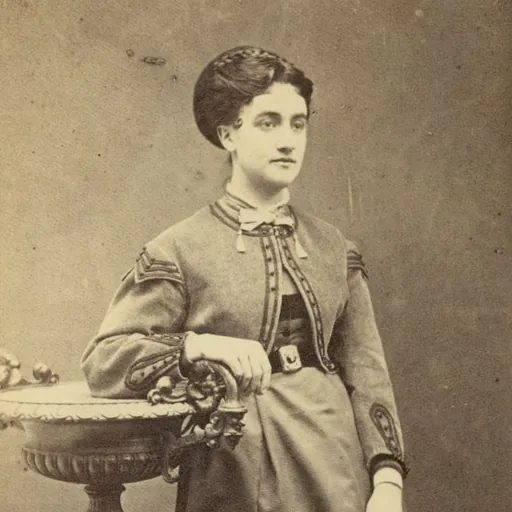
About Martina Barros Borgoño
Lived 1850 – 1944 (aged 94). Martina Barros Borgoño was a Chilean writer.
Martina Mercedes Eugenia Barros Borgoño Lucia (6 July 1850 – 1944) was a Chilean writer and a forerunner of feminism in Chile who advocated for women's suffrage.
Early years Martina Barros Borgoño was born in Santiago on 6 July 1850. She was the eldest daughter of Manuel Barros Arana, brother of the historian Diego Barros Arana, and Eugenia Borgoño Vergara, daughter of Gen. José Manuel Borgoño Núñez, winner of the loyalist resistance in Chiloé. Along with her brothers Manuel (1852–1903), Louis (1858–1943) and Victor grew up in the house of her paternal grandfather, Diego Antonio Barros Fernández de Leiva (1789–1853), until the death of her father. Then, she moved to her historian uncle's house, located in the old street of the Capuchins (now Rosas), where she acquired an education in keeping with the intellectual and refined environment of her tutor.
Education Martina studied at different private schools in Santiago. In 1853 she joined the Rafaela Fernández's school and later the Miss Whitelock's school. Years later she admitted not having learned much in those schools, which she left at 11 years of age. Her greatest source of education was her uncle Diego, as she herself would say in her memoirs, entitled Memories of My Life:
in my case, I owe my work to my uncle Diego that took care of me while I was single, I think it would not have been possible to find a better teacher ... [my education] I also owe to my own initiative, my thirst for knowledge, my admiration for superior talent, which has been one of the characteristics of my life.
Publishing controversy Martina became known in 1872, at age 22 when she published a translation of the book The Subjection of Women (1869), by the English philosopher and political economist John Stuart Mill (1806-1873), with the title The Bondage of Women.
While her work is not extensive, the life told in her memoirs makes allusions to the need for women's liberation, not with a separatist or egalitarian spirit, but rather to contribute to the progress of Chile.
Martina Mercedes Eugenia Barros Lucia Borgoño finished writing her memoirs in 1939, published in 1942, and died in 1944.
Publications The Slavery of Women in The Santiago Journal, 1872. Memories of my life. Santiago: Orbe, 1942.
Don’t just read it —
keep it.
Full-length biographies made to live with: read them, listen on the way to work, watch them tonight.
- E-book
- Audio
- Video
Instant download · yours to keep · every purchase keeps this site free
Important facts
People in Martina Barros Borgoño's life
Named in this biography and alive at the same time

Related people
Same field, nearest in time
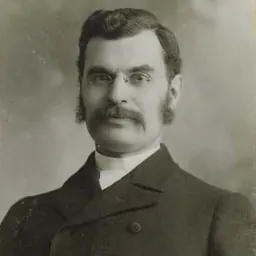
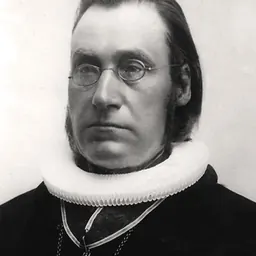

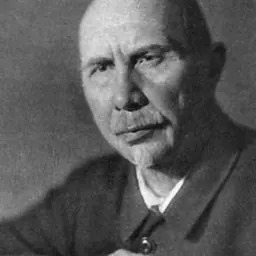
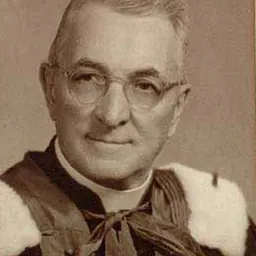
Contemporaries
People whose lives overlapped Martina Barros Borgoño's


Frequently asked questions
Who was Martina Barros Borgoño?
Chilean writer (1850-1944)
When was Martina Barros Borgoño born?
Martina Barros Borgoño was born on 6 July 1850 in Santiago.
When did Martina Barros Borgoño die?
Martina Barros Borgoño died on 6 July 1944 in Chile, Santiago.
What was Martina Barros Borgoño's occupation?
Martina Barros Borgoño was a writer.
What nationality was Martina Barros Borgoño?
Martina Barros Borgoño was Chilean.
Sources & further reading
· Wikipedia: Martina Barros Borgoño
· DBpedia: Martina Barros Borgoño
Cite this page
APA: Biography.guide. (2026). Martina Barros Borgoño. https://biography.guide/martina-barros-borgono/
MLA: "Martina Barros Borgoño." Biography.guide, https://biography.guide/martina-barros-borgono/.
Chicago: "Martina Barros Borgoño." Biography.guide. https://biography.guide/martina-barros-borgono/.
Data last updated: 2026-09-22 · Spot an error? Report a correction.
Portrait: Wikimedia Commons · author & licence
Page generated 2026-09-27 05:00 UTC