
About Martin Wong
Lived 1946 – 1999 (aged 53). Martin Wong was an American painter.
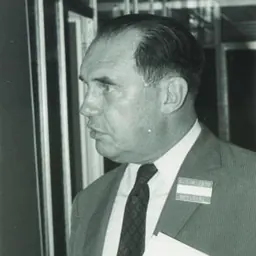
Martin Wong (; July 11, 1946 – August 12, 1999) was an American artist and poet. Born to Chinese American parents in Oregon, Wong was raised in San Francisco by his mother and stepfather before studying art at university and becoming an active participant in the hippie counterculture in northern California. He began his career as a ceramist and eventually expanded his work to include poetry, sculpture, and, principally, painting. After living and working in California for nearly a decade following university, Wong moved to New York in 1978 and became well-known for his paintings depicting Manhattan's East Village and Lower East Side neighborhoods.
His work has been described as a meticulous blend of social realism and visionary art styles. Wong's paintings often explored multiple ethnic and racial identities, exhibited cross-cultural elements, demonstrated multilingualism, and celebrated his queer sexuality. He exhibited for two decades at notable New York galleries including EXIT ART, Semaphore, and P.P.O.W., among others, before his death in San Francisco from an AIDS-related illness. P.P.O.W. continues to represent his estate.
Early life and education Martin Wong was born in Portland, Oregon, on July 11, 1946, the only child of Florence (born Jan Yuet Ah) and Anthony Victor Wong. Florence, also born in Portland, was the daughter of a jewelry store owner from Guangzhou, and was raised in the Chinese city following her birth before returning to Oregon in 1940 to avoid the Japanese occupation. She moved to San Francisco, eventually securing work as a draftsperson at the Richmond Shipyards where she met Anthony, a Chinese-born draftsperson working in the facility. They married shortly before Wong was conceived, but Anthony was diagnosed with tuberculosis during the pregnancy. He died in 1950 in a sanatorium.
After Anthony's death, Wong was placed in foster care until his mother was able to find new employment as a draftsperson with Bechtel. Wong was raised by his mother for the first several years of his life, living in San Francisco's Chinatown. His aunt, Eleanor "Nora" Wong, had been an active participant in the Chinese nightclub scene in the neighborhood in the 1940s, most notably as principal singer at Forbidden City. In 1955, when Wong was nine years old, Florence married Benjamin Wong Fie, the co-owner of the apartment the family was renting. Fie was the son of a Chinese immigrant and Mexican immigrant, though Wong did not grow up speaking Chinese at home and did not become literate in the language. The family soon moved to a larger house between the Richmond and Haight-Ashbury neighborhoods after Benjamin was hired by Bechtel.
Demonstrating a proclivity for artistic expression at an early age, Wong started to paint at the age of 13. His mother was a strong supporter of his artistic inclinations and kept much of his early work. Wong took art classes through the De Young Museum's youth art program while attending George Washington High School. He first exhibited his art in 1961, showing a landscape painting at a gallery in North Beach. His mother also encouraged Wong to collect art and artifacts and he quickly amassed a large collection of primarily Asian art. He graduated high school in 1964.
Wong continued his education at Humboldt State University in Arcata, California, for two years, before transferring to the University of California, Berkeley in 1966 to study architecture. Living in San Francisco, he became an active participant in the city's hippie counterculture. He experimented with psychedelic drugs and was arrested at an anti-draft protest in Oakland during this period. In 1967, during the Summer of Love, he was arrested at a cannabis party in Haight-Ashbury and his mugshot was published in the San Francisco Examiner. At the end of the year, he was briefly hospitalized for inpatient psychiatric treatment, being released early in 1968.
Wong returned to Humboldt State in 1968, where he took classes in every artistic discipline available to learn more about multiple mediums, though he ultimately focused on ceramics. His ceramics from this period were primarily abstract sculptures reminiscent of Buddhist and Hindu symbols and geometries, often with rough edges, tines, and spike-like elements. As an undergraduate, Wong also began producing an extensive amount of poetry. He completed his first major poem, "Firefly Evening", and self-published his first book of poems, Footprints, Poems + Leaves, in 1968. "Firefly Evening" was produced as a hand-drawn calligraphic scroll with a distinct style of text he developed after taking a course on Western calligraphy. He also created several poems executed as inscribed ceramic tablets. Their collaborative paintings often combined Piñero's poetry or prose with Wong's painstaking cityscapes and stylized fingerspelling. Wong's Loisaida pieces and collaborations with Piñero formed part of the Nuyorican arts movement. Wong was openly gay, and he and Piñero were romantic as well as artistic partners.
While living with Wong, Piñero commissioned him to document via painting a recently created graffiti work by the artist Little Ivan, which resulted in Wong beginning his Loisaida series. Wong's painting, Attorney Street (Handball Court with Autobiographical Poem by Piñero), centered on the graffiti work but also included a poem by Piñero, spelled out using hands in American Sign Language in the foreground of the image and written in English in the background against the sky. Wong also painted additional phrases on the frame of the painting using hands and sign language, painted to appear carved into the wood. Curator Sofie Krogh Christensen called this work a "eulogy to the multilingual community of the Lower East Side and its protagonists" for its use of multiple perspectives through text - the graffiti art of Little Ivan, Piñero's poem, and Wong's own sign language message on the frame - to memorialize the rapidly changing neighborhood. Piñero died in 1988 from cirrhosis.
For a time in the 1980s, he made ends meet by buying underpriced antiquities at Christie's and selling them at Sotheby's for a fairer price.
1990–1999: Depicting Chinatowns, move to San Francisco and health decline, final exhibitions Wong held a solo exhibition titled Chinatown Paintings at the San Francisco Art Institute in 1993 that showcased his own memories, experiences and interpretations of the "mythical quality of Chinatown." Wong exemplified "a tourist idea, an outsider's view" of Chinatown that was prevalent for those distant from the reality of the city.
In 1994 Wong was diagnosed with AIDS. With his health in decline following the diagnosis, he moved back to San Francisco to live with his family.
In 1998, the Illinois State University Galleries and the New Museum in New York co-organized Wong's first retrospective exhibition, Sweet Oblivion: The Urban Landscape of Martin Wong, covering two decades of his work beginning with his arrival in New York. The exhibition included several of Wong's large paintings of buildings and landscapes in New York, along with a number of his sign language paintings.
Wong created only three new paintings in 1998 while living with his mother in San Francisco, all depicting cacti from her garden, rendered in stark black and white. He staged an exhibition of these new paintings and other recent works at P.P.O.W. in New York the same year.
In 1999 and 2000, Wong's mother as the executor of his estate donated the bulk of his papers and ephemera to New York University's Fales Library. The Martin Wong Papers, ranging from 1982 to 1999, comprise sketchbooks, correspondence, biographical documents, videocassette recordings, photographs, graffiti-related materials, and parts of Wong's personal library.
In 2001, Wong's mother founded the Martin Wong Foundation to help fund art programs and young artists through collegiate art scholarships, art publications and active art education programs. Since 2003, the scholarships have continued to be offered at Wong’s alma mater Humboldt State University, San Francisco State University, New York University, and Arizona State University.
Posthumous exhibitions P.P.O.W. staged a posthumous exhibition in 2001 featuring nine of Wong's paintings from the 1980s of storefronts and building entrances in New York's Lower East Side and East Village. The gallery organized another exhibition of Wong's work in 2010, Martin Wong: Everything Must Go, curated by the artist Adam Putnam, including paintings, sketches, and photograph collages.
In 2015, the Wattis Institute for Contemporary Arts in San Francisco mounted a posthumous retrospective of Wong's work, Martin Wong: Painting is Forbidden, featuring over 150 artworks and ephemera, primarily small and early pieces. Also in 2015, the Bronx Museum of the Arts in New York organized the first full traveling retrospective of Wong's work since his death, titled Martin Wong: Human Instamatic. P.P.O.W. hosted an exhibition in 2016 of Wong's written scrolls and other calligraphic works on paper, titled Voices.
In 2022, a touring retrospective of Wong's work, Martin Wong: Malicious Mischief, opened at the (CA2M) in Madrid, the artist's first retrospective in Europe. The same year, Galerie Buchholz in Berlin organized an exhibition of Wong's early works on paper from the 1960s and 1970s.
P.P.O.W. staged an exhibition in 2026 featuring Wong's paintings of the character Popeye made of red bricks, including several animatronic works. The mechanized paintings were built with components that made the Popeye figure rock back and forth. Also in 2026, The nonprofit gallery Wrightwood 659 in Chicago hosted Martin Wong: Chinatown USA, the artist's first solo exhibition in the city. The exhibition, a retrospective focused on Wong's paintings of Chinatowns in New York and San Francisco, featured several previously unseen works that the artist had not exhibited during his life.
Notable works in public collections
Silence (1982), Berkeley Art Museum and Pacific Film Archive, Berkeley, California Stanton near Forsyth Street (1983), Museum of Modern Art, New York Sweet Oblivion (1983), Art Institute of Chicago Attorney Street (Handball Court with Autobiographical Poem by Piñero) (1982-1984), Metropolitan Museum of Art, New York The Annunciation According to Mikey Piñero (Cupcake and Paco) (1984), Syracuse University Art Museum, Syracuse, New York It's Not What You Think, What Is It Then? (1984), Bronx Museum of the Arts, New York Narcolepsy (1985-1986), Grand Rapids Art Museum, Grand Rapids, Michigan Big Heat (1986), Whitney Museum, New York Rapture (1988), San Francisco Museum of Modern Art Sweet 'Enuff (1988), Fine Arts Museums of San Francisco Self-Portrait (1993), San Francisco Museum of Modern Art
Don’t just read it —
keep it.
Full-length biographies made to live with: read them, listen on the way to work, watch them tonight.
- E-book
- Audio
- Video
Instant download · yours to keep · every purchase keeps this site free
Important facts
People in Martin Wong's life
Named in this biography and alive at the same time

Related people
Same field, nearest in time


Contemporaries
People whose lives overlapped Martin Wong's



Frequently asked questions
Who was Martin Wong?
American painter (1946-1999)
When was Martin Wong born?
Martin Wong was born on 11 July 1946 in Portland.
When did Martin Wong die?
Martin Wong died on 12 August 1999 in San Francisco.
What was Martin Wong's occupation?
Martin Wong was a painter.
What nationality was Martin Wong?
Martin Wong was American.
Sources & further reading
Cite this page
APA: Biography.guide. (2026). Martin Wong. https://biography.guide/martin-wong-painter/
MLA: "Martin Wong." Biography.guide, https://biography.guide/martin-wong-painter/.
Chicago: "Martin Wong." Biography.guide. https://biography.guide/martin-wong-painter/.
Data last updated: 2026-09-20 · Spot an error? Report a correction.
Page generated 2026-09-27 05:27 UTC