
About Martin Wickramasinghe
Lived 1890 – 1976 (aged 86). Martin Wickramasinghe was a Sri Lankan writer and journalist.
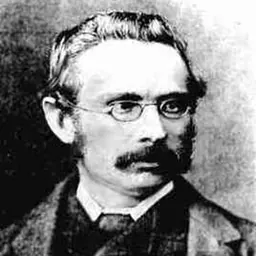
Lama Hewage Don Martin Wickramasinghe, (commonly known as Martin Wickramasinghe) (29 May 1890 – 23 July 1976) was a Sri Lankan journalist and author. His books have been translated into several different languages. Martin Wickramasinghe is often acclaimed as the father of modern Sinhala literature.
Early life Born Lama Hewage Don Martin Wickramasinghe, on 29 May 1890, in the town of Koggala (Galle District), as the only son of Lamahewage Don Bastian Wickramasinghe (father) and Magalle Balapitiya Liyanage Thochchohamy (mother).
At the age of five Wickramasinghe was taught the Sinhala alphabet, at home and in the village temple, by a monk, Andiris Gurunnanse. He also learned the Devanagari script and could recite by memory long sections of the Hitopadesa. After two years he was taken to a vernacular school where he prospered until 1897 when he was sent to an English school in Galle called Buona Vista . In the two years spent at the school Wickramasinghe became fluent in English as well as Latin. When his father died in 1901, he returned to a vernacular school in Ahangama and subsequently lost interest in schooling.
Literary career His literary career began with the novel Leela (1914) and an anthology of essays on literary criticism, Shastriya Lekhana (1919). Shortly thereafter he began a campaign to raise literary standards for the Sinhalese reading public with work such as Sahityodaya Katha (1932), Vichara Lipi (1941), Guttila Geetaya (1943) and Sinhala Sahityaye Nageema (1946) in which he evaluated the traditional literally heritage according to set rules of critical criteria formed by synthesising the best in Indian and western traditions of literary criticism.
Through the 1940s Wickramasinghe dabbled with the double role of literary critic and creative writer. Gamperaliya (1944) is widely held as the first Sinhalese novel with a serious intent that compares, in content and technique, with the great novels of modern world literature. The novel depicts the crumbling of traditional village life under the pressure of modernisation. The story of a successful family in a Southern village is used to portray the gradual replacement of traditional economic and social structure of the village by commercial city influence.
Wickramasinghe died on 23 July 1976 and his home is now a folk museum.
Novels
Leela (1914) Soma (1920) Irangani (1923) Seetha (1923) Miringu Diya (Mirage) (1925) Unmada Chitra (1929) Rohini (1929) Gamperaliya (The Uprooted/Changing Village) (1944) Madol Doova (Mangrove Island) (1947) Yuganthaya (End of the Era) (1949) Viragaya (Devoid of Passions) (1956) Kaliyugaya (Age of Destruction) (1957) Karuvala Gedara (House of Shadows) (1963) Bhavatharanaya (Siddhartha's Quest) (1973)
Collections of short stories
Geheniyak (A Woman) (1924) Magul Gedara (The Wedding) (1927) Pavkarayata Galgesima (Stoning the Sinner) (1936) Apuru Muhuna (The Strange Face) (1944) Handa Sakki Kima (The Moon is Witness) (1945) Mara Yuddhaya (Mara's War) (1945) Mage Kathawa (My Story) (1947) Vahallu (Bondage) (1951)
Plays
Chithra (1940) Mayuri (1944) Vijitha (1952)
Literary criticism
Shastriya Lekshana (Educational Essays) (1919) Sinhala Sahitya Katha (Sinhala Literary Essays) (1932) Sahitya Shiksha 1 (Essays on Literatura) (1936) Sahitya Shiksha 2 (1938) Vichara Lipi (Literary Criticism) (1941) Guttila Gitaya 1 (Critical Review) (1943) Sinhala Sahityaye Negima (Landmarks of Sinhala Literature) (1945) Sahitya Kalava (Art of Literature) (1950) Kavya Vicharaya (Sinhala Poetry:A critical Review) (1954) Atta Yutta (Essays in Literature) (1955) Bana Katha Sahitya (Buddhist Folk Literature) (1955) Nava Padya Sinhalaya (Modern Sinhala Poetry) (1957) Rasavadaya Ha Bauddha Kavyaya (Aesthetics and Buddhist Poetry) (1961) Sinhala Vichara Maga (Sinhala Literary Criticism) (1964) Navakathanga Ha Viragaya (Literary Aspects of Buddhist Jataka Stories) (1968) Sinhala Navakathawa Ha Japan Kama Katha Sevanella (The Sinhala Novel in the Shadow of the Japanese Erotic Novel) (1969) Sinhala Natakaya Ha Sanda Kinduruwa (Sanda Kinduru and Sinhala Drama) (1970) Sampradaya Ha Vicharaya (Tradition and Criticism) (1971) Vyavahara Bhashava Ha Parinama Dharmaya (Contemporary Sinhala and Its Evolotion) (?)
Evolution and Anthropology
Sathwa Sanhathiya (Biological Evolution) (1934) Bhavakarma Vikashaya (An Unorthodox Interpretation of Buddhist Philosophy) (1967) Manava Vidyava Ha Bauddha Vignana Vadaya (Anthropology and Buddhist Idealism) (1974)
Philosophy
Sinhala Lakuna (The Sinhalese Identity) (1947) Budu Samaya Ha Samaja Darshanaya (Buddhism and Social Philosophy) (1948) Denuma Ha Dekuma (Knowledge and Reality) (1958) Sinhala Sakaskada (Sociological Writings) (1962) Bauddha Darshanaya Ha Margaya (Buddhist Philosophy and the Way) (1968) Nivan Muhunuvara Ha Bamunu Dittiya (Face of Nirvana and Brahmin Dogma) (1972)
Autobiography
Ape Gama (Our Village) (1940) Upanda Sita (From My Childhood) (1961)
Biography
Chechov Ha Lankava (Chechov and Sri Lanka) (1970) Ape Urumaya Ha Bhikshun Vahanse (The contribution of Buddhist Monks to our Cultural Heritage) (?) Ape Viyath Parapura Ha Bhasha Samaja Parinamaya (The role of Our Leaders in the Evolution of Our Language and Society) (?)
Books in English
Aspects of Sinhalese Culture (1952) The Buddhist Jataka Stories and the Russian Novel (1952) The Mysticism of D H Lawrence (1957) Buddhism and Culture (1964) Revolution and Evolution (1971) Buddhism and Art (1973) Sinhala Language and Culture (1975)
History
Purana Sinhala Stringe Enduma (Women's Attire in Ancient Lanka) (1935) Kalunika Sevima (Search for Our Past) (1950)
Travel
Soviet Deshaye Negima (The Rise of the Soviet Union) (1962)
Translations in other languages Books translated in to other languages,
Bulgarian Madol Doova (1961)
Chinese A Collection of Short Stories (1961) Madol Doova (1961)
Dutch Madol Doova (1979)
English Landmarks of Sinhala Literature (1948) Lay Bare the Roots (Ape Gama) (1958) Madol Doova (1968) The Way of the Lotus (Viragaya) (1985)
French Viragaya (1995)
Japanese Madol Doova (2002)
Romanian Madol Doova (1962)
Russian Madol Doova (1954) A Collection of Short Stories 1 (1958) A Collection of Short Stories 2 (1970) Trilogy: Gamperaliya, Kaliyugaya, Yuganthaya (1975)
Tamil Gamperaliya (1964) Viragaya (1992) Madol Doova (1993)
Films and television productions Films and television productions, based on Martin Wikramasinghe's books,
Feature films
Gamperaliya (1963) Madol Doova (1976) Kaliyugaya (1981) Yuganthaya (1983) Viragaya (1987)
"Karuwala Gedara"(_) Television
Leli (Daughter in law) (1989) Gamperaliya (1989) Mamage Duwa (1992) Madol Doova (1994) Upasakamma (The Pious Woman) (1994) Mudiyanse Mama (Honourable Uncle) (1994) Mava (Mother) (1994) Sisiliyata Padamak (A Lesson for Ceciliya) (1994)
Martin Wickramasinghe Trust
Martin Wickramasinghe Trust is an approved by the Government of Sri Lanka as a charitable organization. The Martin Wickramasinghe Trust has been established with the objectives of preservation of manuscripts, first editions of all his books, tape recording and photographs related to his life and work. Martin Wickramasinghe Folk Museum in Koggala also operated by Martin Wickramasinghe Trust Fund.
Martin Wickramasinghe Collection A library was not established at Koggala, and Wickramasinghe's personal collection of books, draft manuscripts, are stored under the Martin Wickramasinghe Collection in the National Library of Sri Lanka, after these were dontated by the Martin Wickramasinghe Trust.
Don’t just read it —
keep it.
Full-length biographies made to live with: read them, listen on the way to work, watch them tonight.
- E-book
- Audio
- Video
Instant download · yours to keep · every purchase keeps this site free
Important facts
Family & relationships
People in Martin Wickramasinghe's life
Named in this biography and alive at the same time

Related people
Same field, nearest in time


Contemporaries
People whose lives overlapped Martin Wickramasinghe's




Frequently asked questions
Who was Martin Wickramasinghe?
Sri Lankan writer (1890-1976)
When was Martin Wickramasinghe born?
Martin Wickramasinghe was born on 29 May 1890 in Koggala.
When did Martin Wickramasinghe die?
Martin Wickramasinghe died on 23 July 1976 in Colombo.
What was Martin Wickramasinghe's occupation?
Martin Wickramasinghe was a writer and journalist.
What nationality was Martin Wickramasinghe?
Martin Wickramasinghe was Sri Lankan.
Sources & further reading
· Wikipedia: Martin Wickramasinghe
· DBpedia: Martin Wickramasinghe
Cite this page
APA: Biography.guide. (2026). Martin Wickramasinghe. https://biography.guide/martin-wickramasinghe/
MLA: "Martin Wickramasinghe." Biography.guide, https://biography.guide/martin-wickramasinghe/.
Chicago: "Martin Wickramasinghe." Biography.guide. https://biography.guide/martin-wickramasinghe/.
Data last updated: 2026-09-22 · Spot an error? Report a correction.
Page generated 2026-09-27 05:18 UTC