
Martin V
Pope of the Catholic Church from 1417 to 1431
About Martin V
Lived 1369 – 1431 (aged 61–62). Martin V was an Italian catholic priest, writer and transitional deacon.
Pope Martin V (; ; January/February 1369 – 20 February 1431), born Oddone Colonna, was the head of the Catholic Church and ruler of the Papal States from 11 November 1417 to his death in February 1431. His election effectively ended the Western Schism of 1378–1417. As of 2026, he remains the last pope to have taken the pontifical name "Martin".
Biography Born between 26 January and 20 February 1369 at Genazzano, Oddone Colonna was the son of Agapito Colonna and Caterina Conti.
Oddone studied law at the University of Pavia; he became apostolic protonotary under Pope Urban VI (1378–1389), and was created Cardinal-Deacon of San Giorgio in Velabro by Pope Innocent VII in 1405.
In 1409 he took part in the Council of Pisa, and was one of the supporters of Antipope Alexander V. Later he confirmed his allegiance to Alexander's successor, John XXIII, by whom his family obtained several privileges, while Oddone obtained for himself the vicariate of Todi, Orvieto, Perugia and Umbria; He was excommunicated for this in 1411 by Pope Gregory XII.
Papacy
Election After deposing Antipope John XXIII in 1415, the Council of Constance (1417) was long divided by the conflicting claims of Pope Gregory XII (1406–15) and Antipope Benedict XIII (1394–1423); eventually Gregory resigned and Benedict was deposed. Oddone was elected pope at the Council on 11 November 1417, taking his pontifical name in honour of Martin of Tours, whose feast fell on the day of his election. Participants in the conclave included 23 cardinals and 30 delegates of the council. He was ordained a priest on 13 November 1417, and consecrated bishop the next day. His election effectively ended the Western Schism of 1378–1417.
Martin left Constance at the close of the council (May 1418), but travelled slowly through Italy and lingered at Florence. His authority in Rome was represented by his brother Giordano, who had fought under Muzio Attendolo against the condottiero Braccio da Montone. The Pope at the time ruled only Rome (when not rebellious) and its environs: Braccio held Umbria, Bologna as an independent commune, while much of Romagna and the Marche was held by local "vicars", who were in fact petty hereditary lords. - arrived in Bohemia, attracted by its reputation for religious liberty. Prague was placed under interdict for sheltering the excommunicated .
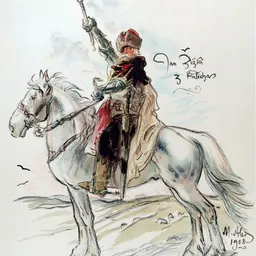
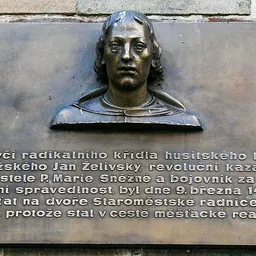
In 1419 King Wenceslaus IV, who had resisted what he considered interference in his kingdom, commanded that all ejected Catholic beneficiaries should be reinstated in their offices and revenues. Prague prepared for armed resistance. Jan Želivský, an extreme anti-Catholic preacher of Prague, led a procession to the town hall, where under the leadership of Jan Žižka of Trocnov, a noble of southern Bohemia, the building was stormed and people found inside were thrown out of the windows on to the spears and swords of the processionists, and hacked to pieces. In Kuttenberg, hundreds of captured Hussites were thrown by the miners into the shafts of disused silver mines. King Wenceslaus swore death to all the rebels, but died of a stroke in August, 1419. The next months were marked by deeds of violence; many citizens, especially Germans, had to flee. When the lawfulness of annuities was established, they were widely used in commerce; it seems that city states used them to raise compulsory loans from their citizens.
Periodic ecumenical councils A decree of the Council of Constance (Frequens) ordered that councils should be held every five years. Martin V summoned a council in 1423 that met first at Pavia and later at Siena (the "Council of Siena"). It was rather poorly attended, which gave the Pope a pretext for dissolving it, as soon as it had come to the resolution that "internal church union by reform ought to take precedence over external union". It was prorogued for seven years. The seventeenth council then met as the "Council of Basel" in February 1431 shortly before Martin's death.
Founding of the University of Louvain On December 9, 1425, Martin founded the University of Louvain or Universitas Lovaniensis in Leuven (also known as "Louvain" in both English and French), a town in what was then the Duchy of Brabant, and what is modern day Belgium.
Death Martin V died in Rome of a stroke on 20 February 1431 at the age of 62. He is buried at St. John Lateran Basilica.
Position on slavery
During the Middle Ages, slavery had fallen out of usage in Europe, with parts of the Church (eg, in England and France) denouncing enslavement of Christians, or the sale of Christian slaves to non-Christians. However, voyages and discoveries brought other continents, where slavery still existed, into European contact, raising the question of whether slavery of unbelievers and outside of Europe was permitted. According to Burton, Pope Martin V authorized a crusade against Africa in 1418, and this, coupled with a later bull of Pope Eugene IV (1441), sanctioned the Portuguese trade in African slaves. In March 1425, Davis notes that a bull was issued that threatened excommunication for any dealers in Christian slaves and ordered Jews to wear a "badge of infamy" to deter, in part, the buying of Christians. Setton states that in June 1425 Martin anathematized those who sold Christian slaves to Muslims. Maxwell states that traffic in Christian slaves was not banned, instead it was purely sales to non-Christian owners. Davidson argues that the papal bull of excommunication issued to the Genoese merchants of Caffa related to the buying and selling of Christians, but was considered ineffectual, as prior injunctions against the Viennese - including the Laws of Gazaria - made allowances for the sale of both Christian and Muslim slaves. In 1441, ten black African slaves were presented to Martin by Prince Henry of Portugal. Other scholarly sources argue that Martin supported colonial expansion. Davidson argues that Martin's injunction against slavery was not a condemnation of slavery itself, but rather driven through fear of "infidel power".
Norman Housley states that "political weakness compelled the Renaissance Papacy to adopt an acquiescent and unchallenging position when approached for requests for privileges in favour of these ventures", and that he viewed it "hard to avoid the conclusion that the pope was agreeing to whatever was asked of him by the king".
Residences
During his permanence in Rome, Martin moved his residence from the Lateran to Santa Maria Maggiore and, from 1424, the Basilica of Santi Apostoli near the Palazzo Colonna. He also frequently sojourned in towns held by his family in the Latium (Tivoli, Vicovaro, Marino, Gallicano and others).
Numbering
When the second Pope to take the name Martin was elected in 1281, there was confusion over how many Popes had taken the name before. It was believed then that there were three, so the new Pope of 1281 became Martin IV. But, in reality, those believed to be Martin II and Martin III were actually named Marinus I and Marinus II, although they are sometimes still referred to as "Martin II" and "Martin III" . This has advanced the numbering of all subsequent Popes Martin by two. Popes Martin IV–V were actually the second and third popes by that name.
Don’t just read it —
keep it.
Full-length biographies made to live with: read them, listen on the way to work, watch them tonight.
- E-book
- Audio
- Video
Instant download · yours to keep · every purchase keeps this site free
Important facts
People in Martin V's life
Named in this biography and alive at the same time
Related people
Same field, nearest in time





Contemporaries
People whose lives overlapped Martin V's



Frequently asked questions
Who was Martin V?
pope of the Catholic Church from 1417 to 1431
When was Martin V born?
Martin V was born in 1369 in Genazzano.
When did Martin V die?
Martin V died on 20 February 1431 in Rome.
What was Martin V's occupation?
Martin V was a catholic priest, writer and transitional deacon.
What nationality was Martin V?
Martin V was Italian.
Sources & further reading
Cite this page
APA: Biography.guide. (2026). Martin V. https://biography.guide/martin-v/
MLA: "Martin V." Biography.guide, https://biography.guide/martin-v/.
Chicago: "Martin V." Biography.guide. https://biography.guide/martin-v/.
Data last updated: 2026-09-20 · Spot an error? Report a correction.
Page generated 2026-09-27 05:19 UTC