
About Martin Pring
Lived 1580 – 1626 (aged 45–46). Martin Pring was an English explorer, large estate owner and sea captain.
Martin Pring (1580–1626) was an English explorer from Bristol, England who in 1603 at the age of 23 was captain of an expedition to North America to assess commercial potential; he explored areas of present-day Maine, New Hampshire, and Cape Cod in Massachusetts. Pring and his crew were the first known Europeans to ascend the Piscataqua River. It is thought that Italian explorer Giovanni da Verrazzano explored this part of the New England coast in 1524-25 looking for a route to the Far East, but he did not make landfall until he reached the St. Lawrence River further north.
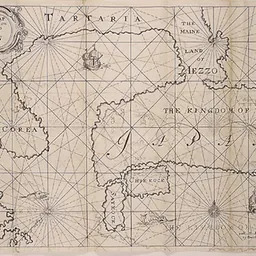
In 1606 Pring returned to America and mapped the Maine coast. Later he became a ship's master, sailing for the East India Company and exploring in East Asia. He also prevented other nations from trading in the area. By 1619 he commanded all the Company's naval forces.
Returning to England in 1621, Pring was made a member of the Virginia Company and granted land in the Chesapeake Bay area. After leaving the East India Company in 1623, he served as a privateer for England, capturing several French and Spanish ships.
Early life and education
Martin Pring was born and raised in Feniton, Devonshire. The parish registers record his baptism in the church on 23 April 1580, son of John Pringe of Thorne, (born 1540bfr., buried 6 February 1630 in Feniton) who married (on 30 June 1561 in Feniton) Mary Clarke. Historians have not discovered details about his early life, but he apparently learnt early about sailing out of Bristol. He started working on ships.
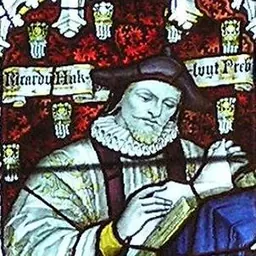
1603 North America voyage In 1603, under patronage of the mayor, aldermen and merchants of Bristol, including Richard Hakluyt, Pring at the age of 23 was appointed as captain to command a ship and bark to explore the northern parts of the territory known as Virginia in North America and assess its commercial potential, financing it against a return cargo of sassafras. His flagship, the Speedwell, was of 60 tons and 30 men. (A different Speedwell was one of those used by members of the Plymouth Colony 17 years later for their 1620 trip to America.) It was escorted by a barque, the Explorer (also known as Discoverer
The two ships first made landfall about two months later at the entrance of Penobscot Bay in what is now the state of Maine. Heading west, they visited the mouths of the Saco, Kennebunk and York rivers, all of which Pring found "to pierce not far into the land." In June, they arrived at the Piscataqua River, a tidal estuary, which is described as the westernmost and best river. Pring explored 10–12 miles into the interior by means of the Piscataqua, the center of which now forms part of the border between Maine and New Hampshire. He and his crew are the first Europeans known to have done so.
Anchoring the Speedwell at the lower harbour, Pring boarded the smaller Explorer and, aided by oarsmen, ascended the Piscataqua. They sounded its depth, which they found impressive, and explored its banks. Pring admired the area's "goodly groves and woods." They encountered the native Abenaki people. Pring's description of them provides significant details of pre-colonial Native American life.
They found sassafras in sufficient quantity in a bay, and immediately built a barricade for defense against the Native inhabitants. Pring called it "Whitson Bay" and a nearby hill "Mount Aldworth" after two of his merchant financiers in Bristol: John Whitson and Robert Aldworth. Pring's Whitson Bay has been identified with several locations in Massachusetts: Provincetown, Plymouth, where the Mayflower settlers later landed, and two locations on Martha's Vineyard, Old Town Harbor in Edgartown and Vineyard Haven.
Pring wrote that they were constantly visited by groups of Natives as large as "one hundred and twentie at once". He does not explain, however, how relations with the locals deteriorated from harmony (Pring tells the story of locals charmed by the playing of the zither ("gitterne") by a sailor, who the Natives paid tobacco, pipes and snakes skins to play, while they "danced twentie in a Ring ...) singing Io Ia Io Ia Ia Io" Salisbury suggests that it likely had to do with the abrupt conduct of the English, insensitivity to local customs (which they used only when convenient), and their use of the dogs against the indigenous peoples.
The expedition spent two months ashore at the mouth of the Pamet River on Cape Cod, in what is now Truro, Massachusetts. The explorers erected a small stockade below Cornhill, which would be noted by the Pilgrims on their subsequent journey to the New World. Subsisting on a variety of fish and game, Pring's men harvested sassafras trees for export to England.
The Explorer departed first with a load of sassafras. Pring's ship Speedwell was attacked by a large force of Wampanoag, but the ship's two Mastiffs had woken the guard and held off the warriors. As the ship departed, warriors burned the woods on shore and more than 200 shouted at the sailors. The natives had earlier fled the area where the expedition camped. Pring's men had found one of their birch bark canoes, described in detail and said to weigh 60 pounds, which was carried back to England. He departed 8 or 9 August, and reached England on 2 October.
Lord Chief Justice Sir John Popham appointed Pring to make a second voyage to North America and assess the Maine coast in 1605. His mapping work under direction of Sir Ferdinando Gorges helped influence the selection of a site for a new colony.
In 1621 Pring returned to England, where he was made a freeman of the Virginia Company. He was granted 200 acres. Although he resigned from the Dutch East Indies Company in 1623, he soon returned to sea, serving as a privateer for England. He took many prizes in French and Spanish trading ships.
Pring's short account of his first expedition to America was published in 1625 and is included in the fourth volume of Samuel Purchas's Pilgrimes. It provides valuable material about the lives of the pre-colonial Abenaki and Wampanoag, as well as Pring's descriptions of geography, plants and animals. The explorer died in 1626 at the age of 46 and was buried in Bristol, where his tomb survives in St Stephen's church.
Don’t just read it —
keep it.
Full-length biographies made to live with: read them, listen on the way to work, watch them tonight.
- E-book
- Audio
- Video
Instant download · yours to keep · every purchase keeps this site free
Important facts
People in Martin Pring's life
Named in this biography and alive at the same time




Related people
Same field, nearest in time


Contemporaries
People whose lives overlapped Martin Pring's


Frequently asked questions
Who was Martin Pring?
English explorer
When was Martin Pring born?
Martin Pring was born in 1580 in Bristol.
When did Martin Pring die?
Martin Pring died in 1626 in Bristol.
What was Martin Pring's occupation?
Martin Pring was an explorer, large estate owner and sea captain.
What nationality was Martin Pring?
Martin Pring was English.
Sources & further reading
Cite this page
APA: Biography.guide. (2026). Martin Pring. https://biography.guide/martin-pring/
MLA: "Martin Pring." Biography.guide, https://biography.guide/martin-pring/.
Chicago: "Martin Pring." Biography.guide. https://biography.guide/martin-pring/.
Data last updated: 2026-09-20 · Spot an error? Report a correction.
Page generated 2026-09-27 05:18 UTC