
About Martin Peerson
Lived 1572 – 1651 (aged 78–79). Martin Peerson was an English organist, composer and harpsichord.
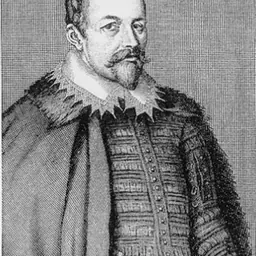
Martin Peerson (or Pearson, Pierson, Peereson) (between 1571 and 1573 – December 1650 or January 1651 and buried 16 January 1651) was an English composer, organist and virginalist. Despite Roman Catholic leanings at a time when it was illegal not to subscribe to Church of England beliefs and practices, he was highly esteemed for his musical abilities and held posts at St Paul's Cathedral and, it is believed, Westminster Abbey. His output included both sacred and secular music in forms such as consort music, keyboard pieces, madrigals and motets.
Life and career From Peerson's will and the March marriage registers, it appears that he was the son of Thomas and Margaret Peerson of March, Cambridgeshire, in England. It is believed that Martin Peerson was born in the town of March between 1571 and 1573, as records show that his parents married in 1570, but a "Margaret Peersonn" was married in 1573. It therefore seems that Thomas Peerson died a few years after 1570 and that Martin's mother remarried.
A drawing of Old St. Paul's Cathedral from the south, as it appeared between 1630 and 1666
In the 1580s, Peerson was a choirboy of St. Paul's Cathedral in London under organist Thomas Mulliner. Subsequently, he came under the patronage of the poet Fulke Greville. On May Day in 1604 Peerson's setting of the madrigal See, O See, Who is Heere Come a Maying was performed as part of Ben Jonson's Private Entertainment of the King and Queene at the house of Sir William Cornwallis at Highgate (now in London).
A letter dated 7 December 1609 states that at the time Peerson was living at Newington (now Stoke Newington, London) and had composed several lessons for the virginals, which was his principal instrument. It appears that he had Roman Catholic sympathies, for that year, on the same occasion as Jonson, he was convicted of recusancy – the statutory offence of not complying with the established Church of England. He therefore died in either December 1650 or, more likely, January 1651.
In spite of his Roman Catholic leanings, evidenced by the use of pre-Reformation Latin texts for his motets and his 1606 conviction for recusancy, Peerson's position at the heart of the Anglican establishment confirms the overall esteem in which he was held.
Music A virginal, probably English, c. 1750, from Frederick Litchfield's Illustrated History of Furniture from the Earliest to the Present Time (1892?). Peerson's keyboard music would probably have been played on such an instrument.
Peerson's powerful patrons enabled him to print and publish a considerable quantity of his music, although little remains today. The only four extant keyboard pieces – "Alman", "The Fall of the Leafe", "Piper's Paven" and "The Primerose" – appear in the Fitzwilliam Virginal Book (c. 1609 – c. 1614), one of the most important sources of early keyboard music containing 298 pieces from the late Elizabethan and early Jacobean periods. He also set to music some of William Leighton's verses, written by the latter while in prison for debt. Together with works by other composers, these were published as The Teares and Lamentatacions of a Sorrowfull Soule in 1614. This was followed two years later by Tristiae Remedium, with texts assembled by the Reverend Thomas Myriell mainly using psalm texts in the English language.
In 1620 Peerson's collection Private Musicke was published. It contained secular music, including madrigals and consort songs, for one or two voices accompanied by viols or virginals. He published some metrical psalter tunes in Thomas Ravenscroft's 1621 work The Whole Booke of Psalmes with the Hymnes Evangelicall and Songs Spirituall, and then a group of Motets or Grave Chamber Musique in 1630 with English texts and the then-fashionable keyboard continuo; the latter work contains two very fine songs of mourning.
Selected works . .
Don’t just read it —
keep it.
Full-length biographies made to live with: read them, listen on the way to work, watch them tonight.
- E-book
- Audio
- Video
Instant download · yours to keep · every purchase keeps this site free
Important facts
People in Martin Peerson's life
Named in this biography and alive at the same time




Related people
Same field, nearest in time


Contemporaries
People whose lives overlapped Martin Peerson's


Frequently asked questions
Who was Martin Peerson?
English composer, organist and virginalist
When was Martin Peerson born?
Martin Peerson was born in 1572 in March.
When did Martin Peerson die?
Martin Peerson died on 16 January 1651 in London.
What was Martin Peerson's occupation?
Martin Peerson was an organist, composer and harpsichord.
What nationality was Martin Peerson?
Martin Peerson was English.
Sources & further reading
Cite this page
APA: Biography.guide. (2026). Martin Peerson. https://biography.guide/martin-peerson/
MLA: "Martin Peerson." Biography.guide, https://biography.guide/martin-peerson/.
Chicago: "Martin Peerson." Biography.guide. https://biography.guide/martin-peerson/.
Data last updated: 2026-09-20 · Spot an error? Report a correction.
Page generated 2026-09-27 05:29 UTC