
About Martin O'Donnell
Born 1955. Martin O'Donnell is an American composer and sound designer.
Martin O'Donnell (born May 1, 1955) is an American composer, audio director, and sound designer best known for his work on video game developer Bungie's titles, including the Myth series, Oni, the Halo series, and Destiny. O'Donnell collaborated with Michael Salvatori for all of the scores; he has also directed voice talent and sound design for the Halo trilogy.
O'Donnell began his career in music writing television and radio jingles such as the Flintstones Chewable Vitamins jingle and scoring for radio stations and films. O'Donnell moved to composing video game music when his company, TotalAudio, did the sound design for the 1997 title Riven. After producing the music for Myth II, Bungie contracted O'Donnell to work on their other projects, including Oni and the project that would become Halo: Combat Evolved. O'Donnell ended up joining the Bungie staff ten days before the studio was bought by Microsoft, and was the audio director for all Bungie projects until he was fired in April 2014.
O'Donnell's score to the Halo trilogy has received critical acclaim, earning him several awards, and the commercial soundtrack release of the music to Halo 2 was the best-selling video game soundtrack of all time in the United States, and the first video game soundtrack to break the Billboard 200. He composed the scores for Halo 3 (2007), Halo 3: ODST (2009), and Halo: Reach (2010). His final work for Bungie was composing music for the 2014 video game Destiny. He successfully sued Bungie for unpaid wages and stock ownership. Subsequently, he co-founded Highwire Games and composed the score for their debut virtual reality game Golem, which was released in late 2019.
O'Donnell is the Republican nominee to represent Nevada's 3rd congressional district in the 2026, challenging incumbent Democrat Susie Lee. He was a candidate in the Republican primary for this seat in 2024.
Early life and education O'Donnell describes his upbringing as "typical"; he received piano lessons and wanted to start a rock band when he was in junior high school. His father made films while his mother taught piano. O'Donnell began his musical career in the field after one of his colleagues who knew of his music background approached him to write for his film. O'Donnell talked to his friend Michael Salvatori, who had his own recording studio, and offered to split the profits from the job with him; the two became constant partners. After fifteen years of composing for TV and radio commercials, he decided that he wanted to work on game soundtracks and move on from commercial-sounding music. "I was hoping to find some other medium that would be new and cutting-edge and sort of the Wild West," he recalled.
Video games In 1993, Dick Staub, a Chicago radio personality and friend of O'Donnell's, asked if his eighteen-year-old son Josh could visit O'Donnell's studio, as he was interested in computer games and audio. O'Donnell agreed, and in talking with Josh learned that he had friends in Spokane, Washington who were making a game O'Donnell had never heard of called Myst. Among the games Rivens developers would play in their downtime was a title called Marathon, created by Chicago-based Bungie. On returning to Chicago O'Donnell emailed a Bungie staffer and pursued them for a job. In 1999, Bungie wanted to re-negotiate the contracts for Oni, and the negotiations resulted in O'Donnell joining the Bungie team, ten days before the company was bought by Microsoft. Because he did not know how long the presentation would be, O'Donnell created "smushy" opening and closing sections that could be expanded or cut as time required to back up a rhythmic middle section. the resulting music became the basis for the Halo series' "highly recognizable" signature sound, and what has been called one of the best-known video game themes. Halos music used an interactive engine to change music in response to player's actions; this non-linear method has since become widespread. The scores for Halo and its sequel Halo 2 garnered awards such as The Game Developers Choice Award and Best Original Video Game Soundtrack from Rolling Stone. O'Donnell planned on composing the music "at the last minute", saying he had no intention of producing a large amount of music that would never be used. "It drives everyone crazy but it worked for me in the past and it works for the game in the best way. Writing music before the end just doesn't work for me," he said.
For Halo 3: ODST, a planned expansion to Halo 3 that became a full game, O'Donnell and Salvatori abandoned all previous Halo themes and started anew. Since Bungie was aiming for a smaller, detective story feel, O'Donnell felt that a jazz-influenced approach worked best in echoing the film noir atmosphere. Reach was Bungie's last Halo project. O'Donnell called the prospect of writing new music both a challenge and a relief to step away from the iconic themes of Halo.
In 2015, music from the Halo series was voted by listeners into the Classic FM Hall of Fame for the first time, reaching position 244.
Early in the video game Destinys development, O'Donnell began composition of an eight-movement symphonic suite entitled Music of the Spheres. Collaborating with Paul McCartney as well as Michael Salvatori and C. Paul Johnson, the symphony contained music to be implemented in Destiny, as well as any future installments of the franchise. On April 11, 2014, O'Donnell announced via Twitter he had been fired from Bungie "without cause". In June 2014, he filed a lawsuit against Bungie president Harold Ryan, claiming he was terminated without cause and that Ryan withheld pay for vacation and sabbatical time. In a response filed in Washington's Superior Court, Ryan denied wrongdoing. The suit was settled in June 2014, with a final arbitration ruling decided September 4, 2015, At the 18th Annual D.I.C.E. Awards, Destiny was awarded with Outstanding Achievement in Original Music Composition and Outstanding Achievement in Sound Design.
Post-Bungie In 2015, O'Donnell founded video game development studio Highwire Games. He worked on the soundtrack to their debut game Golem, a VR game which was released on November 15, 2019. A musical prequel album to the game, Echoes of the First Dreamer (The Musical Prequel to Golem) was released by video game music label Materia Collective.
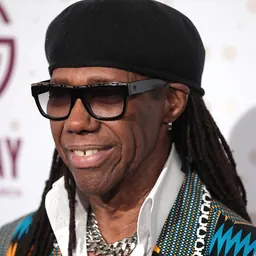
Collections O'Donnell's music has been packaged into several soundtrack collections. For Halos music, O'Donnell created "frozen" arrangements that represented an approximation of a play-through of the games. The Halo Original Soundtrack sold over 40,000 copies, and was followed by two different releases of the music to Halo 2. The two volumes of the Halo 2 Original Soundtrack were produced by Nile Rodgers, with the first album being released in sync with the video game in 2004 and became the best-selling game soundtrack of all time in the United States. The second album was released more than a year after the soundtrack had been mixed and mastered.
The Halo 3 Original Soundtrack was released in November 2007, and featured a fan contribution that was the select winner from a pool of entries judged by O'Donnell, Rodgers, and others. All of O'Donnell's work on the series was repackaged as Halo Trilogy—The Complete Original Soundtracks in December 2008, alongside preview tracks written by Halo Wars composer Stephen Rippy. The music to Halo 3: ODST was released as a two-disc set to coincide with the game's release on September 22, 2009. Reachs soundtrack was available in digital formats the same day as the game's release on September 14, 2010; the physical two-disc soundtrack was released September 28, 2010.
On September 26, 2014, O'Donnell's soundtrack to Bungie's first installment of the Destiny franchise was released, several months after his termination from the company.
Composition O'Donnell (second from right) at a Game Developers Conference 2010 talk on "The Musical Recipe of Emotion" O'Donnell has used an Apple Macintosh computer for composition. In an interview O'Donnell wished that his software would easily upgrade to newer revisions; "for the last twenty years of technology, every time a 'new' version of something comes out, the old version gets trashed and I find myself unable to do something that I used to depend on," he said. O'Donnell was involved in the implementation of his music as well as the composition, and was Bungie's Audio lead.
O'Donnell said in an interview that he feels that one problem with games is those that play music non-stop, which he feels detracts from the overall impact. Composers are forced to either write ambient music, he says, or very light music that is not emotionally driven, which he said is a detriment.
Political career O'Donnell is a self-described political conservative, and Bungie coworkers described him as the most right-leaning employee at the company. However, according to The Nevada Independent, O'Donnell had previously referred to Trump as an "idiot" in a 2016 social media post and stated that he "loathed" Trump in 2017, before later expressing support for him. He was defeated in the 2024 Republican primary, placing fourth behind Elizabeth Helgelien, Dan Schwartz, and Drew Johnson. In June 2026, O'Donnell, with Trump's endorsement, won the Republican primary for the 3rd congressional district and will face Lee in a highly competitive swing district in November.
Legal dispute with Bungie In 2019, O'Donnell began uploading material related to Destiny and the unreleased orchestral suite Music of the Spheres to his YouTube channel and Bandcamp page, including an album titled "Sketches for MotS". Bungie served him with contempt of court papers in April 2021, arguing that his possession and distribution of the material violated the 2015 injunction. On July 12, 2021, Judge Regina Cahan of the Superior Court of Washington for King County ruled in Bungie's favor, ordering O'Donnell to submit his electronic devices for forensic examination, pay Bungie all revenue earned from the Bandcamp sales, and post a court-approved statement on his social media channels acknowledging he had no legal authority to possess or distribute the material. Bungie sought approximately $100,000 in legal fees, an amount O'Donnell's representatives described as unreasonable. O'Donnell posted the court-ordered statement in November 2021. His father did voice work for Myth as the "Surly Dwarf", as well as "The Prophet of Objection" in Halo 2.
Despite his extensive work with Bungie, O'Donnell remained co-owner and president of TotalAudio.
Selected music projects for video games
Don’t just read it —
keep it.
Full-length biographies made to live with: read them, listen on the way to work, watch them tonight.
- E-book
- Audio
- Video
Instant download · yours to keep · every purchase keeps this site free
Important facts
People in Martin O'Donnell's life
Named in this biography and alive at the same time



Related people
Same field, nearest in time



Contemporaries
People whose lives overlapped Martin O'Donnell's


Frequently asked questions
Who is Martin O'Donnell?
American video game composer
When was Martin O'Donnell born?
Martin O'Donnell was born on 1 May 1955 in Westchester.
What is Martin O'Donnell's occupation?
Martin O'Donnell is a composer and sound designer.
What nationality is Martin O'Donnell?
Martin O'Donnell is American.
Sources & further reading
Cite this page
APA: Biography.guide. (2026). Martin O'Donnell. https://biography.guide/martin-o-donnell/
MLA: "Martin O'Donnell." Biography.guide, https://biography.guide/martin-o-donnell/.
Chicago: "Martin O'Donnell." Biography.guide. https://biography.guide/martin-o-donnell/.
Data last updated: 2026-09-20 · Spot an error? Report a correction.
Page generated 2026-09-27 05:20 UTC