
About Martin A. Couney
Lived 1869 – 1950 (aged 80–81). Martin A. Couney was an American and German physician, obstetrician and neonatologist.
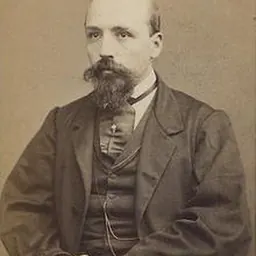
Martin Arthur Couney (born Michael Cohen, 1869 – March 1, 1950) was an American obstetrician of German-Jewish descent, an advocate and pioneer of early neonatal technology. Couney was one of the first advocates for premature babies, and his Infantoriums have become widely accredited with saving the lives of over 6,500 premature babies. Couney's cultural and professional background remain contested as Couney repeatedly changed the details about his personal background throughout his life. The ambiguity of his early life has long impacted his work and reputation. The mystery Couney enforced on his background was compounded by his lack of an official medical licence.
Couney stated he had studied in Leipzig and Berlin and that his medical licence was European, and therefore, that his doctorate was not applicable in America. However, there is no record of Couney ever studying medicine in any European institution. There is some evidence to suggest that Couney immigrated to the United States in 1888 when he was 19 years old; however this casts doubt on his claims both of having completed a medical degree and of having studied under Budin, due to the inconsistencies in this timeline. In 1907, Couney's daughter, Hildegarde Couney, was born six weeks premature, weighing just three pounds (1.4 kilos).
Apprenticeship and early career Despite the many unknowns of Couney's life, it is widely accepted that he was an apprentice in Paris under Pierre-Constant Budin, an established obstetrician known as the founder of modern perinatal medicine. The exhibit was a success and in 1897, Couney was invited by exposition promoter Samuel Schenkein to host an exhibit at the Diamond Jubilee Celebration for Queen Victoria in London to present his first infant incubator show. At the time, his ideas were deemed unscientific. It was not until his assistant, Budin, exhibited the incubators at Berlin's World Fair that the incubators gained considerable attention. The entrance fees covered not only the care of the infants, but also allowed Couney to pay his nurses a good wage and facilitated the frequent travel of the exhibit. Indeed, in 1897 as Couney was starting his career in the field of neonatology, an anonymous source in the medical journal The Lancet condemned the exposition as “an unscrupulous way to make money”. Others decried the entire notion of infant incubators in fairgrounds. In the medical journal The Lancet in 1897, an article titled "The Danger of Making a Public Show of Incubators for Babies" lamented the proximity of infant incubators to animal exhibits and peep shows, concerned that the unsanitary conditions of the animal exhibits would endanger the babies. It was also seen as inappropriate to house the infants so close to 'scandalous' peep shows, especially as the Infantorium shows attracted many families and children. The perceived dangers of 'preemie' fairground exhibits were accentuated by imposter shows, which began appearing in fairgrounds as a result of the profitability of shows such as Couney's Infantorium. These shows often did not adhere to the same cleanliness and professional standards as the well-known Infantorium. As a result, medical journals at the time condemned the shows as risky and dangerous for the premature infants.
The support of Julius Hess, who came to be known as the father of American neonatology, during the 1933 Chicago World Fair, improved Couney's reputation. The exhibit ran for two consecutive summers, over 18 months from 1933–1934. The facility cost $75,000 ($1.4 million today) to construct and was fronted by a huge sign bearing the words, “Living Babies in Incubators”. By the end of the second summer, Chicago's health commissioner had become involved in Couney's efforts. It was not long after the end of the fair that Chicago became the first American city to officially implement policies for the explicit purpose of premature infant care.
Throughout Couney's career, whenever a midway or fairground closed, Couney attempted to donate his incubators to local hospitals, though his donations were never accepted. By the year of Couney's death in March 1950, incubators had been integrated into public hospitals. Couney is now recognised as a pioneer of early infant care. His exhibits worked against the claims of the then popular eugenics movement and helped introduce the issue of premature births to the general populace. Due to the high fatality rates of prematurely born infants in the first half of the twentieth century, the topic was generally undiscussed. Couney's promotion of his Infantorium demonstrated that 'preemie' infant care could be successful, if expensive.
Eugenics movement The eugenics movement of the early twentieth century presented an ideological contrast to Couney's treatment of premature babies. The eugenics movement was reaching its peak at the beginning of the 20th century and Couney's 'Infantoriums' were often showcased in the same fairgrounds as exhibitions supporting the eugenics movement. Articles in medical journals at the time condemned Couney's treatment of premature babies, stating the babies would pass on their “deficiencies, deformities and vices” to the next generation. A film produced by an American doctor in the early 1900s was even tagged “Kill Defectives, Save the Nation” and articles in medical journals questioned efforts to save premature infants, doubting the efficacy of such efforts. The prominence of the eugenics movement led many doctors at the time to perceive Couney as farcical, and premature babies were often left to die without medical intervention.
Don’t just read it —
keep it.
Full-length biographies made to live with: read them, listen on the way to work, watch them tonight.
- E-book
- Audio
- Video
Instant download · yours to keep · every purchase keeps this site free
Important facts
People in Martin A. Couney's life
Named in this biography and alive at the same time


Related people
Same field, nearest in time




Contemporaries
People whose lives overlapped Martin A. Couney's



Frequently asked questions
Who was Martin A. Couney?
American physician
When was Martin A. Couney born?
Martin A. Couney was born in 1869 in Krotoszyn.
When did Martin A. Couney die?
Martin A. Couney died on 1 March 1950 in New York City.
What was Martin A. Couney's occupation?
Martin A. Couney was a physician, obstetrician and neonatologist.
What nationality was Martin A. Couney?
Martin A. Couney was American and German.
Sources & further reading
Cite this page
APA: Biography.guide. (2026). Martin A. Couney. https://biography.guide/martin-a-couney/
MLA: "Martin A. Couney." Biography.guide, https://biography.guide/martin-a-couney/.
Chicago: "Martin A. Couney." Biography.guide. https://biography.guide/martin-a-couney/.
Data last updated: 2026-09-20 · Spot an error? Report a correction.
Page generated 2026-09-27 05:30 UTC