
Marthe Gautier
Paediatrician and discoverer of trisomy 21
About Marthe Gautier
Lived 1925 – 2022 (aged 96). Marthe Gautier was a French pediatrician, physician and scientist.
Marthe Gautier (; 10 September 1925 – 30 April 2022) was a French medical doctor and researcher. She discovered the cause of Down syndrome being the existence of a third instance of chromosome 21 in 1958, after which the disorder was given the additional name trisomy 21. This discovery made it possible to prenatally diagnose the disorder. A colleague of hers, Jérôme Lejeune, took full credit for the discovery. In 2009, she published a testimony of her own role in the discovery.
Education Marthe Gautier discovered a vocation for pediatrics at an early age. After graduating from a boarding school in 1942, she joined her sister Paulette who was about to complete her medical studies in Paris intending to become a pediatrician. She passed the entrance exam of the "Internat des hôpitaux de Paris" and spent the next four years as an intern gaining clinical experience in pediatrics. During WWII, Paulette was killed by a stray bullet during Nazi occupation, but Gautier stayed and went on to finish her medical training; she was one of two women in the program and studied under the mentorship of Robert Debré.
In September 1955, Gautier left for Boston. She was accompanied by Jean Aicardi and Jacques Couvreur, both Fulbright scholars, and the three became the first interns of the Hôpitaux de Paris to be awarded scholarships for the US. At Harvard, one of the tasks of her internship was to be trained as a laboratory technician working in cell culture. Besides the two objectives that had been set initially, Gautier was also working part-time as a cell culture technician to obtain in-vitro cultures of fibroblast starting from aorta fragments. Turpin agreed to provide her with tissue samples from patients with Down syndrome. With very limited resources Gautier set up the first in vitro cell culture laboratory in France.
In order to count the chromosomes, Gautier worked on fibroblasts derived from connective tissue, which were easier to obtain under local anesthesia. Although the principle of cell culture is simple, there were many practical obstacles to getting it to work under the primitive conditions available to Gautier, who was forced to use a personal loan to purchase laboratory glassware and, at times, her own blood as a source of human serum. She eventually confirmed that the protocol worked, using connective tissue donated by a neighbouring surgeon, taken during planned interventions in children. She used the "hypotonic shock" method followed by drying the slide after attachment in order to disperse the chromosomes of dividing cells and make them easier to count.
Using this protocol, Gautier found that the cells of children who do not have a chromosomal abnormality have 46 chromosomes. In May 1958, she observed an additional chromosome in the cells of a trisomic boy, the first evidence of chromosomal abnormalities in individuals with Down syndrome.
Announcement of results At the time, the laboratories at the Armand-Trousseau hospital did not have a microscope capable of capturing images of the slides. Gautier entrusted her slides to Jérôme Lejeune, a fellow researcher at CNRS, who offered to take pictures in another laboratory better equipped for this task. However, according to Gautier's account, Lejeune did not return the slides, but instead reported the discovery as his own.
In January 1959, by studying new cases
The Turpin team also identified the first translocation and the first chromosomal deletion, resulting in publications Gautier co-signed.
Attribution of the discovery In April 1960, the condition was named trisomy 21. As of 1970 the Lejeune foundation started to promote the discovery as primarily the work of Lejeune. Gautier claimed in 2009 that she was put to one side by Turpin and by Lejeune who claimed responsibility for the discovery, even though it relied on the work that she had initiated and directed technically. Aware of having been manipulated, Gautier decided to abandon trisomy 21 and to return to caring for children affected by cardiopathy.
The Jérôme Lejeune Foundation asserts that a letter from Turpin to Lejeune in October 1958 shows that Lejeune, and not Gautier, identified the 47th chromosome. The Foundation maintains that there is no evidence that Gautier made the key discovery.
The ethics committee of the Inserm has issued a note in July 2014, reminding of the decisive role of Marthe Gautier, and has built upon this case to remind of the international rules for scientific publications and listing authors. The note states that "history of discovery is not identical to the history of science, and the process of validating knowledge remains very different... As the discovery of trisomy would have been impossible without the mandatory contributions of Raymond Turpin and Marthe Gautier, it is regrettable that their names were not systematically associated with this discovery, as much in terms of communication but also in the assignment of various awards and distinctions".
In July 2026, descendants of Lejeune began legal action against the director of an Avignon Festival play based on the controversy which promoted Gautier's version; the case was initially slated to be heard at the Paris tribunal in September 2026.
Medical career After the trisomy discovery Gautier left Turpin's team and applied for a position in public health care to dedicate herself to cardio-pediatrics. She was hired by Professor Nouaille in a newly opened service at the Hospital Kremlin Biccetre. Subsequently, she became Master of Research at the INSERM. and was decorated on 16 September 2014. Marthe Gautier had previously declined this distinction twice before consenting to it "by indignation towards the impudence of the Lejeune Foundation".
She was promoted to Commander of the National Order of Merit on 15 November 2018.
In 2026, Gautier was announced as one of 72 historical women in STEM whose names have been proposed to be added to the 72 men already celebrated on the Eiffel Tower. The plan was announced by the Mayor of Paris, Anne Hidalgo following the recommendations of a committee led by Isabelle Vauglin of Femmes et Sciences and Jean-François Martins, representing the operating company which runs the Eiffel Tower.
Don’t just read it —
keep it.
Full-length biographies made to live with: read them, listen on the way to work, watch them tonight.
- E-book
- Audio
- Video
Instant download · yours to keep · every purchase keeps this site free
Important facts
People in Marthe Gautier's life
Named in this biography and alive at the same time



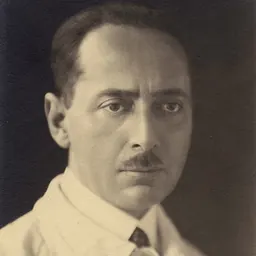
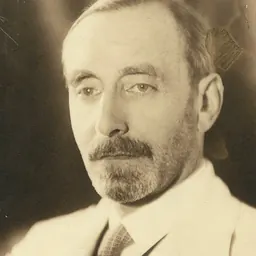
Related people
Same field, nearest in time
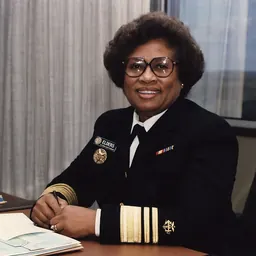



Contemporaries
People whose lives overlapped Marthe Gautier's




Frequently asked questions
Who was Marthe Gautier?
paediatrician and discoverer of trisomy 21
When was Marthe Gautier born?
Marthe Gautier was born on 10 September 1925 in Montenils.
When did Marthe Gautier die?
Marthe Gautier died on 30 April 2022 in Meaux.
What was Marthe Gautier's occupation?
Marthe Gautier was a pediatrician, physician and scientist.
What nationality was Marthe Gautier?
Marthe Gautier was French.
Sources & further reading
Cite this page
APA: Biography.guide. (2026). Marthe Gautier. https://biography.guide/marthe-gautier/
MLA: "Marthe Gautier." Biography.guide, https://biography.guide/marthe-gautier/.
Chicago: "Marthe Gautier." Biography.guide. https://biography.guide/marthe-gautier/.
Data last updated: 2026-09-20 · Spot an error? Report a correction.
Page generated 2026-09-27 05:24 UTC