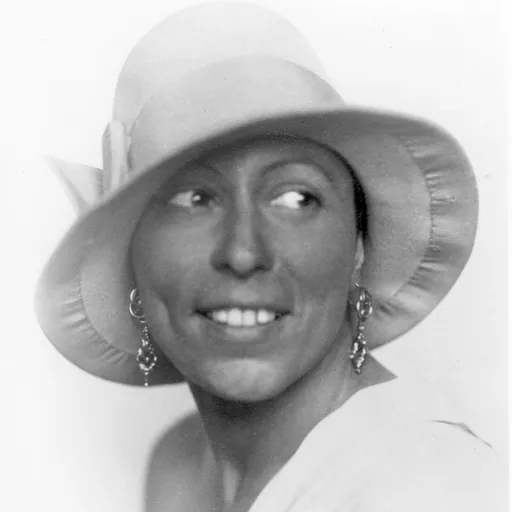
Marta Feuchtwanger
German-American curator
About Marta Feuchtwanger
Lived 1891 – 1987 (aged 96). Marta Feuchtwanger was a German physical education teacher.
Marta Feuchtwanger (née Löffler; 21 January 1891 – 25 October 1987) was the irrepressible and somewhat eccentric third child of a prosperous Munich businessman who in 1912 married the author Lion Feuchtwanger. Although they married only after Marta became pregnant with Feuchtwanger's child, the marriage lasted forty-six years and she became both a devoted wife and a huge influence on his work. The Jewish couple were forced to emigrate during the Hitler period. After her husband died in 1958 Marta Feuchtwanger spent nearly three decades as a high-profile widow in Los Angeles.
Biography Early years Marta Löffler was born and grew up in Munich. Her parents were Leopold Löffler, a successful textiles merchant, and his wife, born Johanna Reitlinger. The family adhered to Liberal Judaism: they did not flaunt their Jewish faith or insist on rigid adherence to Jewish dietary rules. Her upbringing was comfortable and the ambiance was culturally rich. She came into contact with the works of Ibsen and Nietzsche at an early age. A keen gymnast, by the time she was fourteen Marta was the leader of a gymnastics group. She met Lion Feuchtwanger through his sister Franziska Feuchtwanger in 1909. When they discovered Marta was pregnant Lion Feuchtwanger proposed marriage. Although they both rejected marriage as a "bourgeois convention", they traveled to Überlingen on the north shore of Lake Constance and went through a quiet marriage ceremony on 10 May 1912. One source describes their decision to marry as "spontaneous". Lion Feuchtwanger's family opposed the marriage. but he would never become a practical man. After the war, if they were out in a car together and experienced a puncture, it would be the fitness fanatic Marta who would change the wheel while Lion held the torch. In Munich there was also scope for networking. During this time the still little known Bertolt Brecht approached Lion Feuchtwanger for help in establishing himself in the world of theatre: lifelong friendship ensued. It was Marta Feuchtwanger who recommended Brecht to change the name of the subsequently successful play on which he was working from "Spartakus" to the more politically innocuous "Trommeln in der Nacht" ("Drums in the Night").
Berlin In 1925 Lion and Marta Feuchtwanger moved to Berlin which at this time was the vibrant cultural centre of the country. Life in Munich was becoming more threatening with the rise of the populist National Socialist movement. In 1922 there were reports of antisemitic graffiti being scrawled on the walls of the homes of Jewish writers. There were reports that if the 1923 Hitler Putsch in Munich had not been a fiasco, it would have been followed by arrest for Lion Feuchtwanger and Bertolt Brecht (who up to this point was also based in Munich). Leon was by now enjoying significant commercial success with his books and in 1931 the couple had a house of their own built in the fashionable district of Berlin-Grunewald. In Autumn 1932, with the political situation in Germany ever more polarised and deadlocked, Marta Feuchtwanger accompanied her husband on a "reading trip" to London where an English-language translation of the first volume of Feuchtwanger's Josephus trilogy was being issued. It appears that Lion continued on to North America for an extended lecture tour while Marta returned to Berlin. At the end of the year she departed for her annual skiing holiday in St Anton. While she was away, on 30 January 1933, the Hitler government took power. The situation for Jews with a high public profile deteriorated very rapidly, and the Feuchtwangers were known to be fiercely critical of the National Socialists. Marta and Lion Feuchtwanger now stayed out of Germany.
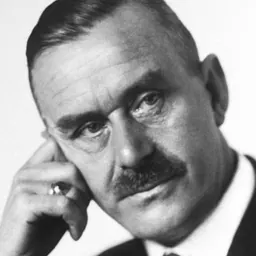
Fellow exiles included Thomas Mann who rented a villa in nearby Sanary-sur-Mer for the summer, and later recalled in his diary having met Marta at the Réserve Palace Hotel, describing her as an "Egyptian-like woman" (als eine "ägyptisch aussehende Frau"). His older brother, the novelist Heinrich Mann, also spoke of Marta's endlessly elegant and stylish deportment. During the summer of 1933, and then for the rest of the decade, the Feuchtwangers found themselves at the heart of a group of literary celebrities. The Villa Lazare became a social centre for the German emigrant-writers' colony. Marta organised reading groups and extended tea parties that often included more than sixty guests. Lion Feuchtwanger was working night and day on the second novel in his ; he is rarely mentioned in connection with his wife's heroic socialising during this period.
During their time in Sanary the Feuchtwangers learned that back in Berlin their German citizenship had been taken away. In March 1934 the two of them moved to a more substantial house, the Villa Valmer in Sanary, which remained their home till 1939/40. As before their home was a meeting point for the exiled German community. Along with her focus on domestic hospitality and her regular skiing holidays, Marta also worked on the garden while Lion remained focused on his writing, also undertaking a number of lengthy foreign trips. After the outbreak of war in September 1939 Lion and Marta Feuchtanger, like many German refugees from the Nazis, were interned several times. Dangers intensified after the German invasion of May/June 1940 and the establishment of a pro-Nazi puppet state in southern France. Helped by Marta, and with active support from the US vice-consul in Marseille, Hiram Bingham (who at one stage sheltered him in his own villa in breach of US and French laws) and by the remarkable journalist Varian Fry, the Feuchtwangers were part of a little group that managed to escape to Portbou on the other side of the Spanish frontier, in September 1940. They made the final part of the French journey dressed and equipped as a band of recreational hikers. The price extracted by the Spanish border guards was paid in the time-honoured currency of Camel cigarettes. Her next stop was at the American consulate back in Marseilles where supported by a combination of her own chutzpah and her husband's international fame she made her way to the front of a long frightened queue, winding around several streets, of people desperate to escape. She informed the consular staff that Lion was being held at Camp des Milles, a detention facility near Nimes. A vice-consular official called Miles Standish drove to the camp and somehow extracted Lion Feuchtwanger, disguised as a woman. The escape seems to have involved the world-famous novelist swimming across a little river while wearing a dress. Stopped and challenged at a roadblock on the way back to Marseille, Standish persuaded the officials that the bedraggled figure on the back seat was his mother-in-law.
California The couple crossed the Atlantic on separate ships, and when Marta arrived in the late Autumn/Fall of 1940 at New York she was greeted both by her husband and by her husband's New York publisher, their friend Ben Huebsch. It was Huebsch who had arranged for friends to show the president's wife a photograph of the great writer, Lion Feuchtwanger, looking through a barbed wire fence from inside the Camp des Milles: that had led to an unofficial (but evidently effective) presidential instruction that the couple should be issued with emergency US visas. The Feuchtwangers then took the train from New York to Los Angeles where initially they stayed with the artist-caricaturist Eva Herrmann, already one of Lion's intimates. It had been empty for several years (following the bankruptcy of a builder believed to have been involved in an earlier attempt at restoration) and was in a terrible condition. A neighbor who hugely admired Lion's writings arranged for a handyman to join them and Marta meticulously masterminded a major rebuild while the house was filled, little by little, with furniture most of which was purchased second hand. The Feuchtwangers had lost one greatly treasured private library when they lost their home in Berlin-Grunewald, and just as Lion had been able to amass a replacement book collection at their home in Sanary they had been forced by political developments to move again, leaving virtually all the books behind. Once settled in Pacific Palisades, whenever they found themselves with money to spare, the priority was to rebuild the collection which, this time, would outlast them both.
Over the next few years the Feuchtwangers repeatedly applied for US citizenship. However, during 1936/37 Lion Feuchtwanger had visited the Soviet Union. That, and the fact that some of his literary friends had had known Communist connections, seems to have been the reason that in the McCarthy era United States decisions over their applications were always postponed by the authorities. According to at least one source, during Lion Feuchtwanger's lifetime the Feuchtwanger's home at Pacific Palisades was kept under FBI surveillance. It was only shortly after Lion Feuchtwanger's death at the end of 1958 that Marta was informed that her application for citizenship had been accepted. Her initial reaction under the circumstances was to reject the status, but she thought better of it: on 10 January 1959 Marta Feuchtwanger became a US citizen. There were practical advantages. During her first fourteen years in America she had not dared to travel abroad because of the constant awareness that, as a non-citizen, there could be no guarantee that the US border guards would let her back in.
During nearly thirty years as a widow, Marta Feuchtwanger nurtured her husband's memory, becoming a significant figure in public life in the process. She provided guided tours round the house the Feuchtwangers had shared and became a regular guest at parties and official functions in the Los Angeles area. In 1964 or 1966 she was honoured by the West German president with the National Order of Merit ("Großes Bundesverdienstkreuz").
When, in January or April 1969, Marta Feuchtwanger visited West Germany for the first time it was at the invitation of Chancellor Brandt himself. It was indeed the third time that Brandt had invited her, his first invitation having been sent when he was the Mayor of West Berlin. But she had turned down the first two invitations. She attended "official functions" and was, she later reported, received with great honour ("ehrenvoll") both in West Germany and in East Germany (the two were separate states between 1949 and 1990). She was therefore in Berlin for the opening of the Feuchtwanger Archive at the . In 1987 she died, aged 96, in Santa Monica.
Following Marta Feuchtwanger's death, thanks to an initiative by the journalist-biographer the Feuchtwangers' former home, the Villa Aurora, has been redesignated as an "Artists' Residence" in which German artists from various disciplines are able to live and work for three month terms.
Don’t just read it —
keep it.
Full-length biographies made to live with: read them, listen on the way to work, watch them tonight.
- E-book
- Audio
- Video
Instant download · yours to keep · every purchase keeps this site free
Important facts
People in Marta Feuchtwanger's life
Named in this biography and alive at the same time




Related people
Same field, nearest in time




Contemporaries
People whose lives overlapped Marta Feuchtwanger's

Frequently asked questions
Who was Marta Feuchtwanger?
German-American curator (1891-1987)
When was Marta Feuchtwanger born?
Marta Feuchtwanger was born on 21 January 1891 in Munich.
When did Marta Feuchtwanger die?
Marta Feuchtwanger died on 25 October 1987 in Pacific Palisades.
What was Marta Feuchtwanger's occupation?
Marta Feuchtwanger was a physical education teacher.
What nationality was Marta Feuchtwanger?
Marta Feuchtwanger was German.
Sources & further reading
· Wikipedia: Marta Feuchtwanger
Cite this page
APA: Biography.guide. (2026). Marta Feuchtwanger. https://biography.guide/marta-feuchtwanger/
MLA: "Marta Feuchtwanger." Biography.guide, https://biography.guide/marta-feuchtwanger/.
Chicago: "Marta Feuchtwanger." Biography.guide. https://biography.guide/marta-feuchtwanger/.
Data last updated: 2026-09-22 · Spot an error? Report a correction.
Portrait: Wikimedia Commons · author & licence
Page generated 2026-09-27 05:01 UTC