
About Marshall Rogers
Lived 1950 – 2007 (aged 57). Marshall Rogers was an American comics artist, illustrator and visual artist.
William Marshall Rogers III (January 22, 1950 – March 24, 2007), known professionally as Marshall Rogers, was an American comics artist best known for his work at Marvel and DC Comics in the 1970s.
Biography
would keep my parents happy, because it's a legitimate profession, and would allow me some artistic outlet as I worked. Well, I quickly found out that the world wasn't ready for another Frank Lloyd Wright ... and I would end up doing parking lots and designing heating / cooling systems. I had wanted to draw and be imaginative. And then there was one last stumbling block, and that was calculus. ... I just couldn't grasp those weird theories that were running around.
He left college in 1971 before graduating, and returned home to New York, where he discovered his family was moving to Denver, Colorado, where his father's employer, Johns Manville, was relocating. Opting to remain, he completed a 52-page story he had begun in college and presented it in 1972 as a sample to Marvel Comics production manager John Verpoorten, who found Rogers' work wanting. The following summer he worked in a hardware store for several months, was fired, and while living on unemployment benefits approached the short-lived Atlas/Seaboard Comics and, he said:
was given a couple of very small assignments. One was to design a costume for a kung-fu character they were going to establish, and another was to do a couple of illustrations for a back-up feature in a black-and-white monster book. The kung-fu costume I designed was rejected because they said, 'It was too good,' which meant, I felt, the costume was too intricate to draw over and over. The black-and-white illustrations were used. One appeared in the back of the black-and-white monster book on a little game-page they called 'Dr. Frankenstein's Brain Twisters.' He eschewed the grey wash that was used in other black-and-white comics stories in favor of applying screentone.
With writer Steve Englehart, Rogers penciled an acclaimed run on the Batman in Detective Comics #471–476 (Aug. 1977 – April 1978), providing one of the definitive interpretations that influenced the 1989 movie Batman and that was adapted for the 1990s animated series. The Englehart and Rogers pairing was described in 2009 by comics writer and historian Robert Greenberger as "one of the greatest" creative teams to work on the Batman character. DC Comics writer and executive Paul Levitz noted in 2010: "Arguably fans' best-loved version of Batman in the mid-1970s, writer Steve Englehart and penciller Rogers's Detective run featured an unambiguously homicidal Joker...in noirish, moodily rendered stories that evoked the classic Kane-Robinson era." In their story "The Laughing Fish", the Joker is brazen enough to disfigure fish with a rictus grin, then expects to be granted a federal trademark on them, only to start killing bureaucrats who try to explain that obtaining such a claim on a natural resource is legally impossible. The supervillain Deadshot was redesigned by Rogers during his Detective Comics run. Rogers also penciled the origin story of the Golden Age Batman in Secret Origins #6 (Sept. 1986) with writer Roy Thomas and inker Terry Austin.
The two also did a sequel miniseries, Batman: Dark Detective, and worked together on other series, including Marvel's The Silver Surfer and a short run on DC's revived Mister Miracle. Englehart and Rogers' first Batman run was collected in the trade paperback Batman: Strange Apparitions , and the second run in Batman: Dark Detective . Rogers remained as artist on Detective Comics for a few issues after Englehart's departure from the series. With writer Len Wein, he co-created the third version of the supervillain Clayface. Rogers' other Batman work included a story arc in Batman: Legends of the Dark Knight that was begun by writer Archie Goodwin and completed by James Robinson.
An Englehart-Rogers story featuring Madame Xanadu that sat in inventory for a few years was published as a one-shot in 1981, in DC's first attempt at marketing comics specifically to the "direct market" of fans and collectors. In 1986, Rogers drew a graphic novel adaptation of "Demon with a Glass Hand", an episode of The Outer Limits television series, based on a script by Harlan Ellison. It was the fifth title of the DC Science Fiction Graphic Novel series.
At Eclipse Comics during the early 1980s, he collaborated on the graphic novel Detectives Inc. with writer Don McGregor, drew the Scorpio Rose series and the first Coyote series written by Englehart, and wrote and drew his own whimsical series Cap'N Quick & A Foozle. In 1992, McGregor and Rogers crafted a two part-story for Marvel in Spider-Man issues #27–28 dealing with bullying and gun violence.
Personal life Rogers' mother was Ann White Rogers. He had a sister, Suzanne, and an adopted son, Russell Young.
Awards 1978: nominated at the Eagle Awards for Favourite Artist, for Favourite Single Story for Detective Comics #472: "I am the Batman" with Steve Englehart and for Favourite Continued Story for Detective Comics #471-472 with Steve Englehart 1979: Inkpot Award 1979: nominated at the Eagle Awards for Favourite Comicbook Artist (US), for Best Continued Story for Detective Comics #475-476 with Steve Englehart, and for Best Cover for Detective Comics #476
Don’t just read it —
keep it.
Full-length biographies made to live with: read them, listen on the way to work, watch them tonight.
- E-book
- Audio
- Video
Instant download · yours to keep · every purchase keeps this site free
Important facts
People in Marshall Rogers's life
Named in this biography and alive at the same time




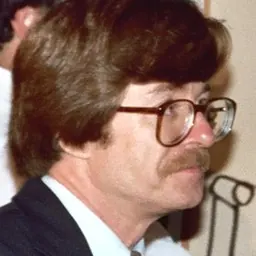
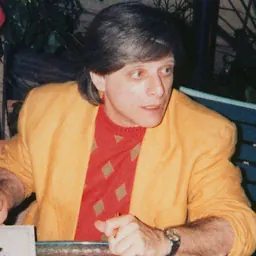
Related people
Same field, nearest in time



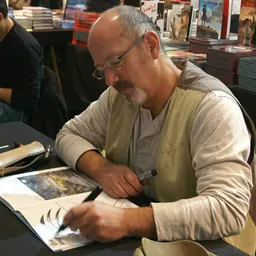
Contemporaries
People whose lives overlapped Marshall Rogers's


Frequently asked questions
Who was Marshall Rogers?
American comics artist (1950–2007)
When was Marshall Rogers born?
Marshall Rogers was born on 22 January 1950 in Flushing.
When did Marshall Rogers die?
Marshall Rogers died on 24 March 2007 in Fremont.
What was Marshall Rogers's occupation?
Marshall Rogers was a comics artist, illustrator and visual artist.
What nationality was Marshall Rogers?
Marshall Rogers was American.
Sources & further reading
Cite this page
APA: Biography.guide. (2026). Marshall Rogers. https://biography.guide/marshall-rogers-comics-artist/
MLA: "Marshall Rogers." Biography.guide, https://biography.guide/marshall-rogers-comics-artist/.
Chicago: "Marshall Rogers." Biography.guide. https://biography.guide/marshall-rogers-comics-artist/.
Data last updated: 2026-09-20 · Spot an error? Report a correction.
Page generated 2026-09-27 05:26 UTC