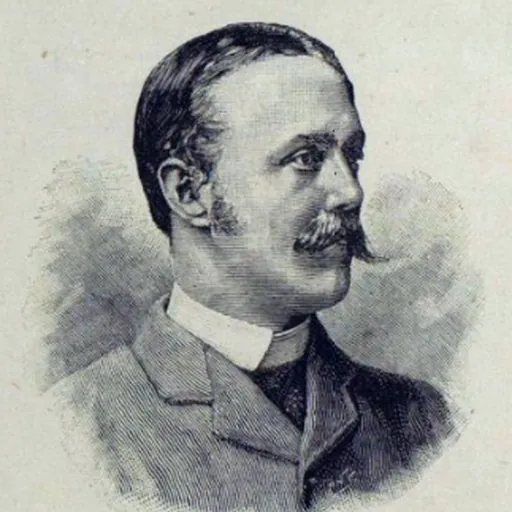
About Mark Hanbury Beaufoy
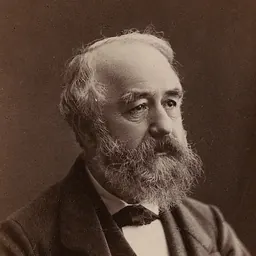
Lived 1854 – 1922 (aged 68). Mark Hanbury Beaufoy was a British association football player and politician.
Mark Hanbury Beaufoy (21 September 1854 – 10 November 1922) was an English vinegar manufacturer and Liberal member of parliament. He wrote A Father's Advice, a famous piece of verse about gun safety.
Background and early life The son of Lieutenant Commander George Beaufoy (1796–1864), and the grandson of Colonel Mark Beaufoy (1764–1827), Beaufoy, born in South Lambeth, London was educated at Eton and Trinity Hall, Cambridge. The Beaufoys had been vinegar makers since the 1740s, when Colonel Mark Beaufoy's father, another Mark Beaufoy (1718–1782) who was originally from Evesham, established a vinegar plant at Cuper's Gardens, on a site which later formed part of Waterloo Bridge. Despite being his father's youngest son, George Beaufoy succeeded to the vinegar works in 1851, when he retired from the Navy. The next year he married Anne Harvey, with whom he had three children. George Beaufoy died in 1864, leaving his business in trust for Beaufoy, his only son, who was then ten. By the time the business came into Beaufoy's hands, it was at number 87, South Lambeth Road, South Lambeth, having moved there in 1810.
The name Hanbury came into the Beaufoy family in 1743, when the Mark Beaufoy who founded the family firm married Elizabeth Hanbury, daughter of Capel Hanbury (died 1740) of Bristol and Pontymoile and of his wife Elizabeth Newton, an heiress. In 1881, he chaired a meeting which founded the Church of England Central Society for Providing Homes for Waifs and Strays, later renamed the Church of England Children's Society, and now known as The Children's Society. The object of the new organisation was "to rescue and care for children who are orphaned, homeless, cruelly treated or in moral danger, and to relieve over-burdened homes". holding the seat until 1895. He was also a Justice of the Peace.
Football In his youth Beaufoy was an amateur association football player, usually in position of outside right.
Throughout the English-speaking world, shooting people are familiar with Beaufoy's verses on gun safety called A Father's Advice. These begin: "If a sportsman true you'd be Listen carefully to me: Never, never, let your gun Pointed be at anyone..."
Beaufoy had written the verses by Christmas, 1902, when they were given to his fifteen-year-old eldest son, Henry Mark Beaufoy, together with his first gun, a 28-bore. A hundred copies of the verses were printed and given to friends. A Father's Advice quickly became well known in shooting circles, but it was not always credited to Beaufoy.
The verses appeared in many different publications, sometimes with Beaufoy's permission, more often without it. Gun-makers began to send A Father's Advice out with their cartridges, and a gamekeeper offered the verses to a Sussex magazine, claiming to have written them. It was sometimes said they were by an officer killed in the Boer war, and in a letter to The Sporting Times they were attributed to the Reverend J. L. Browne, an Eastbourne headmaster. Browne replied to say they were not his, and in November 1910 Beaufoy himself wrote in to say he was the author, adding "Perhaps they have not been wholly useless – if so, I am amply rewarded". The youngest son, Robert, lost his left arm during the First World War, but continued with his shooting, going on to become a good one-armed shot. The middle son, George Maurice Beaufoy, was killed on 10 May 1941 when a bomb fell on the family vinegar yard in Lambeth during the Second World War. He was the last of the Beaufoys to manage the business.
The Beaufoy Institute in London is named after him.
Honours (sports) Old Etonians F.C.
1879 F.A. Cup Final (winner).
Notes and references The Dispossessed: An Aspect of Victorian Social History by Barbara Kerr (1974, John Baker, London) discusses the related Thornhill & Beaufoy families and the social changes in Victorian England following the industrial revolution.
Don’t just read it —
keep it.
Full-length biographies made to live with: read them, listen on the way to work, watch them tonight.
- E-book
- Audio
- Video
Instant download · yours to keep · every purchase keeps this site free
Important facts
People in Mark Hanbury Beaufoy's life
Named in this biography and alive at the same time




Related people
Same field, nearest in time



Contemporaries
People whose lives overlapped Mark Hanbury Beaufoy's




Frequently asked questions
Who was Mark Hanbury Beaufoy?
British politician (1854-1922)
When was Mark Hanbury Beaufoy born?
Mark Hanbury Beaufoy was born on 21 September 1854.
When did Mark Hanbury Beaufoy die?
Mark Hanbury Beaufoy died on 10 November 1922.
What was Mark Hanbury Beaufoy's occupation?
Mark Hanbury Beaufoy was an association football player and politician.
What nationality was Mark Hanbury Beaufoy?
Mark Hanbury Beaufoy was British.
Sources & further reading
· Wikipedia: Mark Hanbury Beaufoy
· DBpedia: Mark Hanbury Beaufoy
Cite this page
APA: Biography.guide. (2026). Mark Hanbury Beaufoy. https://biography.guide/mark-hanbury-beaufoy/
MLA: "Mark Hanbury Beaufoy." Biography.guide, https://biography.guide/mark-hanbury-beaufoy/.
Chicago: "Mark Hanbury Beaufoy." Biography.guide. https://biography.guide/mark-hanbury-beaufoy/.
Data last updated: 2026-09-23 · Spot an error? Report a correction.
Portrait: Wikimedia Commons · author & licence
Page generated 2026-09-27 05:06 UTC