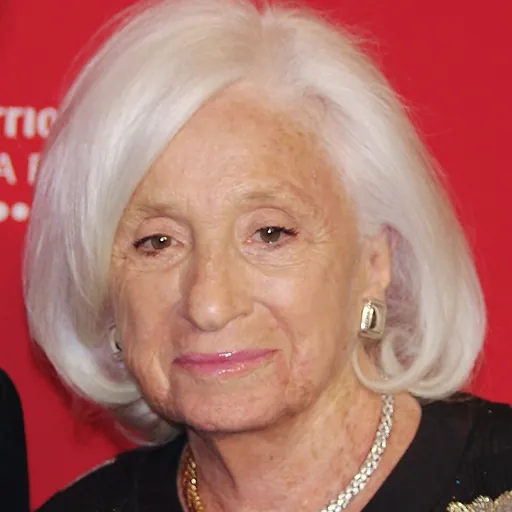
About Marion Wiesel
Lived 1931 – 2025 (aged 94). Marion Wiesel was a translator.
Marion Rose Wiesel (born Mary Renate Erster; January 27, 1931 – February 2, 2025) was an Austrian-American Holocaust survivor, humanitarian, and translator. She was married to author and fellow Holocaust survivor Elie Wiesel, the 1986 Nobel Peace Prize laureate, 14 of whose books she translated from French into English. The most important of them was her translation of his book Night, based on his Holocaust experiences in the Auschwitz and Buchenwald concentration camps. In 2001, she was awarded the Presidential Citizens Medal by U.S. president Bill Clinton, and in 2007 she was named a Commandeur de la Legion d'Honneur by French president Jacques Chirac.
Early life and education Wiesel was born Mary Renate Erster in Vienna, Austria, on January 27, 1931. Her mother, Jetta (Hubel) Erster, chose the name Mary out of a love of Americana. She and her family then fled to France, but after France was occupied by the Nazis in 1940, she and her family were interned in the Gurs internment camp, a French concentration camp. In 1942, they were able to smuggle themselves into Basel, Switzerland, where her mother had a relative with Swiss citizenship, and they lived there until 1949.
The Erster family emigrated to the United States in 1949, with the help of HIAS, then known as the Hebrew Immigrant Aid Society. Marion attended the University of Miami but primarily lived in New York City, where she worked at a bra factory and as a saleswoman at Russeks department store on Fifth Avenue in Midtown Manhattan. She became a member of the National Association for the Advancement of Colored People (NAACP) in the 1950s, marched for civil rights in the American South, and spoke out against racial segregation in the South and discrimination in the U.S.
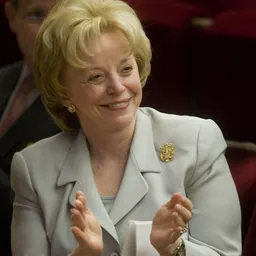
Career Marion and Elie Wiesel (center) meeting U.S. vice president Dick Cheney and Second Lady Lynne Cheney at Galicia Jewish Museum in 2005 Wiesel translated 14 of her husband's books from French into English. In addition, she wrote, narrated, and produced "Children of the Night" (1999), a documentary about the 1.3 million children who were murdered in the Holocaust. She also produced television programs, which included "The World of Elie Wiesel", "The Oslo Concert: A Tribute to Peace", and "A Passover Haggadah".
As its Executive Director and Chairperson, she headed the Beit Tzipora Centers (named for Elie Wiesel's younger sister Tzipora, who was murdered at seven years of age in Auschwitz) in Israel, as part of the Foundation's work. They provide schooling and support to over 1,000 Israeli Jewish children of Ethiopian origin every year who have faced challenges integrating into Israeli society. She was fluent in five languages.
On June 6, 1972, she gave birth to their son, Shlomo Elisha Wiesel (who goes by his middle name Elisha), naming him Shlomo after his paternal grandfather who was murdered in Buchenwald during the Holocaust, and Elisha meaning "God is salvation." Elie Wiesel wrote that their son's birth "will mark my existence forever. The little fellow in the arms of his mother will illuminate our life." In 1995, she received an honorary doctorate degree from Bar Ilan University.
In 1987, France made her Commandeur des Arts et des Lettres. In 1991, French president François Mitterrand named her Chevalier de la Legion d'Honneur. As he handed her the medal, President Clinton said that he was awarding it to her for her "mission of hope against hate, of life against death, of good over evil", and noted that out of her experience of the Holocaust, she "summoned the courage to commit her life to teaching others, especially children, about the human cost of hatred, intolerance, and racism." The award was presented to them by former U.S. Secretary of State Hillary Rodham Clinton, who said that the Wiesels "played a pivotal part in bringing the Shoah into public consciousness, and had "worked to overcome indifference toward the suffering of oppressed and marginalized populations around the world: Soviet Jews, Miskito Indians, refugees from Cambodia, prisoners from the former Yugoslavia, victims of the genocide in Darfur."
Don’t just read it —
keep it.
Full-length biographies made to live with: read them, listen on the way to work, watch them tonight.
- E-book
- Audio
- Video
Instant download · yours to keep · every purchase keeps this site free
Important facts
People in Marion Wiesel's life
Named in this biography and alive at the same time



Related people
Same field, nearest in time




Contemporaries
People whose lives overlapped Marion Wiesel's

Frequently asked questions
Who was Marion Wiesel?
Austrian-American translator (1931–2025)
When was Marion Wiesel born?
Marion Wiesel was born on 27 January 1931 in Vienna.
When did Marion Wiesel die?
Marion Wiesel died on 2 February 2025.
What was Marion Wiesel's occupation?
Marion Wiesel was a translator.
Sources & further reading
Cite this page
APA: Biography.guide. (2026). Marion Wiesel. https://biography.guide/marion-wiesel/
MLA: "Marion Wiesel." Biography.guide, https://biography.guide/marion-wiesel/.
Chicago: "Marion Wiesel." Biography.guide. https://biography.guide/marion-wiesel/.
Data last updated: 2026-09-23 · Spot an error? Report a correction.
Portrait: Wikimedia Commons · author & licence
Page generated 2026-09-27 05:07 UTC