
Marion Parker
American murder victim
About Marion Parker
Lived 1915 – 1927 (aged 12). Marion Parker was an American.
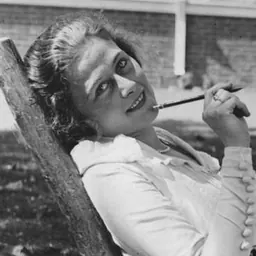
Frances Marion Parker (October 11, 1915 – December 17, 1927) was an American child who was abducted and murdered in Los Angeles, California, in 1927. Her murder was deemed by the Los Angeles Times as "the most horrible crime of the 1920s", and at the time was considered the most horrific crime in the history of California. In later decades, Parker's death was the subject of various murder ballads.
Parker went missing on December 15, 1927, after she was dismissed from her classes at Mount Vernon Junior High School in Lafayette Square: an unknown man, posing as an employee of her father, Perry, checked her out of school with the registrar, stating that her father had suffered an accident. The next day, the Parker family received ransom letters demanding $1,500 in gold. The letters were signed with various titles, including "Fate", "Death", and "The Fox"; and some had words written in Greek.
Following the orders of the ransom, Perry Parker—a bank employee—met his daughter's abductor in central Los Angeles on December 17, 1927. Upon the exchange of the money, the assailant drove away, throwing Marion's mutilated body out of his car as he fled. The child had been significantly disfigured, her limbs cut off, her eyes fixed open with wires, and her abdomen disemboweled and stuffed with rags; her limbs were discovered the next day in Elysian Park.
Parker's murderer was soon identified as William Edward Hickman (born February 1, 1908), a 19-year-old former co-worker of Perry. Law enforcement officers tracked Hickman throughout the Pacific Northwest over several days, relying on sightings in Albany and Portland, Oregon, and Seattle, Washington, where he paid shop-owners with gold certificates given to him in the ransom. He was arrested in Echo, Oregon, on December 22, 1927, and then extradited to California, where he was convicted of Parker's murder. He made a written confession, in which he explained in detail how he strangled Parker, disarticulated her limbs, and disemboweled her.
Hickman and his defense claimed that he was insane and that a deity, "Providence", told him to commit the crime. He was one of the first defendants in California to use what was then a new law, which allowed defendants to plead that they were not guilty by reason of insanity. Hickman was convicted and sentenced to death. After an unsuccessful appeal, he was executed by hanging at San Quentin State Prison in October 1928. Marion Parker was survived by her parents; elder brother; and twin sister, Marjorie.
Background
Frances Marion Parker was born October 11, 1915, in Los Angeles, California, to Geraldine (née Heisel) and Perry Marion Parker.
Abduction Parker went missing from Mount Vernon Junior High School, located in the Lafayette Square section of Los Angeles, on December 15, 1927. She was excused from class by the registrar, Mary Holt, after a man, presenting himself as an employee of the bank where Perry Parker worked, claimed that Perry had suffered an automobile accident and wished to see his daughter. The man, apparently unaware of Marion's twin sister, Marjorie, was given possession of Marion. Holt later claimed that she "never would have let Marion go but for the apparent sincerity and disarming manner of the man." Parker was reported missing later that day.
Investigation Ransom demands The next day, December 16, the first of several ransom letters were delivered via telegram to the Parker home, demanding $1,500 in $20 gold certificates. All communications by the kidnapper were signed with names such as "Fate," "Death," and "The Fox." The first telegram, addressed from Pasadena, read, "Do positively nothing till you receive special delivery letter," with what appeared to be Marion's signature on it. A second telegram, sent shortly after from Alhambra, read, "Marion secure. Use good judgment. Interference with my plans dangerous." This telegram was signed with the name George Fox.
In another of the successive telegrams, it was indicated that "no one will ever see the girl again except the angels in heaven." At 7:15 p.m., the kidnapper phoned the home, instructing Perry to depart immediately to the aforementioned location, assuring him that he would recognize Perry's car.
Perry arrived at the location alone with the ransom money at approximately 8 p.m., and was confronted by the kidnapper only moments after arriving. The suspect, driving a Chrysler coupe, pulled up next to Perry's vehicle and held him at gunpoint with a sawed-off shotgun; the unknown man had a bandana covering most of his face. During the exchange, Perry was able to see Marion seated in the passenger seat of the car, concealed up to her neck by clothing, but not visibly moving. When he called out to her, she did not respond, though her eyes were visibly open; Perry assumed she had been drugged. As soon as the money was handed over, the assailant put his vehicle into gear, moving forward, and pushed Marion's body out of the car before speeding away. Her eyes had been held open with piano wires, to give the appearance that she was still alive. and identified as having been stolen in San Diego. where they interviewed a number of tenants. On December 20, the fingerprints taken from the getaway car were identified as belonging to William Edward Hickman (born February 1, 1908), a former coworker of Perry Parker. Both men were employed by the First National Bank of Los Angeles, where Parker worked as an assistant cashier and Hickman as an officer.
The year prior, Hickman had been arrested on a complaint made by Perry regarding stolen and forged checks totaling $400. He was convicted and sentenced to probation, after which he spent six months living with family in Kansas City, Missouri, before returning to Los Angeles. Additional fingerprints lifted from the ransom letters were positively identified as Hickman's. It was subsequently discovered that Hickman had been a new resident of the Bellevue Arms, having moved into the building recently under the alias "Donald Evans."
Upon examination of Hickman's apartment, bloody footprints were discovered, evidence of a crime. He was sighted by a gas station attendant in Albany, Oregon, on the morning of December 20, 1927, driving a green Hudson vehicle later determined to have been stolen in Los Angeles.
Around 6:30 a.m. on December 22, Fred King, a gas station proprietor in Portland, spotted Hickman at his service station, where he was again purchasing gasoline. The officers had recognized him from wanted posters. In the green Hudson, the officers discovered $1,400 of the gold ransom given to him from Perry. Hickman relayed an extensive story to a journalist from the East Oregonian, in which he claimed to have participated in a kidnapping plot with the Cramers. Hickman claimed to have spent time with Parker, even having taken her to see Figures Don't Lie at the Rialto Theatre. He took responsibility for the telegrams and phone calls, but claimed that it was the Cramers who had actually carried out the murder.
Police, however, determined this to be impossible, as the Cramer brothers had been incarcerated for several months on other charges.
Conviction and execution In February 1928, a jury rejected the insanity defense and the judge sentenced Hickman to death by hanging. He appealed his conviction but it was upheld by the California Supreme Court.
In March 1928, Hickman and Welby Hunt were found guilty of first degree murder in the death of Clarence Ivy Toms. The two both received life terms after the jurors recommended mercy for each of them. Hunt was released on parole in March 1939.
On October 19, 1928, Hickman was hanged on the gallows in San Quentin Prison. One of the earliest recorded ballads inspired by the Parker murder, "Little Marian Parker", was recorded by Vernon Dalhart and Carson Robison, and released in 1928 by Columbia Records.
The 2020 revival of Perry Mason featured a premise based loosely on the murder of Marion Parker.
Don’t just read it —
keep it.
Full-length biographies made to live with: read them, listen on the way to work, watch them tonight.
- E-book
- Audio
- Video
Instant download · yours to keep · every purchase keeps this site free
Important facts
People in Marion Parker's life
Named in this biography and alive at the same time






Frequently asked questions
Who was Marion Parker?
American murder victim
When was Marion Parker born?
Marion Parker was born on 11 October 1915 in Sebastian County.
When did Marion Parker die?
Marion Parker died on 17 December 1927 in Los Angeles.
What nationality was Marion Parker?
Marion Parker was American.
Sources & further reading
· DBpedia: Murder of Marion Parker
Cite this page
APA: Biography.guide. (2026). Marion Parker. https://biography.guide/marion-parker/
MLA: "Marion Parker." Biography.guide, https://biography.guide/marion-parker/.
Chicago: "Marion Parker." Biography.guide. https://biography.guide/marion-parker/.
Data last updated: 2026-09-26 · Spot an error? Report a correction.
Page generated 2026-09-27 05:16 UTC