
About Marília Pêra
Lived 1943 – 2015 (aged 72). Marília Pêra was a Brazilian actor and film actor.
Marília Soares Pêra (22 January 1943 – 5 December 2015) was a Brazilian actress, singer and theater director. Throughout her career, she won around 80 awards, acting in 49 plays, 29 telenovelas and more than 20 films.
Career Daughter of Portuguese actor Manuel Pêra and actress of Italian descent Dinorah Marzullo, Pêra stepped onto a theater stage for the first time at the age of four, alongside her parents, who were part of the cast of Henriette Morineau's company.
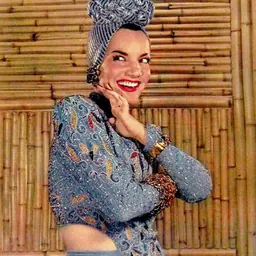
From the age of 14 to 21, she worked as a dancer and participated in musicals and revues, including Minha Querida Lady (1962), starring Bibi Ferreira. According to Pêra, she passed because the directors were looking for someone who could do stunts, which was rare at that time. She also acted in other plays such as O Teu Cabelo Não Nega (1963), a biography of Lamartine Babo, in the role of Carmen Miranda. She would return to play the role of the singer in the show A Pequena Notável (1966), directed by Ary Fontoura; at A Tribute to Carmen Miranda at Lincoln Center, New York (1975), directed by Nelson Motta; in the only performance A Pêra da Carmem, at Canecão, in 1986, and in the musical Marília Pêra canta Carmen Miranda (2005), directed by Maurício Sherman.
In 1964, Pêra defeated Elis Regina in an audition for the musical Como Vencer na Vida sem Fazer Força, both still unknown to the public at the time.
Her first appearance on television was in Rosinha do Sobrado, on Rede Globo, in 1965 and then in A Moreninha. In 1967 she made her first performance in a musical show, A Úlcera de Ouro, by Hélio Bloch.
In the 1960s, she was arrested during the performance of Chico Buarque's play Roda Viva (1968) and forced to run naked through a Polish corridor (i.e. run the gauntlet). She was arrested a second time, as she was considered a communist, when police invaded her house, scaring everyone, including her seven-year-old son, who was sleeping.
In 1969, she achieved great success in the role of the protagonist in the drama Fala Baixo Senão Eu Grito, by Leilah Assumpção, directed by Clóvis Bueno, the first play by the São Paulo playwright. For her interpretation of the complex character Mariazinha, a virgin spinster who lives in a boarding house for nuns, Pêra received the Molière Award and also the Award from the São Paulo Association of Theater Critics (APCT), currently the São Paulo Association of Art Critics (APCA). Her future husband Paulo Villaça played a thief who one night jumps out of her bedroom window with the intention of stealing. In the conversation between the two, which lasts all night, the spinster reveals her frustrations to the public and to herself.
In 1975, she recorded the LP Feiticeira, released by Som Livre.
Pêra was the actress who performed most alone on stage, managing to attract children to the difficult art of the monologue. In addition to Carmen Miranda, she played on screen and on stage the roles of famous women, such as Maria Callas, Dalva de Oliveira, Coco Chanel and the former first lady of Brazil Sarah Kubitschek. Her debut as a director took place in 1978, in the play A Menina e o Vento, by Maria Clara Machado.
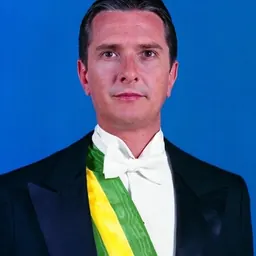
In 1992, she presented the musical Elas por Elas, for TV Globo. Alongside singer Simone and Cláudia Raia, they made public their support for then presidential candidate Fernando Collor de Mello in the 1989 elections.
In a statement made to the television program Fantástico in 2006, due to the success of her character Milu, in the telenovela Cobras & Lagartos, Pêra spoke about her career, revealing that she could not stand working with actors with bad breath and foot odor. She commented that there are many actors who do not care about hygiene, without mentioning names (a hint towards his romantic partner in the telenovela, Herson Capri). Pêra stated that she never thought she was beautiful and that she was always clumsy.
In 2008, she starred in the film Polaroides Urbanas, by Miguel Falabella, in which he played twin sisters.
In 2009, she was cast by TV Globo to play hippie Rejane Batista in the miniseries Cinquentinha, by Aguinaldo Silva. After several scenes were recorded, the actress gave up the role, causing discomfort among the network's management. Betty Lago took over the role from Pêra. Some news that circulated at the time stated that the reason for not wanting to continue with the interpretation was that he did not feel comfortable with the role.
In 2010, she was part of the cast of the series A Vida Alheia, by Miguel Falabella, on Rede Globo, as Catarina.
In January 2013, the series Pé na Cova premiered, in which Pêra played Darlene, a makeup artist at her ex-husband Ruço's (Miguel Falabella) funeral home, who lives in the suburbs. In April 2014, due to personal problems, the actress left the series, returning to recording on 11 June 2014.
At the 2015 carnival, Pêra was honored by the samba school Mocidade Alegre, in São Paulo. In August of the same year, she was honored at the Gramado Film Festival, where she received the Oscarito Trophy.
Personal life Pêra married for the first time at the age of seventeen the musician Paulo Graça Mello. They were married from 1960 to 1962. She was 18 when she gave birth to their son, Ricardo Graça Mello who became an actor. Paulo Graça Mello died in a car accident in 1969. Her second marriage was to comedian Agildo Ribeiro, from whom she separated in 1968. The following year she married actor Paulo Villaça, her partner in Fala Baixo Senão Eu Grito, separating in 1971. In 1972, she married with Nelson Motta, separating in 1980. From this marriage, her daughters, Esperança Motta and Nina were born. Her last marriage, from 1998 until her death in 2015, was to Rio de Janeiro economist Bruno Faria. She was the older sister of Sandra Pêra, granddaughter of Antônia Marzullo, also actresses, and niece of actor Abel Pêra.
Death Pêra died on 5 December 2015 in her apartment in the Ipanema neighborhood of Rio de Janeiro. In the last months of her life, she was fighting lung cancer. She had spent the year undergoing medical treatment, combating wear and tear on her hip bones, which prevented her from acting. She was buried in the São João Batista Cemetery, in the city of Rio de Janeiro.
Filmography
Television
Film Source: Mulheres do Cinema Brasileiro - Marília Pêra
Stage
1948 - Medéia 1948 - Frenesi 1948 - O casaco encantado 1957–59 - Grande Teatro Tupi / Teatro da Imperatriz da Seda 1957–59 - Espetáculos Tonelux / Teatrinho Trol 1957–59 - Ballet às Segundas / Câmera Um 1959–60 - O filé vem de fora 1960 - Circo Thiany 1960 - Boite Plaza Show Todas elas são barbadas (Cole) 1960 - Terra seca 1960 - O rei mentiroso 1960–61 - My fair Lady 1961 - Espanta gato 1960 - Divorciados 1960 - Society em baby doll 1961 - Minha querida lady 1963 - O teu cabelo não nega 1964 - The Threepenny Opera 1964 - Como vencer na vida sem fazer força 1966 - Se correr o bicho pega, se ficar o bicho come 1966 - Onde canta o sabiá 1967 - The Taming of the Shrew 1967 - A úlcera de ouro 1968 - O barbeiro de Sevilha 1968 - Roda viva 1969 - A moreninha 1970 - A vida escrachada de Joana Martini e Baby Stompanato 1971 - A pequena notável 1973 - Apareceu a Margarida 1974 - Pippin 1975 - A feiticeira 1975 - Síndica, qual é a tua? 1976 - Deus lhe pague 1977 - O exércício 1978 - A menina e o vento (acting and direction) 1979 - Pato com laranja 1980 - Brasil, da censura à abertura 1981 - Doce deleite 1983 - Adorável Júlia 1984 - Brincando em cima daquilo 1986 - The Mystery of Irma Vep (direction) 1987 - A estrela Dalva 1989 - Elas por ela 1991 - Quem matou a baronesa? 1992 - Elas por ela 1992 - A prima dona 1996 - Master Class 1997 - Padre Antonio Vieira 1998 - Toda nudez será castigada 1998 - Ciranda dos homens, carnaval dos animais 1999 - Além da linha d'água 1999 - Altar do incenso 2000 - O amigo oculto (direction) 2001 - Estrela tropical 2001 - Vitor ou Vitória 2002 - A filha da... 2003 - Marília Pêra canta Ari Barroso 2004 - Mademoiselle Chanel 2005 - Marília Pêra canta Carmen Miranda 2006 - Pasárgada! 2006 - W In Tour 2006 - Era Uma Vez... (direction) 2007 - Um lobo nada mau (direction) 2008 - Doce Deleite (direction) 2009 - Gloriosa 2012 - Herivelto como Conheci 2013 - Alô, Dolly!
Discography
Awards and nominations
Don’t just read it —
keep it.
Full-length biographies made to live with: read them, listen on the way to work, watch them tonight.
- E-book
- Audio
- Video
Instant download · yours to keep · every purchase keeps this site free
Important facts
Family & relationships
People in Marília Pêra's life
Named in this biography and alive at the same time





Related people
Same field, nearest in time





Contemporaries
People whose lives overlapped Marília Pêra's



Frequently asked questions
Who was Marília Pêra?
Brazilian actress (1943–2015)
When was Marília Pêra born?
Marília Pêra was born on 22 January 1943 in Rio de Janeiro.
When did Marília Pêra die?
Marília Pêra died on 5 December 2015 in Rio de Janeiro.
What was Marília Pêra's occupation?
Marília Pêra was an actor and film actor.
What nationality was Marília Pêra?
Marília Pêra was Brazilian.
Sources & further reading
Cite this page
APA: Biography.guide. (2026). Marília Pêra. https://biography.guide/marilia-pera/
MLA: "Marília Pêra." Biography.guide, https://biography.guide/marilia-pera/.
Chicago: "Marília Pêra." Biography.guide. https://biography.guide/marilia-pera/.
Data last updated: 2026-09-22 · Spot an error? Report a correction.
Page generated 2026-09-27 05:34 UTC