
About Marie of the Incarnation
Lived 1566 – 1618 (aged 52). Marie of the Incarnation was a French nun and religious leader.
Marie of the Incarnation, OCD, also known as Madame Acarie (1 February 1566–18 April 1618), was the foundress of the Discalced Carmel in France and later became an extern sister of the order.
Biography " La bell'Acarie" ("the beautiful Acarie"), as she was known in Paris, was born Barbara Avrillot in Paris. Her family belonged to the higher bourgeois society; her father, Nicholas Avrillot, was accountant general in the Chamber of Paris, and chancellor of Marguerite of Navarre, the first wife of Henry IV of France; while her mother, Marie Lhuillier, was a descendant of Etienne Marcel, the famous chief municipal magistrate. Avrillot was placed with the Poor Clares of the Abbey of Longchamp, where she had a maternal aunt, for her education, and acquired there a vocation for the cloister. In 1584, through obedience she married Pierre Acarie, viscount of Villemor, a wealthy young man of high standing, who was a fervent Catholic, to whom she bore seven children. Barbara Acarie was so wise in her almsgiving that during a famine the wealthy persons who desired to help the poor caused their alms to pass through her hands, and she was widely respected. In addition she was afflicted with physical sufferings, the consequences of a fall from her horse, and a very severe course of treatment left her an invalid for the rest of her life.
At the beginning of the seventeenth century, Acarie was widely known for her virtue, her supernatural gifts, and especially her charity towards the poor and the sick in the hospitals. To her residence came all the distinguished and devout people of the day in Paris, among them Madame de Meignelay, a model of Christian widows, Madame Jourdain and Madame de Bréauté, all future Carmelites, the chancellor de Merillac, Père Coton, the Jesuit, as well as Vincent de Paul and Francis de Sales, who for six months was Acarie's spiritual director.
She is reputed to have had the gift of healing, the gift of prophecy, of predicting certain events in the future, of reading hearts and of discerning spirits. At the age of twenty-seven, she received the stigmata, the grace of physical conformity to the suffering Christ. She is the first Frenchwoman the authenticity of whose stigmata (although invisible) have been attested by eminent persons. On 11 November 1611, she, with Vincent de Paul, assisted at the Mass of the installation of the Oratory in France. Among the many postulants whom Acarie received for the Carmel, there were some who had no vocation, and she conceived the idea of getting them to undertake the education of young girls, and broached her plan to her holy cousin, Mme. de Sainte-Beuve. To establish the order, they brought Ursulines to Paris and adopted their rule and name.
When her husband died in 1613, his widow settled her affairs and begged leave to enter the Carmel, asking as a favour to be received as an extern sister in the poorest community. In 1614 she entered the convent of Amiens, taking the religious name Marie of the Incarnation. Her three daughters had preceded her into the Carmel, and one of them, Margaret of the Blessed Sacrament, was sub-prioress at Amiens.
Marie of the Incarnation made her perpetual vows on 8 April 1615, in the course of a prolonged sickness. She was heavily influenced by the piety exhibited in the death of St. Francis Xavier, and asserted a desire to die as he had died, namely, bereft of all physical recourse. In 1616, for reasons of health, she was sent to the Carmelite convent at Pontoise, where she died at the age of fifty-two.
The process for beatification was opened in Rome in 1627. Acarie was beatified by Pope Pius VI in 1791. That year, another biography appeared. Another biography followed suit, as the established religion regained lost ground after the Revolutionary Period in France. Acarie's mortal remains are in the chapel of the Carmelites of Pontoise. Her feast is celebrated on 18 April.
Evelyn Underhill regarded the vigorous and saintly Madame Acarie as providing the first definite impulsion towards that interior growth which made the exquisite and urbane Francis de Sales a fit guide for the soul of St. Jane Frances de Chantal.
Don’t just read it —
keep it.
Full-length biographies made to live with: read them, listen on the way to work, watch them tonight.
- E-book
- Audio
- Video
Instant download · yours to keep · every purchase keeps this site free
Important facts
People in Marie of the Incarnation's life
Named in this biography and alive at the same time

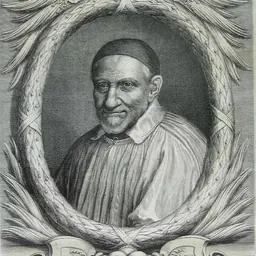


Related people
Same field, nearest in time




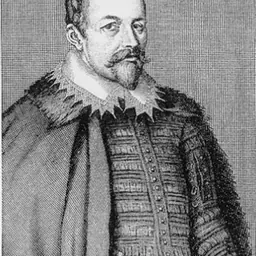
Contemporaries
People whose lives overlapped Marie of the Incarnation's



Frequently asked questions
Who was Marie of the Incarnation?
French Discalced Carmelite beatified nun
When was Marie of the Incarnation born?
Marie of the Incarnation was born on 1 February 1566 in Paris.
When did Marie of the Incarnation die?
Marie of the Incarnation died on 18 April 1618 in Pontoise.
What was Marie of the Incarnation's occupation?
Marie of the Incarnation was a nun and religious leader.
What nationality was Marie of the Incarnation?
Marie of the Incarnation was French.
Sources & further reading
· Wikipedia: Marie of the Incarnation
· DBpedia: Marie of the Incarnation (Carmelite)
Cite this page
APA: Biography.guide. (2026). Marie of the Incarnation. https://biography.guide/marie-of-the-incarnation/
MLA: "Marie of the Incarnation." Biography.guide, https://biography.guide/marie-of-the-incarnation/.
Chicago: "Marie of the Incarnation." Biography.guide. https://biography.guide/marie-of-the-incarnation/.
Data last updated: 2026-09-20 · Spot an error? Report a correction.
Page generated 2026-09-27 05:21 UTC