
About Marie Lataste
Lived 1822 – 1847 (aged 25). Marie Lataste was a French nun and mystic.
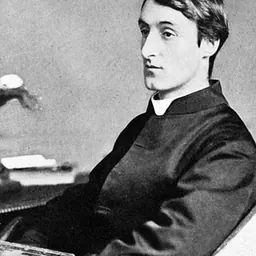
Marie Lataste (21 February 1822 at Mimbaste near Dax, Landes, France – 10 May 1847 at Rennes) was a French Roman Catholic nun and visionary. A peasant girl with minimal formal education, she wrote two lengthy volumes describing teachings which she said Jesus had revealed to her in a vision, and which were published after heavy editing by her spiritual advisor. These books were briefly popular due to their apparent prediction of the 1870 fall of the Papal States, and influenced the writings of poet Gerard Manley Hopkins.
Life
Childhood
Marie Lataste was the youngest child of François Lataste and Elisabeth Pourlet, Catholic peasants living in the village of Mimbaste. Her accounts of her own childhood describe her as intelligent and ambitious, but withdrawn and short-tempered. Her formal education was minimal, although her family owned a number of books, and she was able to borrow others from local priests. and the Catholic Encyclopedia considers the Works of Marie Lataste inauthentic due to the degree of editorial interpolation.
Edward Healy Thompson, in his biography of Lataste, describes her writings as displaying "precision and a familiar simplicity" but containing "nothing which may not be gathered from theological treatises or even catechetical instructions." He also argues that they should be considered miraculous, due to Lataste's lack of formal education and the exhaustive nature of their contents. Aldous Huxley, in his Ends and Means, cites her experiences as an example of the Dark Night of the Soul. And Coventry Patmore depicted her as Psyche in his poem The Unknown Eros.
Prophecy
Among the published Works of Marie Lataste was an account of a prophetic vision, dated sometime before 1843 and first published in 1862, which appeared to describe Pope Pius IX's 1854 proclamation of the Immaculate Conception. Jesus is described as saying to Lataste:
The day is drawing nigh when heaven and earth will unite together to accord to My Mother that which is her due in respect of her highest prerogative. Sin was never in her, and her conception was pure and without stain; it was immaculate, as was the rest of her life. It is My will that this truth should be proclaimed on earth, and acknowledged by all Christians. I have chosen to Myself a Pope, and I have inspired him with this resolution. He will ever have this thought in his mind from the time that he shall be Pope. He will gather together the Bishops of the whole world, that their voices may be heard proclaiming Mary Immaculate in her Conception, and the voices of all shall be united in his voice.
The prophecy later goes on to say:
Now affliction shall come upon the earth, oppression shall reign in the city which I love, and in which I have left My Heart. She shall be in sorrow and desolation, surrounded by enemies on all sides, like a bird taken in a net. This city will seem to succumb during [three years] and a little longer after these three years. But My Mother shall descend into the City; she will take the hands of the old man seated on a throne, and will say to him, "Behold the hour, arise: See thy enemies: I cause them to disappear one after another, and they disappear for ever. Thou hast rendered glory to me in heaven and on earth, and I will render glory to thee in heaven and on earth. Look at men — they venerate thy name, thy courage, thy power. Thou shalt live, and I will live with thee. Old man, dry thy tears; I bless thee." Peace shall return to the world, Mary shall breathe upon the tempests and appease them; her name shall be praised, blessed, and exalted for ever.
The "city which I love" was understood to refer to Rome, and after Victor Emmanuel II conquered the Papal States in 1870, the three years of oppression were widely believed to have begun. The Vicar General of Aire wrote that "the decisive test of the truth of her prophecies will be the triumph of the present Pope and the deliverance of Rome." Edward Healy argued in 1877 that "a little longer" might encompass an arbitrary number of years, but Herbert Thurston considered this test to have been unambiguously failed by 1915.
Don’t just read it —
keep it.
Full-length biographies made to live with: read them, listen on the way to work, watch them tonight.
- E-book
- Audio
- Video
Instant download · yours to keep · every purchase keeps this site free
Important facts
People in Marie Lataste's life
Named in this biography and alive at the same time


Related people
Same field, nearest in time


Contemporaries
People whose lives overlapped Marie Lataste's


Frequently asked questions
Who was Marie Lataste?
French nun (1822–1847)
When was Marie Lataste born?
Marie Lataste was born on 21 February 1822 in Landes.
When did Marie Lataste die?
Marie Lataste died on 10 May 1847 in Rennes.
What was Marie Lataste's occupation?
Marie Lataste was a nun and mystic.
What nationality was Marie Lataste?
Marie Lataste was French.
Sources & further reading
Cite this page
APA: Biography.guide. (2026). Marie Lataste. https://biography.guide/marie-lataste/
MLA: "Marie Lataste." Biography.guide, https://biography.guide/marie-lataste/.
Chicago: "Marie Lataste." Biography.guide. https://biography.guide/marie-lataste/.
Data last updated: 2026-09-20 · Spot an error? Report a correction.
Page generated 2026-09-27 05:20 UTC