
About Marianne Farningham
Lived 1834 – 1909 (aged 74). Marianne Farningham was a British biographer, hymnwriter, writer and editor.
Mary Anne Hearn (17 December 1834 – 16 March 1909) who wrote under the nom de plumes Marianne Farningham in The Christian World and for A Working Woman's Life, Eva Hope, and Marianne Hearn, was a British religious writer of poetry, biographies, prose and hymns. She was one of the few female writers in the Victorian period to emerge from the lower classes.
Life Mary Anne Hearn was born in Farningham in Kent in 1834 to Joseph Hearn and Rebecca Bowers, a religious Nonconformist couple in the Baptist denomination. In her memoir, she describes her thankfulness at having been raised in the country in a loving, devout, and amusing family. She tells the following anecdote about her father, a deacon and teetotaler who worked as a merchant:My father was very fond of his bees, and he and they were good friends. I remember once he took me up with him to perform a curious little ceremony. He had lost a cousin, and he told me he was going to inform the bees, and they would say they were sorry. He tapped the hive, and then said in a low, quiet voice, "My cousin is dead," and I felt a cold shiver pass over me, as I distinctly heard a wailing response like a buzzing moan from the bees. According to Hearn, her first piece of poetry was "an epitaph on a dead toad which we found in the garden, and which we put in a match-box and buried with great solemnity." Faced with their daughter's increasing desperation to learn how to read, Joseph and Rebecca allowed her to visit the pastor's daughter, Isabella, for basic lessons. Besides this, she was home-schooled, taught to perform domestic chores at home and to reflect on Bible stories to gain wisdom, as her family did not approve of the National School.
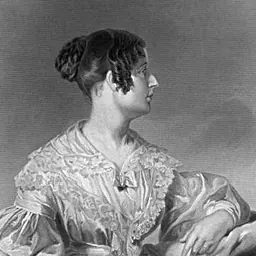
Hearn credits the poetry of Felicia Hemans as her inspiration for pursuing a poetic career, her first reading of "A Better Land" causing Hearn to feel faint and overcome with "strange, sweet emotions." Coming after the death of her little brother, the unexpected loss of her mother to what may have been consumption made Hearn the woman of the house at 12 years of age, forced to care for the home and her younger siblings. In the 1851 England Census, when she was 16 years of age, she is listed as "housekeeper" for her father's family. Hearn's further education was possible when the British and Foreign Bible Society opened a British School nearby, with Miss Eliza Hearn of Eynesford (no relation) as headmistress. With no time for reading and utterly despondent, Hearn was saved from a life of drudgery by this woman, who took an interest in the angry young girl after noticing her situation at church with "infinite compassion"; she consequently promoted Mary Anne's interest in education.
Teaching and writing career An apt pupil, Hearn eventually became a teacher at the British Schools in Bristol, then Gravesend and finally Northampton. In the 1861 England Census, Hearn lived as a lodger with the Howes family at 35 Newland, Northampton, and listed her occupation as "British Schools Teacher." In 1866, after deciding to become a full-time writer, at the instigation of her Baptist pastor Jonathan Wittemore, founder of Christian World, she joined the staff of his publication.
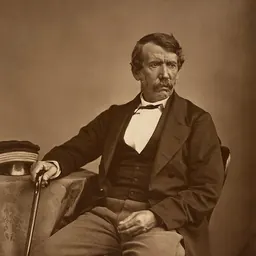
She also wrote biographies of contemporary British heroes such as Grace Darling, David Livingstone, General Gordon and Queen Victoria under the name "Eva Hope."
In 1885, she became the editor of the Sunday School Times, which she had previously written for, earning an annual sum of £50.
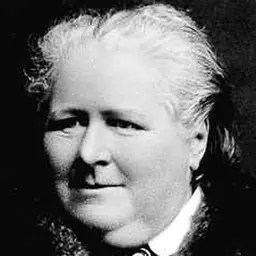
Hymns and social outreach Farningham wrote a number of hymns of which "Just as I am, Thine Own to Be" is possibly the best remembered, although it is said to be a reworking of another hymn Just As I Am written by Charlotte Elliott in 1835. Passionate about education for the lower classes, she was acquainted with similarly minded female philanthropists Mary Carpenter and Frances Power Cobbe.
Death and legacy Though she mentions having been once engaged while working as a teacher in Northampton, Hearn claims she soon came to know, "that the sheltered life of a married woman was not God's will concerning me." She never married or had children.
Farningham died in Barmouth, Wales on 16 March 1909 and was buried in Billing Road Cemetery, Northampton. She had been living at 12 Watkin-Terrace, Northampton since at least 1881. She left £602 18s 11d to her friends, a Miss Elizabeth Sharwood and George William Pettit, a tanner.
Don’t just read it —
keep it.
Full-length biographies made to live with: read them, listen on the way to work, watch them tonight.
- E-book
- Audio
- Video
Instant download · yours to keep · every purchase keeps this site free
Important facts
People in Marianne Farningham's life
Named in this biography and alive at the same time




Related people
Same field, nearest in time


Contemporaries
People whose lives overlapped Marianne Farningham's




Frequently asked questions
Who was Marianne Farningham?
British religious writer and editor
When was Marianne Farningham born?
Marianne Farningham was born on 17 December 1834 in Farningham.
When did Marianne Farningham die?
Marianne Farningham died on 16 March 1909 in Barmouth.
What was Marianne Farningham's occupation?
Marianne Farningham was a biographer, hymnwriter, writer and editor.
What nationality was Marianne Farningham?
Marianne Farningham was British.
Sources & further reading
· Wikipedia: Marianne Farningham
· DBpedia: Marianne Farningham
Cite this page
APA: Biography.guide. (2026). Marianne Farningham. https://biography.guide/marianne-farningham/
MLA: "Marianne Farningham." Biography.guide, https://biography.guide/marianne-farningham/.
Chicago: "Marianne Farningham." Biography.guide. https://biography.guide/marianne-farningham/.
Data last updated: 2026-09-26 · Spot an error? Report a correction.
Page generated 2026-09-27 05:16 UTC