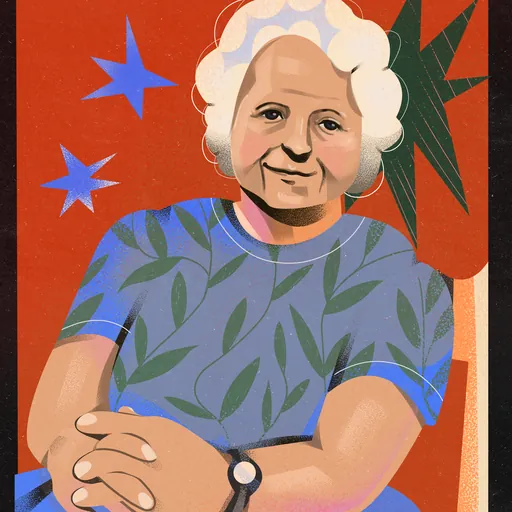
About Mariana Yampolsky
Lived 1925 – 2002 (aged 76). Mariana Yampolsky was a Mexican photographer and painter.
Mariana Yampolsky (September 6, 1925 – May 3, 2002) was a Mexican-American photographer. A significant figure in 20th-century Mexican photography, she specialized in capturing photos of common people in everyday situations in the rural areas of the country. She was born in the United States, but came to Mexico to study art and never left, becoming a Mexican citizen in 1958. Her career in photography began as a sideline to document travels and work in the arts and politics, but she began showing her photography in the 1960s. From then until her death in 2002, her work was exhibited internationally receiving awards and other recognition both during her lifetime and posthumously.
Biography
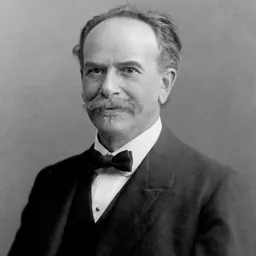
Mariana Yampolsky was born September 6, 1925, in Chicago, Illinois. Her mother was Hedwig Urbach. Her father, Oscar Yampolsky, was a Russian Jewish sculptor and painter who had immigrated to the United States to escape anti-Semitism. She was raised on her paternal grandfather's farm in Illinois until she finished high school. Her mother was from an upper-class German Jewish family whose family would later immigrate to Brazil to escape the Nazis. Her mother's uncle was Franz Boas, who established the field of anthropology in the United States. Her family was intellectual, cultured, socialist with a worldview that was later defined as "global humanism."
She received her Bachelor of Arts in the social sciences from the University of Chicago in 1944. The following year, Yampolsky went to Mexico to study and where she would spend the rest of her life, becoming a Mexican citizen in 1958.
Career While best known for her photography, she did printing, lithography and painting. She also worked as a curator and editor.
Yampolsky was a graphic arts editor for primary school textbooks, which used many reproductions of paintings, graphics, sculpture and photography. These included texts dedicated to mathematics, literature, the natural and the social sciences. These numbered about 550 million books. In the 1960s and 1970s, she worked with Leopoldo Méndez on a book called "The Ephemera and the Eternal of Mexican Popular Art." She worked as an illustrator for the newspaper "El Día" in Mexico City and a publication of the Mexican Ministry of Communications called "Annals." In 1980, she created the book "Niños" (Children), which is a heavily illustrated art book with images of children in various stages from pre-Hispanic to modern times, published by the Mexican Ministry of Public Education. Through the rest of the decade she edited various art books related to Mexican artists, food, toys, customs and ceremonies. in New York, the San Francisco Museum of Modern Art, and the Fototeca Nacional of INAH in Pachuca. It has been exhibited in over 50 one-woman exhibitions and approximately 150 group exhibitions internationally, in countries such as the United States, Great Britain, Switzerland, and Italy.
Yampolsky played an important role in building collections of images about Mexico, such as the Wittliff collections, the largest in the United States. She promoted the project in Mexico and introduced the Wittliff Foundation to almost every important photographer in Mexico.
Artistic inclination
Yampolsky's influences as a photographer include Tina Modotti, Manuel and Lola Álvarez Bravo, Nacho López and Héctor García. The classic division of Mexican art into pre Hispanic, colonial and post Independence periods appears frequently in her work along with classic Mexican images such as cacti, agave plants, horses, field workers, masks, women working and skulls with themes such as scarcity, death and poverty.
Most of her work focused on rural life in Mexico in the 20th century. It focuses on common people, which was not fashionable at the time. Yampolsky is quoted as saying that her art reflects "… moments, in the lives of people that others perhaps don't see or don't value." Her work shows the influence of her professors, the Bravos, as they show pride in the indigenous flora and people of the land, with frequent reference to the dignity of agrarian work. Her work is part of the Mexican photographic tradition of documenting the complexity of Mexican culture, including the negative aspects such as poverty, disease, resignation and lack of sanitation. Her photographs are not staged. She convinced people to go about their normal lives as she photographed. These photographs reflect her family's global humanism and anthropological background with important examples being The Exterminating Angel (1991); Waiting for the Priest (1987); Orange Stand (1969); Stacked Piñata Pots (1988) and Jailhouse Patio (1987), with the aim of showing the various causes and aspects of poverty in Mexico.
As part of her focus on rural life, an important aspect of her work was the promotion of Mexican handcrafts and folk art, of which she amassed a collection of over 3,000 pieces over her lifetime and was featured in some of her work. An exhibit dedicated to her collection was shown in 2012 at the Museo de Arte Popular in Mexico City.
Recognition
Yampolsky was recognized by the Sistema Nacional de Creadores of the Secretariat of Culture. She received Miguel Othón de Mendizábal Prize from INAH in 2000.
She was honored posthumously by the Instituto Nacional de Bellas Artes in 2012 for her life's work.
Mariana Yampolsky Foundation The Mariana Yampolsky Foundation (Fundación Mariana Yampolsky in Spanish) was founded to honor the photographer's memory and to promote her life's work. It is led by her husband, Arjen van der Sluis, who donated their house in the Tlalpan borough of Mexico City to the foundation. The foundation has over 70,000 negatives of photographs related to Yampolsky and her life. It also maintains a complete collection of the "Colibrí" series which Yampolsky edited.
Don’t just read it —
keep it.
Full-length biographies made to live with: read them, listen on the way to work, watch them tonight.
- E-book
- Audio
- Video
Instant download · yours to keep · every purchase keeps this site free
Important facts
more
Mariana, 1925-2002People in Mariana Yampolsky's life
Named in this biography and alive at the same time






Related people
Same field, nearest in time





Contemporaries
People whose lives overlapped Mariana Yampolsky's


Frequently asked questions
Who was Mariana Yampolsky?
Mexican-american photographer (1925-2002)
When was Mariana Yampolsky born?
Mariana Yampolsky was born on 6 September 1925 in Chicago.
When did Mariana Yampolsky die?
Mariana Yampolsky died on 3 May 2002 in Mexico City.
What was Mariana Yampolsky's occupation?
Mariana Yampolsky was a photographer and painter.
What nationality was Mariana Yampolsky?
Mariana Yampolsky was Mexican.
Sources & further reading
· Wikipedia: Mariana Yampolsky
Cite this page
APA: Biography.guide. (2026). Mariana Yampolsky. https://biography.guide/mariana-yampolsky/
MLA: "Mariana Yampolsky." Biography.guide, https://biography.guide/mariana-yampolsky/.
Chicago: "Mariana Yampolsky." Biography.guide. https://biography.guide/mariana-yampolsky/.
Data last updated: 2026-09-20 · Spot an error? Report a correction.
Portrait: Wikimedia Commons · author & licence
Page generated 2026-09-27 04:58 UTC