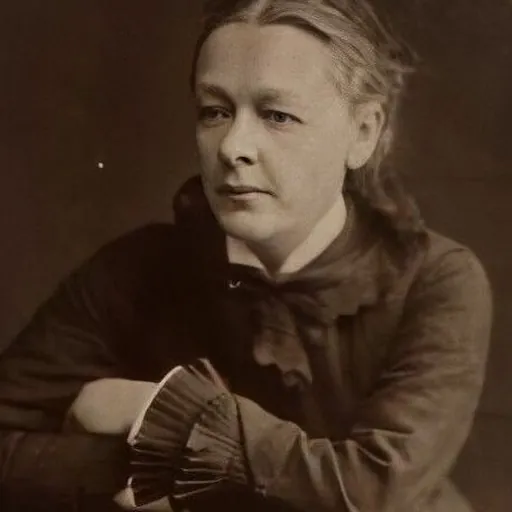
About Maria Trubnikova
Lived 1835 – 1897 (aged 62). Maria Trubnikova was a Russian writer and women's rights activist.
Maria Vasilievna Trubnikova (, née Ivasheva []; 6 January 1835 – 28 April 1897) was a Russian feminist, activist and women's rights champion in the 19th century.
Of mixed Russian and French heritage, Trubnikova was orphaned at an early age and subsequently raised by a wealthy relative. She married at 19, and she and her husband, Konstantin, had seven children. In adulthood, Trubnikova hosted a women-only salon in Saint Petersburg which became a center of feminist activism. She also maintained international connections to fellow feminists in England, France, and other countries. Alongside Anna Filosofova and Nadezhda Stasova, whom she mentored, Trubnikova was one of the earliest leaders of the Russian women's movement.
Together, the three friends and allies were referred to as the "triumvirate". They founded and led several organizations designed to promote women's cultural and economic independence, including a publishing cooperative. Subsequently, they successfully pushed government officials to allow higher education for women, although continuing opposition meant that their achievements were sometimes limited or reversed. In later life, Trubnikova experienced severe illness and personal difficulties. She died in 1897.
Early life Maria Vasilievna Ivasheva was born on 6 January 1835 in Chita, a city in the Far East of the Russian Empire. She was the second of four children. Her father, , had been a participant in the Decembrist Revolt ten years earlier and had consequently been exiled to Siberia. Ivasheva's mother, (alternately "LeDantieux"), was of French descent. She received a high-quality education (by the standards of the time) from private tutors. Filosofova and Stasova both wrote that they had been "empty-headed" before their friendship with her. In contrast to the contemporaneous Russian nihilist movement, Trubnikova and the other members of the triumvirate were not radical in public style or fashion, and retained their stations in the good graces of the upper class.
The triumvirate, alongside several others, founded the Society for Cheap Lodgings and Other Benefits for the Citizens of St. Petersburg in 1859. Efn|The "Germans" were primarily descended from German or Baltic aristocratic families, according to Stites. Employing upwards of thirty women, the cooperative focused on writing and translation. It published a wide variety of books, including textbooks, scientific works and children's stories, such as Darwin's On the Origin of Species and Hans Christian Andersen's Fairy Tales. Although it was initially successful, the cooperative never received governmental approval, and suffered financial difficulties after Trubnikova and Stasova went abroad and its bookselling partner went bankrupt. Nevertheless, under Filosofova's management, it lasted until 1879. He rejected the petition in late 1868, but under pressure from Tsar Alexander II, allowed less-advanced, mixed-gender public lectures which women could attend. These were rapidly taken up, overwhelmingly by women. Tolstoy countered by permitting the classes, but at his own quarters, where he could monitor them. The political movement in favour of women's education continued to grow, and by October 1869, the Russian government permitted a limited set of courses for women on advanced subjects (including chemistry, history, anatomy, zoology, and Russian literature). The courses began in January 1870. Attended by more than 200 women, they became known as the Vladimirskii courses, after their host from 1872, the Vladimir college.
Later life In 1869, Trubnikova left Russia temporarily to seek treatment for mental illness, and to meet Butler and Marie Goegg in Switzerland. Internationally, Trubnikova was seen as one of the foremost women of the Russian feminist movement. But by this time her husband had grown much less liberal, becoming implacably opposed to her activism. He had also lost much of her inheritance in the stock market. Upon her return to Russia in 1876, Trubnikova and her husband separated, and she struggled for money. Her daughters, who had become radical activists, began to support her, and she also worked as a writer and translator. Trubnikova hosted meetings of illegal societies at her house, and once helped hide the revolutionary Sophia Perovskaya (who coordinated the assassination of Alexander II).
By 1878, her illness resulted in her becoming much less active, although she continued to perform translations and worked for the release of two of her daughters following their arrests in 1881. Trubnikova moved to the countryside near Tambov in 1882, returning to Saint Petersburg for visits in 1888 and 1890. In 1892, she helped organize food aid in response to the famine in Tambov Oblast. A severe flu over the winter of 1893 to 1894 worsened Trubnikova's condition, and she was moved to an asylum. She died at Saint Petersburg's asylum on 28 April 1897 in the embrace of one of her daughters. Trubnikova was interred at the Novodevichy Cemetery in Saint Petersburg, and remembered by her colleagues as the pith of feminist activism in Russia.
Don’t just read it —
keep it.
Full-length biographies made to live with: read them, listen on the way to work, watch them tonight.
- E-book
- Audio
- Video
Instant download · yours to keep · every purchase keeps this site free
Important facts
People in Maria Trubnikova's life
Named in this biography and alive at the same time
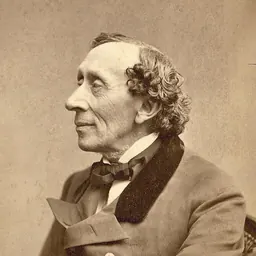
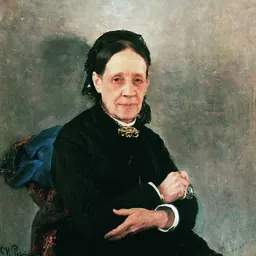
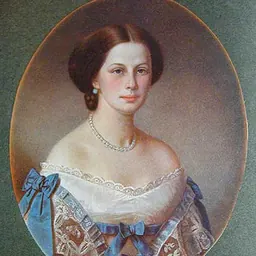


Related people
Same field, nearest in time

Contemporaries
People whose lives overlapped Maria Trubnikova's




Frequently asked questions
Who was Maria Trubnikova?
Russian philanthropist and feminist (1835–1897)
When was Maria Trubnikova born?
Maria Trubnikova was born on 6 January 1835 in Petrovsk-Zabaykalsky, Chita.
When did Maria Trubnikova die?
Maria Trubnikova died on 28 April 1897 in Tambov, Saint Petersburg.
What was Maria Trubnikova's occupation?
Maria Trubnikova was a writer and women's rights activist.
What nationality was Maria Trubnikova?
Maria Trubnikova was Russian.
Sources & further reading
Cite this page
APA: Biography.guide. (2026). Maria Trubnikova. https://biography.guide/maria-trubnikova/
MLA: "Maria Trubnikova." Biography.guide, https://biography.guide/maria-trubnikova/.
Chicago: "Maria Trubnikova." Biography.guide. https://biography.guide/maria-trubnikova/.
Data last updated: 2026-09-20 · Spot an error? Report a correction.
Page generated 2026-09-27 05:10 UTC