
Maria Teresia Ledóchowska
Polish noblewoman, religious foundress and saint, editor
About Maria Teresia Ledóchowska
Lived 1863 – 1922 (aged 59). Maria Teresia Ledóchowska was a Polish and Austrian religious, editor, missionary, founder of Catholic religious community and writer.
Mary Theresa Ledóchowska, ; 29 April 1863 – 6 July 1922), was a Polish Catholic religious sister who founded the Missionary Sisters of St. Peter Claver, dedicated to spreading Catholicism in Africa. She was beatified in 1975.
Life
Early life Mary Theresa was the eldest of seven children. Members of the Polish nobility, she and her siblings – including Wlodimir Ledóchowski, Superior General of the Society of Jesus, and St. Ursula Ledóchowska – were born in Loosdorf, the Lower Austrian estate that belonged to their parents, Count Antoni Halka-Ledóchowski and Countess Josephine Salis-Zizers.
As a young girl, Ledóchowska exhibited a great love of the arts and displayed talent as a writer. She loved society life and would dress in her finest attire to attend the balls which were part of her family's social life. She was educated by the Sisters of Loreto in Sankt Pölten and displayed a strong Catholic piety, as was typical in her family. Her social life continued until both she and father contracted smallpox in 1885. She was nursed back to health, but her father succumbed to the disease. After his death, their uncle, Cardinal Mieczysław Halka Ledóchowski, took charge of their care.
From 1885 to 1890, in order to help her family, which had fallen into economic difficulties, she obtained the position of lady-in-waiting to Princess Alice of Parma, the Grand Duchess of Tuscany, at the imperial palace in Salzburg. While living at court, she attended concerts and balls often. At the same time, she remained strictly committed to her faith. Under the guidance of a Franciscan friar who served as spiritual director to both the princess and her, she was admitted to the Third Order of St. Francis, following its spirituality and its emphasis on venerating the Passion of Christ. Pope Leo XIII had entrusted the evangelization of Africa to Lavigerie. She began to publicize his cause, and soon attracted donors.
Missionary service In 1889 Princess Alice arranged for Ledóchowska to meet Cardinal Lavigerie. He encouraged her to establish committees throughout Europe in order to combat African slavery. She proceeded to do so, starting them in Salzburg, Sankt Pölten, Vienna, and Kraków. She wrote a novel entitled Zaida to show the terrible consequences of slavery, especially for women. At the same time, she began a mission page in a Catholic periodical. These mission features, called Echo From Africa, were based on letters from missionaries serving in Africa. The page of letters evolved into a monthly magazine, which made its debut in 1889, with her as the publisher, rare for a woman in the 19th century. The magazine soon became a full-time job, and Ledóchowska left her duties at the imperial court in 1891 so as to devote all of her time and energy to the missions. The print run of the magazine peaked at 44.000 copies in 1913. It was published in multiple languages including Polish, Italian, French, and English.
Ledóchowska took up residence with a community of the Daughters of Charity of St. Vincent de Paul in Salzburg. Struggling to find financial support for her project, she lived in near poverty, surviving on a prebend granted to her by Empress Elisabeth of Austria.
The foundress traveled throughout Europe, addressing various conferences and international gatherings of Catholics to speak about the evils of slavery. Between 1891 and 1922, she gave at least 28 public lectures across Austria, Germany, France, Switzerland, Italy, and Poland to rally support and funds for the African missions.
Death Ledóchowska moved to Rome in order to run her congregation better from there. She developed tuberculosis but continued to serve the needs of the missions and her congregation. She died on July 6, 1922, in the congregation's motherhouse in Rome.
Veneration During her own lifetime, Ledóchowska had become known as the "Mother of the African missions". Immediately after she died, her sisters asked for notification of answered prayers and copies of correspondence from her. Her remains were exhumed and transferred to the chapel of the General Motherhouse in 1934. Her cause was formally opened on 26 January 1945, granting her the title of Servant of God. She was beatified by Pope Paul VI on October 19, 1975, together with Arnold Janssen, Josef Freinademetz, and Eugène de Mazenod. Her feast day is 6 July.
Colonialism Some modern scholars have analyzed Ledóchowska's work within the context of European colonialism. Historian Esaie Djomo describes her publications and the Sodality as an "infrastructure" for a "Catholicization" of Africa that sought to displace both indigenous religions and Islam, which she characterized as a "false" religion and a "destructive, gnawing worm". Djomo views her activism as a form of religious colonization.
Don’t just read it —
keep it.
Full-length biographies made to live with: read them, listen on the way to work, watch them tonight.
- E-book
- Audio
- Video
Instant download · yours to keep · every purchase keeps this site free
Important facts
People in Maria Teresia Ledóchowska's life
Named in this biography and alive at the same time
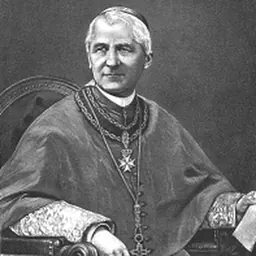

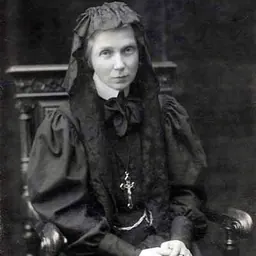

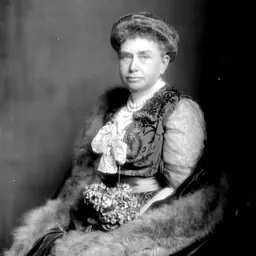
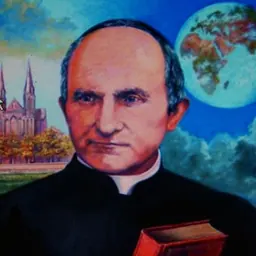
Related people
Same field, nearest in time



Contemporaries
People whose lives overlapped Maria Teresia Ledóchowska's


Frequently asked questions
Who was Maria Teresia Ledóchowska?
Polish noblewoman, religious foundress and saint, editor (1863-1922)
When was Maria Teresia Ledóchowska born?
Maria Teresia Ledóchowska was born on 29 April 1863 in Loosdorf.
When did Maria Teresia Ledóchowska die?
Maria Teresia Ledóchowska died on 6 July 1922 in Rome.
What was Maria Teresia Ledóchowska's occupation?
Maria Teresia Ledóchowska was a religious, editor, missionary, founder of Catholic religious community and writer.
What nationality was Maria Teresia Ledóchowska?
Maria Teresia Ledóchowska was Polish and Austrian.
Sources & further reading
· Wikipedia: Maria Teresia Ledóchowska
· DBpedia: Mary Theresa Ledóchowska
Cite this page
APA: Biography.guide. (2026). Maria Teresia Ledóchowska. https://biography.guide/maria-teresia-ledochowska/
MLA: "Maria Teresia Ledóchowska." Biography.guide, https://biography.guide/maria-teresia-ledochowska/.
Chicago: "Maria Teresia Ledóchowska." Biography.guide. https://biography.guide/maria-teresia-ledochowska/.
Data last updated: 2026-09-24 · Spot an error? Report a correction.
Page generated 2026-09-27 05:05 UTC