
Maria Reiche
Peruvian archaeologist, mathematician and technical translator
About Maria Reiche
Lived 1903 – 1998 (aged 95). Maria Reiche was a German and Peruvian archaeologist, mathematician and language teacher, known for Nazca Lines.
Maria Reiche Grosse-Neumann (15 May 1903 – 8 June 1998) was a German-born Peruvian mathematician, archaeologist, and technical translator. She is known for her research into the Nazca Lines, which she first saw in 1941
She was widely recognized as the curator of the lines and lived nearby to protect them. She received recognition as Doctor Honoris Causa by the National University of San Marcos and the Universidad Nacional de Ingeniería in Lima. Reiche helped gain national and international attention for the Nazca Lines; Peru established protection, and they were designated a UNESCO World Heritage Site in 1994.
Following her death, her former home in Nazca was converted into a museum, the Museo Maria Reiche. She is honored as the namesake of Maria Reiche Neuman Airport in Nazca, the Park Maria Reiche in Miraflores and of some fifty schools and other institutions in Peru. The 115th anniversary of her birth was commemorated with a Google Doodle in May 2018.
Early life and education
Maria Reiche was born in Dresden on 15 May 1903 to Felix Reiche Grosse and Ana Elizabeth Neumann. She studied mathematics, astronomy, geography and foreign languages at the Technische Universität Dresden. She learned to speak five languages. They collaborated for years on further studies of these earthworks, trying to determine how they were made and, with more difficulty, for what purpose.
Nazca lines In 1940, Reiche became an assistant to Paul Kosok, an American historian from Long Island University in Brooklyn, New York, who was studying ancient irrigation systems in Peru. Around 1946, Reiche began to map the figures represented by the Nazca Lines and determined there were 18 different kinds of animals and birds.
After Kosok left in 1948, after his second study period in Peru, Reiche continued the work and mapped the area. She used her background as a mathematician to analyze how the Nazca may have created such huge-scale figures. She found these to have a mathematical precision that was highly sophisticated. Reiche theorized that the builders of the lines used them as a sun calendar and an observatory for astronomical cycles.
Reiche used the profits from the book to campaign for preservation of the Nazca desert and to hire guards for the property and assistants for her work. Wanting to preserve the Nazca Lines from encroaching traffic after one figure was cut through by the Pan American Highway government development, Reiche spent considerable money in the effort to lobby and educate officials and the public about the lines. After paying for private security, she convinced the government to restrict public access to the area. She sponsored construction of a tower near the highway so that visitors could have an overview of the lines to appreciate them without damaging them. Reiche contributed to the lines becoming a World Heritage site in 1994.
Personal life Reiche once confessed that at age 40, she passionately fell in love with one of her students, but never said the name. She only said he was "a red-haired man with freckles". According to her long-time friend Clorinda Caller, he was a young Jew who may have had poliomyelitis. This man spoke several languages and also worked as a UN translator.
Reiche's partner was Amy Meredith, who not only was the first person to fund her work, but also played a key role in Maria's interest in the Nazca lines, since she ran a tearoom — called the "Panamerican" — where many intellectuals gathered, including Julio C. Tello and Paul Kosok. It was in this place where Reiche got to meet both scientists. The death of Meredith in January 1960 had a huge impact on Maria's life.
Reiche's health deteriorated as she aged. She used a wheelchair, suffered from skin ailments, and lost her sight. In her later years, she also suffered from Parkinson's disease. At the age of 90 she published Contributions to Geometry and Astronomy in Ancient Peru. Maria Reiche died of ovarian cancer on 8 June 1998,
Don’t just read it —
keep it.
Full-length biographies made to live with: read them, listen on the way to work, watch them tonight.
- E-book
- Audio
- Video
Instant download · yours to keep · every purchase keeps this site free
Important facts
People in Maria Reiche's life
Named in this biography and alive at the same time




Related people
Same field, nearest in time
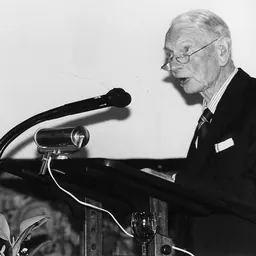
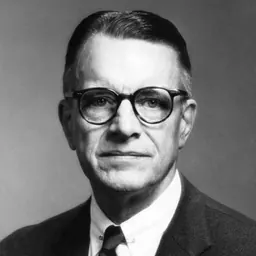
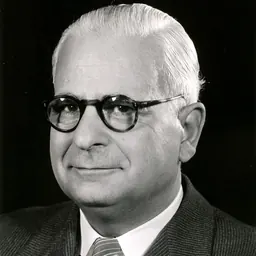

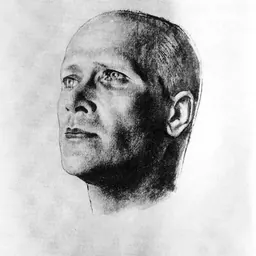

Contemporaries
People whose lives overlapped Maria Reiche's
Frequently asked questions
Who was Maria Reiche?
Peruvian archaeologist, mathematician and technical translator
When was Maria Reiche born?
Maria Reiche was born on 15 May 1903 in Dresden.
When did Maria Reiche die?
Maria Reiche died on 8 June 1998 in Lima.
What was Maria Reiche's occupation?
Maria Reiche was an archaeologist, mathematician and language teacher.
What was Maria Reiche known for?
Maria Reiche was known for Nazca Lines.
What nationality was Maria Reiche?
Maria Reiche was German and Peruvian.
Sources & further reading
Cite this page
APA: Biography.guide. (2026). Maria Reiche. https://biography.guide/maria-reiche/
MLA: "Maria Reiche." Biography.guide, https://biography.guide/maria-reiche/.
Chicago: "Maria Reiche." Biography.guide. https://biography.guide/maria-reiche/.
Data last updated: 2026-09-20 · Spot an error? Report a correction.
Page generated 2026-09-27 05:23 UTC