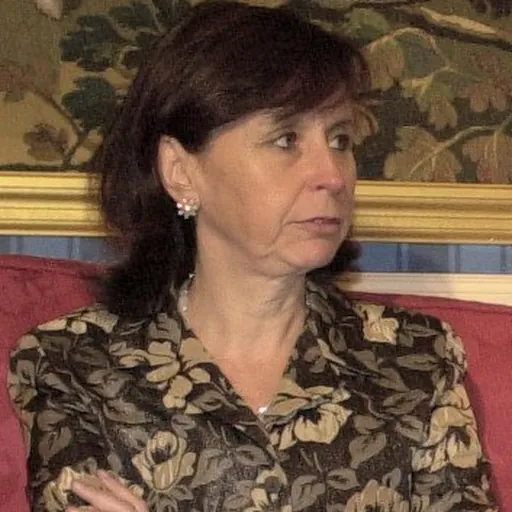
About María Emilia Casas Baamonde
Born 1950. María Emilia Casas Baamonde is a Spanish jurist.
María Emilia Casas Baamonde (born 30 November 1950) is a Spanish jurist. She was the country's first woman Professor of Labor and Social Security Law. In 1998, she joined the Constitutional Court of Spain, becoming the youngest member in the history of the institution. In 2004, she was the Constitutional Court's first woman president, and she continued in that role until 2011. During her presidency, progress was made in anti-discrimination and equality law.
Biography Originally from Monforte de Lemos, where a street is named for her grandfather Roberto Baamonde Robles, a politician and cavalry commander, María Emilia Casas was born in León, where her father was the property registrar.
She studied law at the Complutense University of Madrid, where she graduated Premio Extraordinario, and received a Ph.D. with the same qualification as a pupil of the Complutense professor emeritus of Law. She also has a degree in Philosophy and Literature.
In addition to holding the Chair of Labor Law and Social Security in Spain, she taught master's degree classes in Occupational Risk Management at the University of Salamanca.
In 1998, shortly before becoming a member of the Constitutional Court at the request of the government, she was part of the group of experts on labor standards charged with drafting the law regulating stable part-time work. Popularly known as the , it established the automatic extension of the Presidency of the Court while there was no renewal of the judges whose term had expired. According to the appeals filed by the People's Party to the Plenary of the Constitutional Court, this usurped the mandate established in Article 160 of the Spanish Constitution, to elect the President of said Court every three years. This amendment, collected in article 16.3 of the Organic Law of the Constitutional Court (LOTC), was declared in accordance with the Constitution in Constitutional Court Decision 47/2008, of 9 April.
In 2007, she was subjected to harsh criticism and accused of a crime of improper counseling. A woman contacted Casas by telephone, facilitated by a neighbor, to ask her opinion about the conflicts with her ex-husband and the recovery of custody of her daughter. It was the lawyer María Dolores Martín Pozo who told the Court President that she had gone through a judicial trial and wanted to regain custody of her daughter. Casas received documentation and maintained telephone conversations with the latter, telling her that she should "provoke a judicial action to reach the Constitutional Court en amparo", and that she should be called if she did appeal to the Court. Said woman was later arrested on charges of hiring a hitman to kill her ex-husband. The plot was discovered due to a wiretap, decreed by a judge, on the woman's telephone. Casas was accused of a crime of improper counseling. In June 2008, the Criminal Chamber of the Supreme Court closed the case. while attributing the constitutional dimension to all those measures aimed at facilitating the reconciliation of work and family life of workers (STC 3/2007). It also set insurmountable limits based on the dignity of the person and on the free development of the personality, on the entrepreneurial capacity of employers to control the free time of workers (STC 192/2003). In short, it contributed to extending the protection of the rights to strike and freedom of association to the contexts of productive decentralization (STC 75/2010).
During Casas' Presidency, the Court also endorsed the constitutionality of the , recognizing the specific characteristics of this criminal phenomenon, the needs of protection of the victim, and the greater social reproach of aggression against the wife or partner. In the application of the anti-discrimination law – highlighted by Inmaculada Montalbán, president of the Observatory Against Gender Violence – she followed the path marked by the commitments made by Spain at an international and European level.
She was responsible for drafting the seventh and final version of the ruling on the Statute of Autonomy of Catalonia, after not previously achieving sufficient support in the Plenary Session of the Court.
She left the presidency of the Court in January 2011.
In 2014, she joined the Ejaso Law Firm as an attorney.
In November 2018, she was appointed as a member of the Council of State of Spain.
Honorary distinctions Pelayo Award for Jurists of Recognized Prestige (2006) Extraordinary Honor Award for a career of dedication and prestige in the legal-labor field, granted by the National Association of Labor Lawyers (2007)
Personal life María Emilia Casas was married to the Professor of Administrative Law and advisor to the Bank of Spain, Jesús Leguina Villa (1942–2016), and has four children.
Don’t just read it —
keep it.
Full-length biographies made to live with: read them, listen on the way to work, watch them tonight.
- E-book
- Audio
- Video
Instant download · yours to keep · every purchase keeps this site free
Important facts
Family & relationships
People in María Emilia Casas Baamonde's life
Named in this biography and alive at the same time

Related people
Same field, nearest in time



Contemporaries
People whose lives overlapped María Emilia Casas Baamonde's




Frequently asked questions
Who is María Emilia Casas Baamonde?
Spanish jurist
When was María Emilia Casas Baamonde born?
María Emilia Casas Baamonde was born on 30 November 1950 in Monforte de Lemos.
What is María Emilia Casas Baamonde's occupation?
María Emilia Casas Baamonde is a jurist.
What nationality is María Emilia Casas Baamonde?
María Emilia Casas Baamonde is Spanish.
Sources & further reading
· Wikipedia: María Emilia Casas Baamonde
Cite this page
APA: Biography.guide. (2026). María Emilia Casas Baamonde. https://biography.guide/maria-emilia-casas-baamonde/
MLA: "María Emilia Casas Baamonde." Biography.guide, https://biography.guide/maria-emilia-casas-baamonde/.
Chicago: "María Emilia Casas Baamonde." Biography.guide. https://biography.guide/maria-emilia-casas-baamonde/.
Data last updated: 2026-09-21 · Spot an error? Report a correction.
Portrait: Wikimedia Commons · author & licence
Page generated 2026-09-27 05:00 UTC