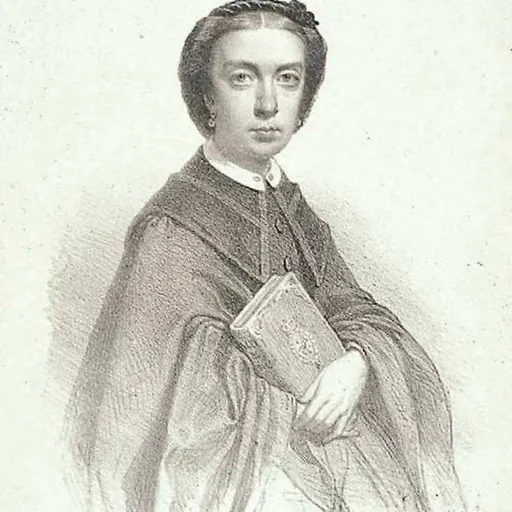
María del Pilar Sinués
Spanish writer, editor, novelist, poet, journalist
About María del Pilar Sinués
Lived 1835 – 1893 (aged 57). María del Pilar Sinués was a Spanish writer, translator, journalist, editor, novelist and poet.
María del Pilar Sinués y Navarro de Marco (19 December 1835, Zaragoza, Aragon - 20 November 1893, Madrid), was a popular and prolific 19th-century Spanish writer of various genres including novels, poetry, and informative works. She used the pen name Laura for her journalistic articles in the magazine she directed. Sinues lived entirely off of her literary production. Her 1857 conduct book, El ángel del hogar (The angel of the house), was reprinted for at least thirty years, the last edition being published in 1881. She was the founder and editor-in-chief of two popular women's magazines, El Angel del Hogar (1864-1869) and Flores y Perlas (1883-1884).
Early life and education María del Pilar Sinués y Navarro was born on 19 December 1835 in Zaragoza, Aragon, Spain. She was the daughter of Pedro Sinués y Yoldi and Flora Navarro. She received her education at the convent of Santa Rosa, Between 1853 and 1854, Sinues published eleven poems in the newspaper El Avisador and five in El Esparterista. The poems are of religious, family, and political themes; an example of the latter is that she dedicated a poem to the "undefeated Duke of la Victoria" in addition to other poems. Sinues published her first collection of poems Mis vigilias in 1854.
Madrid
In 1856, she married by proxy the Valencian journalist and comedian José Marco y Sanchís (1830-1895), whom she only knew from letters due to their mutual admiration for her works. The marriage proposal arose from a meeting of bohemian poets among whom was Gustavo Adolfo Bécquer, who after reading one of Sinues' poems and in the face of general enthusiasm, provoked in Marco y Sanchís the desire to marry Sinues. Present in literary forums and gatherings, she acquired great renown and was rewarded with tributes and awards.
Sinues directed her weekly magazine El ángel del hogar (The angel of the home) between 1864 and 1869, a publication on literature, theater, fashion, and work. From this magazine, she supported the Glorious Revolution of 1868 and dedicated articles on the initiatives of female instruction advocated by the Complutense University of Madrid in 1869. She was appointed secretary but resigned immediately, perhaps to avoid spoiling her public image. She was aware of her personal evolution, which was accentuated by her marital separation. In 1879, she defended literary professionalization. In 1883, she launched the first issue of Flores y Perlas, directed by her and written only by women, but nothing further is recorded about the continuity of the magazine. Two of Sinues' works were declared official texts in all schools: La ley de Dios: Leyendas (The Law of God: Legends) (1858) and A la luz de la lámpara: Cuentos morales (By the Light of the Lamp: Moral Tales) (1862). In Zaragoza, there is a street named after her. The University of Zaragoza has a room named after him.
Themes
Her works contained educational and moralizing themes, often exemplifying the ideal of women's behavior as mothers and wives. Her texts include a pedagogy full of romanticism. She intended to teach by delighting the reader. Her situation as a writer and pedagogue led to an indoctrination that was not reflected in the female characters of her works, which led to a conflict in her educational task. In her works, she designed the model of the woman of her time: good daughters, with a suitable husband; mothers, responsible for the education of their children, and with an eye to the general happiness of their family. All this was presented from a Catholic and conservative point of view.
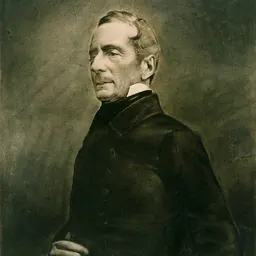
Sinués obtained her great literary success because she adhered to the "Elizabethan canon" that associated aesthetic beauty with works of Christian inspiration and moralizing. The undisputed influence came from the theoretical works of the French poet Alphonse de Lamartine on Christian idealism that endorsed women's literature of sentimental, religious, domestic, and landscape themes, where Sinués came in. The first works of Sinués are medieval legends, with a clear romantic influence. Later, she wrote costumbrist works in the style of Böhl de Faber, and in the moralist and educational El ángel del hogar, Sinues will enumerate how a virtuous writer who is also a daughter, sister, mother, and wife should be; her private life must be blameless.
When she moved to Madrid, she expanded her literary work by writing manuals of conduct for the Christian family, bulletins, and translations of French novels. Little by little, she moved away from Elizabethan precepts and entered into the realist aesthetic that was being imposed in the French novel. An example would be Fausta Sorel in 1861. Also between 1864 and 1869, she wrote a nine-volume Galería de mujeres célebres (Gallery of Famous Women), which includes female trajectories far from "the angel of the home".
Selected works Novels
Rosa, 1851. La diadema de perlas, 1857. Margarita, 1857. Premio y castigo, 1857. (Dedicated to Carolina Coronado.) Un nido de palomas, 1861. Fausta Sorel, 1861. A la sombra de un tilo, 1862. El lazo de flores, 1862. (Novel.) El sol de invierno, 1863. (The novel was adapted for the stage by her husband.) Celeste, 1863. La senda de la gloria, 1863. La Virgen de las lilas, 1865. El almohadón de rosas, 1864. No hay culpa sin pena, 1864. El alma enferma, 1864. Querer es poder, 1865. A río revuelto, 1866. La familia cristiana. La corona nupcial, 1871. Volver bien por mal, 1872. Las alas de Ícaro, 1872. El último amor, 1872. Una hija del siglo, 1873. El becerro de oro, 1875.
Folklore
Luz de Luna, 1855. (Historical legend set in the 15th century) Cantos de mi lira, 1857. (Legends in verse. In the current of Romanticism.) Amor y llanto, 1857. (Historical legends.) La Ley de Dios, 1858. (Collection of legends based on the Ten Commandments. One of her most acclaimed works.) ¡¡Pobre Ana !!, 1861. (Historical legend.) A la luz de una lámpara, 1862. (Compilation of moral tales.) Galería de mujeres célebres, 1868. (Biographical legends.) El cetro de flores, 1865. (Collection of historical legends.) Cuentos de color de cielo, 1867. (Collection of stories and tales.)
Other
Mis vigilias, 1854. (Poems, verse narratives, short stories and essays.) El ángel del hogar, 1859. Flores del alma, 1860. (Poems.) La rama de sándalo, 1862. Sueños y realidades, 1862. Hija, esposa y madre, 1866. (Pedagogical letters.) Veladas de invierno, en torno a una mesa de labor, 1866. El camino de la dicha, 1866. (Letters to two brothers on education.) Un libro para las damas, 1875. (Studies on female education. Reference work on the educational system.) La vida íntima, 1876. (Epistles.) Combates de la vida, 1876. (Social pictures.) Plácida, 1877. (Family drama.) Un libro para las madres, 1877.
Don’t just read it —
keep it.
Full-length biographies made to live with: read them, listen on the way to work, watch them tonight.
- E-book
- Audio
- Video
Instant download · yours to keep · every purchase keeps this site free
Important facts
People in María del Pilar Sinués's life
Named in this biography and alive at the same time



Related people
Same field, nearest in time


Contemporaries
People whose lives overlapped María del Pilar Sinués's




Frequently asked questions
Who was María del Pilar Sinués?
Spanish writer, editor, novelist, poet, journalist (1835-1893)
When was María del Pilar Sinués born?
María del Pilar Sinués was born on 19 December 1835 in Zaragoza.
When did María del Pilar Sinués die?
María del Pilar Sinués died on 20 November 1893 in Madrid.
What was María del Pilar Sinués's occupation?
María del Pilar Sinués was a writer, translator, journalist, editor, novelist and poet.
What nationality was María del Pilar Sinués?
María del Pilar Sinués was Spanish.
Sources & further reading
· Wikipedia: María del Pilar Sinués
· DBpedia: María del Pilar Sinués
Cite this page
APA: Biography.guide. (2026). María del Pilar Sinués. https://biography.guide/maria-del-pilar-sinues/
MLA: "María del Pilar Sinués." Biography.guide, https://biography.guide/maria-del-pilar-sinues/.
Chicago: "María del Pilar Sinués." Biography.guide. https://biography.guide/maria-del-pilar-sinues/.
Data last updated: 2026-09-23 · Spot an error? Report a correction.
Portrait: Wikimedia Commons · author & licence
Page generated 2026-09-27 05:05 UTC