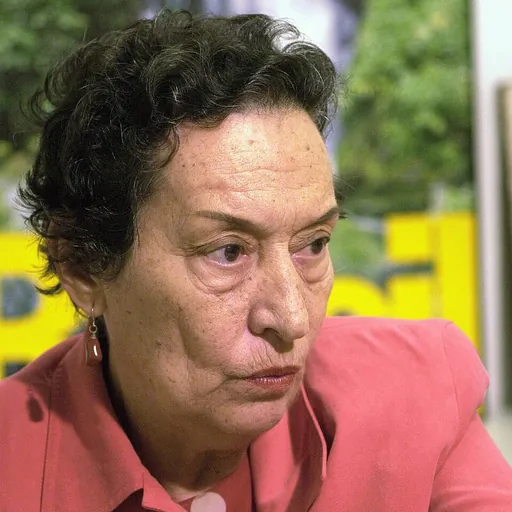
About Maria da Conceição Tavares
Lived 1930 – 2024 (aged 94). Maria da Conceição Tavares was a Brazilian and Portuguese economist, politician, statistician, analyst, university teacher and mathematician.
Maria da Conceição Tavares (April 24, 1930 – June 8, 2024) was a Portuguese naturalized Brazilian economist. She was a full professor at the State University of Campinas (Unicamp) and professor emeritus of the Federal University of Rio de Janeiro (UFRJ). Her students included the former president of Brazil, Dilma Rousseff and José Serra, candidate to president of Brazil on several occasions. Tavares was affiliated with the Workers' Party, and she was a Federal Deputy representing the state of Rio de Janeiro between 1995 and 1999. Left-wing focused, she was the author of several books on Brazil's economic development as well as numerous journal articles.
Early life Maria da Conceição de Almeida Tavares was born in Anadia in the Aveiro District of Portugal on 24 April 1930. She grew up in the Portuguese capital of Lisbon. Her father was an anarchist who sheltered refugees from the Spanish Civil War. After starting an engineering course at the University of Lisbon, Tavares transferred to mathematical sciences, graduating in 1953. To escape the Estado Novo dictatorship in Portugal under António de Oliveira Salazar, she moved to Brazil in February 1954, already married to her first husband, Pedro José Serra Soares, and got pregnant with their daughter Laura. They settled in Rio de Janeiro. From her second marriage, to Antônio Carlos de Magalhães Macedo, she had a son.
Career Because she was unable to have her qualifications recognised in Brazil to allow her to teach at university, she began working in 1955 as a statistician at the National Institute of Immigration and Colonization (INIC), now the Instituto Nacional de Colonização e Reforma Agrária (INCRA). In 1957, she became a Brazilian citizen. At that time, after realising that knowledge of mathematics was not enough for the professional path she intended to follow, she enrolled to study economics at the University of Brazil, now the Federal University of Rio de Janeiro (UFRJ), completing the course in 1960. In 1958, she became a mathematical analyst at the Brazilian Development Bank (BNDES), where she worked until 1960. Between 1958 and 1960 she was also a member of the Executive Group (Grupo Executivo) for Heavy Mechanical Industry (Geimape), one of the industry-coordinating bodies established during the government of President Kubitschek.
The work of Tavares was influenced in particular by three other Brazilian economists, Celso Furtado, Caio Prado Júnior and Ignácio Rangel. She published numerous articles and several books. In 1963, she published her first paper, Rise and fall of the import-substitution process in Brazil, in which she discussed import-substituting industrialization as an historical model of development. In 1965 and 1967, she was a visiting professor at the Fundação Getulio Vargas, an organization established to "stimulate Brazil's socioeconomic development". In 1967 she participated in a meeting promoted by the Ford Foundation, which discussed the organization of postgraduate studies in economics in Brazil. This led, in 1972, to the establishment of the National Association for Graduate Studies in Economics (Anpec). A common theme of her work has been that Brazilians with more progressive views lacked knowledge of the monetary aspects of the country's economy.
In 1968, Tavares was invited by the United Nations Economic Commission for Latin America and the Caribbean (ECLAC) in Santiago de Chile to teach at the Institute of Economy and Planning (ESCOLATINA), part of the University of Chile, as a visiting professor. Between October 1971 and May 1972, she did postgraduate studies at the University of Paris 1 Panthéon-Sorbonne University. However, due to the worsening political situation in Chile she interrupted her course to return to Santiago to assist the government of Salvador Allende, working in the Ministry of Economy as a volunteer advisor. At the same time, she continued to be involved in Brazilian policy arguments about income distribution with the monetarist economist Carlos Geraldo Langoni, who would go on to become the governor of the Bank of Brazil.
Tavares was a member of the University Council of UFRJ in 1984 and 1985. In 1986, she became director of the Institute of Economics of that University. In March 1986, she became known to the public for her testimony on television in defence of the Cruzado Plan, an economic stabilization programme designed to control rampant inflation, which was implemented by the government of José Sarney. She supported measures to remove wage and price indexing, combined with a price freeze. This was successful for nine months but an increase in wages at the end of 1986 stimulated a wage-price spiral of demand-induced inflation.
Death Tavares died in Nova Friburgo, in the state of Rio de Janeiro, on June 8, 2024, at the age of 94. Her body was cremated, and on June 17 her ashes were deposited in the gardens of the Institute of Economy of the State University of Campinas. A tree was planted on the same spot as a tribute to her work in that institution.
Political activism Tavares became a member of the Partido do Movimento Democrático Brasileiro (Brazilian Democratic Movement Party – PMDB), becoming a member of the national executive after being nominated by the PMDB women's movement. In 1988 she left the executive but in 1989 she actively supported the party's presidential candidate, Ulysses Guimarães, national president of the PMDB, for the presidency of Brazil. After his defeat in the first round of the election, she left the party and supported the Worker's Party (PT) candidate, Luiz Inácio Lula da Silva, who was defeated by Fernando Collor de Mello in the second ballot. Tavares left the Chamber of Deputies in January 1999, at the end of the legislature, having decided not run for re-election.
Over 60 years, she trained generations of Brazilian economists and political leaders, including former President of Brazil Dilma Rousseff; José Serra, who held several ministerial positions in the federal government and was also governor of São Paulo state; economics professor Carlos Lessa; and the former president of the Brazilian Development Bank Luciano Coutinho. Tavares participated in several editions of the World Social Forum, a gathering organized to provide an alternative view to that of the better-known World Economic Forum. She became a supporter of the concept of a universal basic income. She was the subject of a biographical film, entitled Livre Pensar (Free to think), directed by José Mariani, which was released in 2018. 2011: Almirante Álvaro Alberto Award for Science and Technology. 2000: Medal Pedro Ernesto, from the City Council of Rio de Janeiro 1998: Second place in the Prêmio Jabuti award for publications in Economics, Administration, Business and Law 1998: Grand Officer of the Order of Bernardo O'Higgins from the Republic of Chile 1987: Order of the Merit of Labour, Ministry of Labour of Brazil. 1986: Officer of the Order of Rio Branco, Brazil. 1986: Medal of Honour of The Conspiracy, by the State Government of Minas Gerais
Don’t just read it —
keep it.
Full-length biographies made to live with: read them, listen on the way to work, watch them tonight.
- E-book
- Audio
- Video
Instant download · yours to keep · every purchase keeps this site free
Important facts
People in Maria da Conceição Tavares's life
Named in this biography and alive at the same time

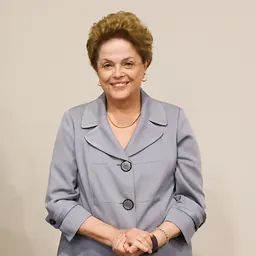


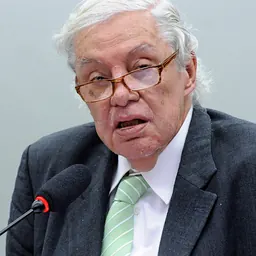
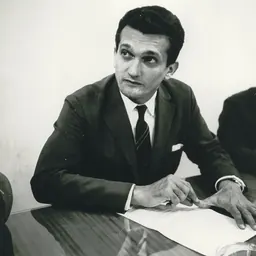
Related people
Same field, nearest in time


Contemporaries
People whose lives overlapped Maria da Conceição Tavares's


Frequently asked questions
Who was Maria da Conceição Tavares?
Brazilian economist (1930–2024)
When was Maria da Conceição Tavares born?
Maria da Conceição Tavares was born on 24 April 1930 in Anadia.
When did Maria da Conceição Tavares die?
Maria da Conceição Tavares died on 8 June 2024 in Nova Friburgo.
What was Maria da Conceição Tavares's occupation?
Maria da Conceição Tavares was an economist, politician, statistician, analyst, university teacher and mathematician.
What nationality was Maria da Conceição Tavares?
Maria da Conceição Tavares was Brazilian and Portuguese.
Sources & further reading
· Wikipedia: Maria da Conceição Tavares
· DBpedia: Maria da Conceição Tavares
Cite this page
APA: Biography.guide. (2026). Maria da Conceição Tavares. https://biography.guide/maria-da-conceicao-tavares/
MLA: "Maria da Conceição Tavares." Biography.guide, https://biography.guide/maria-da-conceicao-tavares/.
Chicago: "Maria da Conceição Tavares." Biography.guide. https://biography.guide/maria-da-conceicao-tavares/.
Data last updated: 2026-09-20 · Spot an error? Report a correction.
Portrait: Wikimedia Commons · author & licence
Page generated 2026-09-27 04:57 UTC