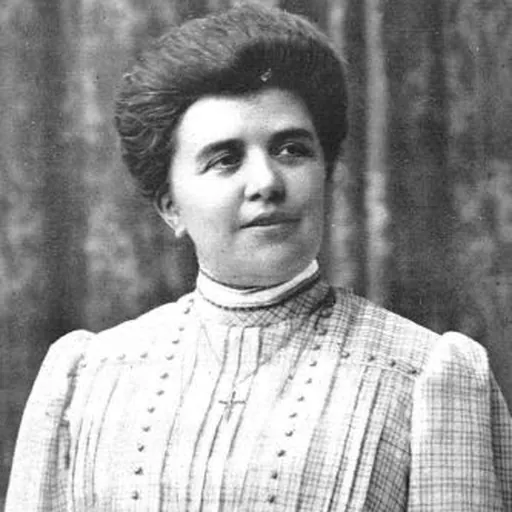
About Maria Antònia Salvà
Lived 1869 – 1958 (aged 88). Maria Antònia Salvà was a Spanish writer, translator and poet.
Maria Antònia Salvà i Ripoll (1869 – 1958) was a Mallorcan poet and translator, and the sister of the politician and the painter . She was the first female poet in the Catalan language.
Considered the first modern poet in the Catalan language and the first modern translator, she is linked to the Renaixença in Mallorca. She wrote poems such as "Espigues en flor" (1926), "El retorn" (1934), and "Lluneta del pagès" (1952), as well as works in prose, such as Viatge a Orient (1907) and Entre el record i l'enyorança (1955).
Salvà was described as "a poet who disguised herself as a translator" to find meaning in the male poetry of her time. Her translations were popular, and still are, in particular her 1917 version of Frédéric Mistral's Mireia (1859).
Early life Plaque on the house in which Salvà was born, on Carrer d'en Morei. Salvà was born on 4 November 1869 in Palma, the capital of the Balearic island of Mallorca. Her mother died when she was only a few months old, and Maria and her brother Antoni (b. 1868) were given to relatives in Llucmajor, while her eldest brother Francesc (b. 1867) was kept by their father and raised in Palma. From an early age, Salvà had a keen interest in poetry and language. In her memoir Between Memory and Longing she wrote: "My fondness for verse and songwriting could almost be said to be innate in me. My wet nurse, nicknamed Flauta, used to say that when I weaned, I already knew a string of songs".
At the age of six she met her father in Palma and was educated at the Col·legi de la Puresa. She began writing poems in Catalan at the age of 14 or 15; in these autobiographical poems, she shows an awareness of the exceptional nature with which she would have to experience writing in her youth and the first maturity of being a woman. At the age of sixteen she returned to Llucmajor, where she alternated between living at la Posada de la Llapassa (on Carrer Rei Jaume I in the town of Llucmajor) and at the la Llapassa estate. In Palma, however, her career grew through her father's acquaintances; she met with the intellectuals of the Renaixença in Mallorca and writers of Romantic poetry, including , and, above all, the Costa i Llobera and Ferrà families, who would impact her literary career. providing her with books, introducing her to Mallorca's literary circles, and encouraging her to publish her first poems and translations.
In 1893 she became well known in Catalan magazines and continued to write until the publication of her first collection, Poesies, in 1910. At this time, Salvà was introduced to the government through a young Josep Carner and her name was shared in publications about the new century. Salvà also began writing in prose – notably a diary about her trip to the Holy Land in 1907 with Costa i Llobera – and translating. She then became invariably linked to poet Frédéric Mistral thanks to her translations of his works, especially Mireia (1917); these also made her the first literary translator of the modern era. She then expanded her translations into French and Italian. With this work, she was integrated into the Catalan literary corpus, along with figures like Francis Jammes, Alessandro Manzoni and Giovanni Pascoli.
Catalan exceptionalism In 1935, Salvà presided over the Jocs Florals de Mallorca and gave a speech in which she defended Catalan identity and language; and in June 1936 she was one of the signatories of the . Several years later in 1939 she briefly spoke in support of Francoism because of its religiosity.
Don’t just read it —
keep it.
Full-length biographies made to live with: read them, listen on the way to work, watch them tonight.
- E-book
- Audio
- Video
Instant download · yours to keep · every purchase keeps this site free
Important facts
People in Maria Antònia Salvà's life
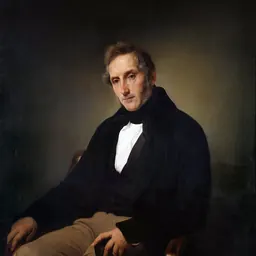
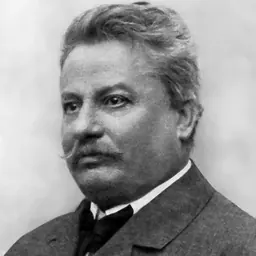
Named in this biography and alive at the same time


Related people
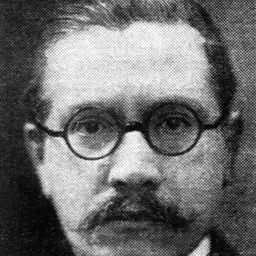
Same field, nearest in time




Contemporaries
People whose lives overlapped Maria Antònia Salvà's



Frequently asked questions
Who was Maria Antònia Salvà?
Spanish writer, translator and poet (1869-1958)
When was Maria Antònia Salvà born?
Maria Antònia Salvà was born on 4 November 1869 in Palma.
When did Maria Antònia Salvà die?
Maria Antònia Salvà died on 29 January 1958 in Llucmajor.
What was Maria Antònia Salvà's occupation?
Maria Antònia Salvà was a writer, translator and poet.
What nationality was Maria Antònia Salvà?
Maria Antònia Salvà was Spanish.
Sources & further reading
· Wikipedia: Maria Antònia Salvà
· DBpedia: Maria Antònia Salvà i Ripoll
Cite this page
APA: Biography.guide. (2026). Maria Antònia Salvà. https://biography.guide/maria-antonia-salva/
MLA: "Maria Antònia Salvà." Biography.guide, https://biography.guide/maria-antonia-salva/.
Chicago: "Maria Antònia Salvà." Biography.guide. https://biography.guide/maria-antonia-salva/.
Data last updated: 2026-09-21 · Spot an error? Report a correction.
Portrait: Wikimedia Commons · author & licence
Page generated 2026-09-27 05:00 UTC