
About Mari Yonehara
Lived 1950 – 2006 (aged 56). Mari Yonehara was a Japanese novelist, writer, translator, essayist and interpreter.
was a Japanese translator, essayist, non-fiction writer, novelist, and simultaneous interpreter between Russian and Japanese, best known in Japan for simultaneous interpretation in the 1980s and 1990s and writing in 2000s.
Biography Yonehara was born in Tokyo. Her father, Itaru, was a member of the Japan Communist Party and had a seat in the lower house of the Japanese Diet representing Tottori Prefecture. Her grandfather, Yonehara Shōzō, was President of Tottori Prefecture Assembly, and a member of the House of Peers.
In 1959, Itaru was sent to Prague, Czechoslovakia as an editor of The Problems on Peace and Socialism, an international communist party magazine and his family accompanied him. Mari initially studied the Czech language, but her father placed her in an international school run by the Soviet Union, where education was conducted in Russian language so that his children were able to continue the language in Japan. The school curriculum was heavy on communist indoctrination, and Yonehara's classmates included children from over 50 countries.
Yonehara returned to Japan in 1964, and after graduation from high school, attended the Tokyo University of Foreign Studies, majoring in the Russian language. She also joined the Japan Communist Party. She then attended a postgraduate program at the University of Tokyo, where she received master in Russian literature and Russian culture. After she left the university, she taught Russian at the Soviet Gakuin (present day Tokyo Russian Language Institute) and the Bunka Gakuin's "university division", while working as an interpreter and translator part-time. In 1980, she co-founded the and became its first secretary-in-chief. She was the president of the Association from 1995-1997 and from 2003 until her death in 2006.
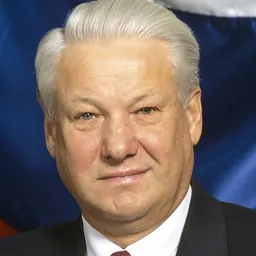
With the demise and the collapse of the Soviet Union, her services for translation and interpretation were much in demand by the news agencies, television and also by the Japanese government, and she was also requested to assist during the visit of Russian president Boris Yeltsin to Japan in 1990.
From April 1997 to March 1998, she appeared on the public broadcaster NHK's Russian language educational program.
In 2001 she received the for about the search for her classmates at Prague after the collapse of the Soviet Bloc.
In 2003 she received a for her long novel published in 2002, about an old female dancer living the Soviet era.
From 2003, she was a regular commentator on TBS television's Saturday evening news show. Her hobbies included the Japanese , , and she kept numerous dogs and cats. She never married.
Nicknames Her nicknames in her own essays: (all these come from Japanese feeble jokes ->) "La Dame Aux Camelias" (in Japanese [tsubaki hime] means both "lady of camelias" and "lady of saliva"; for she was capable to take dry sandwiches at once with no drink), and, "The Tongue Slipping Beauty" (in Japanese [zekka bijin]; for she had a cynical view, and [zekka] is close to the sound , Epiphyllum oxypetalum. [bijin] means "the beauty")
She was also an active member and official of the Japan PEN.
Death She died of ovarian cancer at her home in Kamakura, Kanagawa, aged 56.
Don’t just read it —
keep it.
Full-length biographies made to live with: read them, listen on the way to work, watch them tonight.
- E-book
- Audio
- Video
Instant download · yours to keep · every purchase keeps this site free
Important facts
People in Mari Yonehara's life
Named in this biography and alive at the same time
Related people
Same field, nearest in time




Contemporaries
People whose lives overlapped Mari Yonehara's



Frequently asked questions
Who was Mari Yonehara?
Japanese translator
When was Mari Yonehara born?
Mari Yonehara was born on 29 April 1950 in Tokyo.
When did Mari Yonehara die?
Mari Yonehara died on 25 May 2006 in Kamakura.
What was Mari Yonehara's occupation?
Mari Yonehara was a novelist, writer, translator, essayist and interpreter.
What nationality was Mari Yonehara?
Mari Yonehara was Japanese.
Sources & further reading
Cite this page
APA: Biography.guide. (2026). Mari Yonehara. https://biography.guide/mari-yonehara/
MLA: "Mari Yonehara." Biography.guide, https://biography.guide/mari-yonehara/.
Chicago: "Mari Yonehara." Biography.guide. https://biography.guide/mari-yonehara/.
Data last updated: 2026-09-20 · Spot an error? Report a correction.
Page generated 2026-09-27 05:30 UTC