
About Marguerite Lwoff
Lived 1905 – 1979 (aged 74). Marguerite Lwoff was a French microbiologist, virologist and botanist.
Marguerite Lwoff (née Bourdaleix; 7 July 1905 – 31 October 1979) was a French microbiologist and virologist known for her studies of metabolism. She worked alongside her husband, André Lwoff, throughout their careers, but she was not awarded the Nobel Prize when he received it in 1965.
Life and work Marguerite Bourdaleix was born in France and earned her Ph.D. at the University of Paris. She became known for her work in biology and her specialization in Protozoon physciology and research focus on growth factors and cytology. On 5 December 1925, she married scientist André Lwoff. Her husband received the Nobel Prize in Medicine in 1965.
Timeline Lwoff's work took her to many assignments and laboratories.
1933, Heidelberg, Germany, went with A. Lwoff to the Kaiser Wilhelm Institut (now the Max Planck Institut) to work with Otto Meyerhof. 1936, Cambridge, United Kingdom, with A. Lwoff to the laboratory of David Keilin. 1939–1953 Paris, Named Secretary of the editorial board of the Bulletin de l'Institut Pasteur. 1940, Defended her PhD thesis in sciences: Recherches sur le pouvoir de synthèse des flagellés trypanosomides. M. Caullery was the president of her thesis jury. 1944, Named Head of Laboratory at the Pasteur Institute. There she pursued her research, such as with P. Nicolle, on the feeding of Hematophogous reduviidae. 1954–1955, Pasadena, California, US with A. Lwoff, to work at several laboratories, such as those of Renato Dulbecco in Pasadena. 1955–1970, Paris, Pasteur Institute, André and Marguerite Lwoff changed their research focus to study animal viruses. Marguerite became responsible for cell cultures in which she highlighted the effect of temperature on the different steps of the development cycle of the Polio virus. She "performed isolation of hot and cold mutants, and expressed reflections about the role of fever in viral infection and about the nature of attenuated viral strains." 1970, Marguerite Lwoff retired.
Selected publications Lwoff, M. (1929). Cultivation Medium for T. cruzi. Bulletin de la Société de Pathologie Exotique, 22(10).
Lwoff, M., & Nicolle, P. (1944). Recherches sur la nutrition des réduvidés hémophages. IV. Alimentation de Triatoma infestans Klug à l'aide-de sérum de cheval. Action du glucose. Bulletin de la Société de Pathologie Exotique, 37(1-2). Lwoff, M. (1951). The nutrition of parasitic flagellates (Trypanosomidae, Trichomonadinae). In Biochemistry and physiology of protozoa (pp. 129–176). Academic Press. Lwoff, M. (1951). Nutrition of parasitic amebae. In Biochemistry and Physiology of Protozoa (pp. 235–250). Academic Press.
Don’t just read it —
keep it.
Full-length biographies made to live with: read them, listen on the way to work, watch them tonight.
- E-book
- Audio
- Video
Instant download · yours to keep · every purchase keeps this site free
Important facts
Family & relationships
People in Marguerite Lwoff's life
Named in this biography and alive at the same time
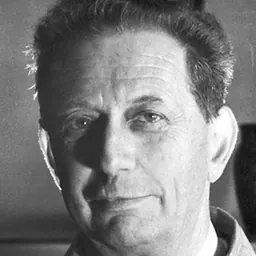
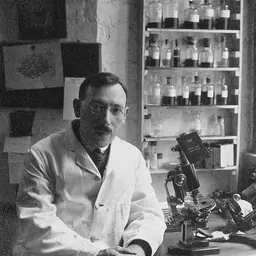

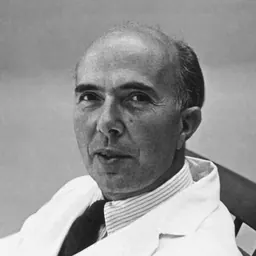


Related people
Same field, nearest in time

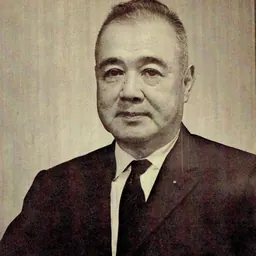

Contemporaries
People whose lives overlapped Marguerite Lwoff's





Frequently asked questions
Who was Marguerite Lwoff?
French microbiologist and virologist (1905-1979)
When was Marguerite Lwoff born?
Marguerite Lwoff was born on 7 July 1905 in Saint-Nazaire.
When did Marguerite Lwoff die?
Marguerite Lwoff died on 31 October 1979 in 15th arrondissement of Paris.
What was Marguerite Lwoff's occupation?
Marguerite Lwoff was a microbiologist, virologist and botanist.
What nationality was Marguerite Lwoff?
Marguerite Lwoff was French.
Sources & further reading
Cite this page
APA: Biography.guide. (2026). Marguerite Lwoff. https://biography.guide/marguerite-lwoff/
MLA: "Marguerite Lwoff." Biography.guide, https://biography.guide/marguerite-lwoff/.
Chicago: "Marguerite Lwoff." Biography.guide. https://biography.guide/marguerite-lwoff/.
Data last updated: 2026-09-22 · Spot an error? Report a correction.
Page generated 2026-09-27 05:27 UTC