
About Marguerite de Saint-Marceaux
Lived 1850 – 1930 (aged 79–80). Marguerite de Saint-Marceaux was a French salonnière, diarist and opera singer.
Lucie Frederica Marguerite "Meg" de Paul de Saint-Marceaux (née Jourdain; 9 May 1850 – 23 February 1930), formerly Baugnies, was a French salonnière, arts patron, diarist, and amateur pianist and opera singer. She was celebrated for her salons, where she hosted intellectual and artistic masters including Marcel Proust, Colette, Giovanni Boldini, Maurice Ravel, Isadora Duncan, and Gabriel Fauré. A number of musical works were premiered at her salons, including excerpts of Claude Debussy's Pelléas et Mélisande and Prélude à l'après-midi d'un faune and Fauré's Mandoline from Cinq mélodies "de Venise". Fauré, who was a close friend of de Saint-Marceaux, dedicated two of his works, Trois mélodies, Op. 7 and Nocturne No. 1 in E♭ minor, Op. 33/1, to her. In 1903, she was hired by Alfred Cortot to sing in the choir for Richard Wagner's Parsifal at the Société des Concerts.
Early life Marguerite de Saint-Marceaux was born Lucie Frederica Marguerite Jourdain on 9 May 1850 in Louviers, into a prominent family of drapers. Her father was Frédéric-Joseph Jourdain. She was the half-sister of the painter Roger Joseph Jourdain. De Saint-Marceaux received an extensive musical education from Antoine François Marmontel and Romain Bussine, among others.
Marriages
As a young woman, de Saint-Marceaux was courted by the composer Camille Saint-Saëns, who asked for her hand in marriage, but her family demanded she refuse him due to his rather Bohemian situation.
She was introduced to the visual arts scene in the 1860s by her half-brother and, in 1870, she married the painter Eugène Baugnies. Her husband's grandfather, Augustin de Saint-Marceaux, served as mayor of Reims. Her salons, considered very informal and Bohemian, were on Friday evenings and full evening dress was prohibited. Her salons were described in the correspondence and writings of various attendees including Fauré, Ravel, Schmitt, Koechlin, Messager, Hahn, Cortot, Proust, Colette, and Gauthier-Villars. came together, often served as a whimsical curfew bell. It was in that sonorous place — sensitive to reverence, jealous of its prerogatives but capable of gentleness — that I first met Maurice Ravel."
De Saint-Marceaux was also fond of writers, particularly playwrights, and invited many to her salons. Frequently in attendance were Édouard Bourdet, Robert de Flers, Abel Hermant, Paul Hervieu, Henri Lavedan, Jules Lemaître, and Victorien Sardou. She also hosted journalists and critics including André Beaunier, Gaston Calmette, Louis Gillet, Arthur Meyer, and Pierre Lalo. She introduced Fauré to his future wife, Marie Frémiet, the daughter of sculptor Emmanuel Frémiet, at one of her salons. On 21 June 1891, he premiered Mandoline from Cinq mélodies "de Venise" at her salon.
Alfred Cortot, who introduced de Saint-Marceaux to the music of Richard Wagner, hired her to sing in the choir for Parsifal in 1903.
In 1900, she hired the violinist Jacques Thibaud, a new graduate from the Conservatoire de Paris, to play at one of her salons. She noted the experience in her diary, writing: "Thibaud with his quartet plays at my house the 2nd quartet of Fauré and that of Saint-Saëns, and also the piano and violin sonata [by Fauré]. Exquisite evening. It costs me 200 francs, it is worth 1000."
Artistic patronages Having been introduced to the world of visual arts by her half-brother, de Saint-Marceaux remained a patroness of painters and sculptors alike after the death of her first husband, and visual artists frequented her salon. She was known to financially support artists and attended their exhibitions. These artists included Jacques-Émile Blanche, Giovanni Boldini, Carolus-Duran, Georges Clairin, Édouard Detaille, Guillaume Dubufe, Henri Gervex, Paul Landowski, Paul Mathey, Madeleine Lemaire, Antonin Mercié, and François Pompon. Through her artistic connections, she was introduced to Claude Monet, who received her at his home in Giverny.
She died on 23 February 1930, aged 79, in the 17th arrondissement of Paris.
Don’t just read it —
keep it.
Full-length biographies made to live with: read them, listen on the way to work, watch them tonight.
- E-book
- Audio
- Video
Instant download · yours to keep · every purchase keeps this site free
Important facts
People in Marguerite de Saint-Marceaux's life
Named in this biography and alive at the same time


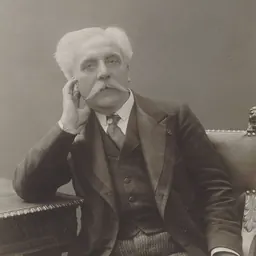
Related people
Same field, nearest in time
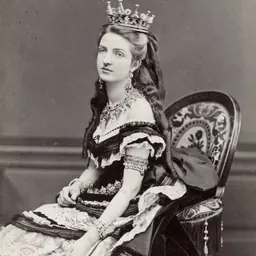


Contemporaries
People whose lives overlapped Marguerite de Saint-Marceaux's


Frequently asked questions
Who was Marguerite de Saint-Marceaux?
French salonnière
When was Marguerite de Saint-Marceaux born?
Marguerite de Saint-Marceaux was born in 1850.
When did Marguerite de Saint-Marceaux die?
Marguerite de Saint-Marceaux died in 1930.
What was Marguerite de Saint-Marceaux's occupation?
Marguerite de Saint-Marceaux was a salonnière, diarist and opera singer.
What nationality was Marguerite de Saint-Marceaux?
Marguerite de Saint-Marceaux was French.
Sources & further reading
· Wikipedia: Marguerite de Saint-Marceaux
· DBpedia: Marguerite de Saint-Marceaux
Cite this page
APA: Biography.guide. (2026). Marguerite de Saint-Marceaux. https://biography.guide/marguerite-de-saint-marceaux/
MLA: "Marguerite de Saint-Marceaux." Biography.guide, https://biography.guide/marguerite-de-saint-marceaux/.
Chicago: "Marguerite de Saint-Marceaux." Biography.guide. https://biography.guide/marguerite-de-saint-marceaux/.
Data last updated: 2026-09-26 · Spot an error? Report a correction.
Page generated 2026-09-27 05:16 UTC