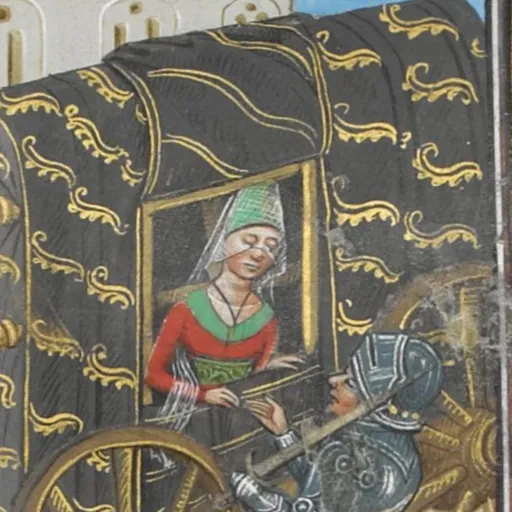
Marguerite de Carrouges
French noblewoman
About Marguerite de Carrouges
Lived 1362 – 1419 (aged 56–57). Marguerite de Carrouges was a French.
Marguerite de Carrouges (née de Thibouville; 1362, Château de Fontaine-la-Soret (Eure) – c. 1419) was a French noblewoman.
Biography
Marriage Marguerite married Jean de Carrouges in 1380.
Rape, trial and duel
On 18 January 1386, Marguerite was allegedly raped by Jacques le Gris, a friend-turned-rival of Jean de Carrouges, in her mother-in-law's home in Capomesnil, Normandy. It is believed that le Gris persuaded Marguerite, whom he had previously been introduced to by her husband, to allow him into the Chateau. He then proceeded to make sexual advances, and when she did not reciprocate, he raped her with the help of his assistant Adam Louvel. Marguerite claimed that she did not commit adultery, but if Jean did not believe her, she would have been chastised, and it would not look good for the Carrouges family.
The Carrouges' initially took the matter up with their liege lord, Count d'Alençon, however, he was known to greatly favor le Gris and quickly threw the case out. Not willing to give up quite yet, Jean de Carrouges instead petitioned the French Parliament in Paris, which subsequently agreed to a trial that began in July 1386. Looking back toward the 14th century, Raptus' inclusion of both abduction and sexual assault meant that, while rape was not necessarily ignored by Anglo-Saxon and Norman legal systems, abduction was often the primary focus. As a result, this meant that rape victims were unlikely to find success in court if their sexual assault was not proven with evidence of a physical abduction and they did not belong to a certain level of social status.
In September 1386, the French Parliament ruled that a trial by ordeal (in this case a trial by combat) would take place to decide le Gris' guilt, a practice that had been banned for over 150 years by the Church at that time. This practice later spread to other parts of Western Europe, where it was often used for crimes that occurred out of public view, such as simony or concubinage. Trial by ordeals continued to be practiced throughout the 12th century and into the early 13th century, until it was banned by Pope Innocent III during the Fourth Lateran Council in 1215. Matters involving this form of trial had also become much more theatrical, involving the throwing of a gauntlet in the presence of the court and the assigning of a time and place where the duel may occur. The charges themselves could range from minor matters regarding petty gossip to treason against the crown. The duel between Carrouges and le Gris was chosen to be held in December 1386. Duels were considered a grand affair, with the parties involved making use of full armor and oftentimes being on horseback. Because of this shift away from warfare, chivalrous demonstrations and a good reputation became increasingly important to knights who wanted to keep their status and recognition, which was always open to challenge and required constant defense. This additional emphasis on reputation meant that a loss in court would prove damaging to either party, while a victory would cement their chivalrous status for years to come.
The duel took place on 29 December 1386. However, there is debate about the authenticity of this claim.
She had three children, was widowed in 1396, and died in 1419.
In popular culture The story of the duel inspired Ridley Scott's 2021 film The Last Duel (based on the 2004 book The Last Duel: A True Story of Crime, Scandal, and Trial by Combat in Medieval France by Eric Jager), in which she was played by Jodie Comer.
Don’t just read it —
keep it.
Full-length biographies made to live with: read them, listen on the way to work, watch them tonight.
- E-book
- Audio
- Video
Instant download · yours to keep · every purchase keeps this site free
Important facts
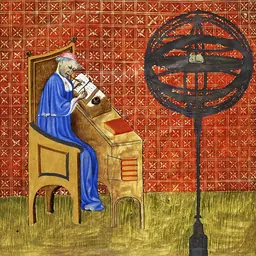
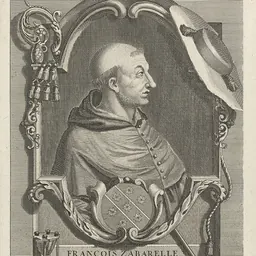
People in Marguerite de Carrouges's life
Named in this biography and alive at the same time

Contemporaries
People whose lives overlapped Marguerite de Carrouges's



Frequently asked questions
Who was Marguerite de Carrouges?
French noblewoman
When was Marguerite de Carrouges born?
Marguerite de Carrouges was born in 1362.
When did Marguerite de Carrouges die?
Marguerite de Carrouges died in 1419.
What nationality was Marguerite de Carrouges?
Marguerite de Carrouges was French.
Sources & further reading
· Wikipedia: Marguerite de Carrouges
· DBpedia: Marguerite de Carrouges
Cite this page
APA: Biography.guide. (2026). Marguerite de Carrouges. https://biography.guide/marguerite-de-carrouges/
MLA: "Marguerite de Carrouges." Biography.guide, https://biography.guide/marguerite-de-carrouges/.
Chicago: "Marguerite de Carrouges." Biography.guide. https://biography.guide/marguerite-de-carrouges/.
Data last updated: 2026-09-22 · Spot an error? Report a correction.
Portrait: Wikimedia Commons · author & licence
Page generated 2026-09-27 05:04 UTC