
About Margaret Mercer
Lived 1791 – 1846 (aged 55). Margaret Mercer was an American educator and philanthropist.
Margaret Mercer (July 1, 1791 – September 17, 1846) was an American abolitionist and educator. She worked to end slavery and freed the Maryland slaves that she inherited from her father, sending six of them to Africa. Mercer started a school and a chapel in Loudoun County that welcomed Black people and continued for a short while after her death. In 2018, a Virginia historical marker was dedicated in her honor.
Early and family Life Margaret Mercer was born on July 1, 1791, to Maryland governor, planter and veteran politician John Francis Mercer and his wife, the former Sophia Sprigg. Her grandfather John Mercer and uncle James Mercer were prominent Virginia lawyers, and her father had served in the Virginia House of Delegates after his service in the American Revolutionary War and before marrying her mother and moving to her family's estates in Anne Arundel County, Maryland. Mercer grew up in the family home named Cedar Park in Galesville, and read widely in her father's library (which contemporaries had admired, as they had the library of her grandfather Mercer). Although her father and both grandfathers had operated their Virginia and Maryland plantations using enslaved labor, Margaret found slavery immoral. She also did not want to marry, and never did. She corresponded with her Essex County, Virginia paternal relatives, including about the important people who visited Cedar Park, the siege of Baltimore during the War of 1812, and her brother's surviving his military service.
Career Mercer inherited some of her father's 72 slaves upon his death in 1821, but was unable to send any of them to Africa because her father's estate was in debt, and their sale (which creditors wanted but Margaret knew would break up families) could pay off that debt. While her brother remained at the family's Anne Arundel county plantations, Mercer moved to Essex County, Virginia, where she lived with her uncle James Mercer Garnett (a former member of Congress as well as a prominent planter), and with his daughters taught at a school nearby in Elmwood for four years. Margaret Mercer taught classes five days a week, and also helped teach Sunday school. On Saturdays, she worked for the Virginia Colonization Society, a part of the American Colonization Society. The society advocated purchasing slaves' freedom and then settling them in Africa. In 1823, the American Colonization Society bought land on the Guinea Coast (in West Africa), and named it Liberia. Another of her Mercer cousins (who had helped found the American Colonization Society), was Congressman Charles Fenton Mercer, of Loudoun County, who lived on a westward road and also became known for education both education and internal improvements (like roads, canals and later railroads). She also knew architect John H. B. Latrobe, a prominent colonization advocate in Maryland. However, three years after the freed slaves arrived in Monrovia, three had died, one moved back to the United States, and another moved further away. [The sixth freed slave's fate remains unknown]. Similar results for other freed slaves sent to Africa led to the colonization movement's decline.
Because of the distance to the nearest church (difficult even on horseback), Mercer asked Latrobe to build Belmont Chapel. In 1841, the chapel opened for services and Bible study. Children of slaves and freed slaves participated with the schoolgirls at the chapel.
She had never married, and her executors Thomas S. Mercer and Richard S. Mercer sold the Belmont estate in 1851 to George Kephart of Frederick County, Maryland, who also bought the former Thomas Ludwell Lee plantation called "Coton" across the Leesburg Pike. Eugenia Kephart, George Kephart's eldest daughter, operated the school and moved it by 1856 to Oak Hill plantation, before closing in the early 1870s when the new Virginia constitution enabled free public education. George Kephart classified himself as a farmer in the 1850 Federal census for Maryland, and the accompanying slave census only showed him as owning 17 enslaved persons there, but two men of the same name (the other possibly his eldest son on the Maryland census) owned a total of 49 enslaved people in Alexandria. The 1860 Federal census for Loudoun County, Virginia classified George as "Merchant" and his son William as "Tradeing", but the Kephart family (now without George Junior who disappeared from the census but would be buried nearby in 1888, and to which 6 year old Julius had been added, only owned one slave, an 18 year old mulatto woman. Kephart either provided for his children who chose not to continue the business or encountered financial difficulties by 1858, when the firm's name changed to Price, Birch and Co. (which remained the name when Union authorities converted the Alexandria office in 1862 into a jail for Confederate and other prisoners) and in 1860 the Loudoun Circuit Court ordered various properties including Coton liquidated. In 1864, Virginia abolitionist Moncure Conway published Testimonies Concerning Slavery and specifically criticized Kephart, who died at Belmont in 1869, about two years after his wife. His Alexandria slave trading office and jail is now also a historic site and museum.
Although much of the former Belmont estate was developed in recent years, the manor house was placed on the National Register of Historic Places in 1980, and remains today as an event venue, surrounded by the Belmont golf club and gated community developed by Toll Brothers in 1995.
Religious services continued at the Belmont chapel until 1936. In 1990, St. David's Episcopal Church was built on the former Belmont Chapel site. In 2018, community leaders and politicians from Loudoun County, and Liberia visited St. David's Episcopal Church and School in Ashburn to dedicate a Virginia historical marker in Mercer's honor.
Don’t just read it —
keep it.
Full-length biographies made to live with: read them, listen on the way to work, watch them tonight.
- E-book
- Audio
- Video
Instant download · yours to keep · every purchase keeps this site free
Important facts
People in Margaret Mercer's life
Named in this biography and alive at the same time

Related people
Same field, nearest in time


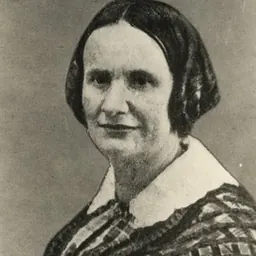

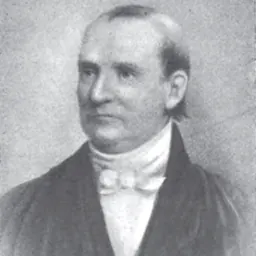
Contemporaries
People whose lives overlapped Margaret Mercer's
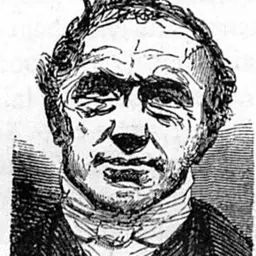
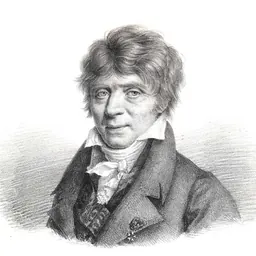



Frequently asked questions
Who was Margaret Mercer?
American antislavery reformer and educator (1791-1846)
When was Margaret Mercer born?
Margaret Mercer was born on 1 July 1791 in Annapolis.
When did Margaret Mercer die?
Margaret Mercer died on 17 September 1846 in Belmont Manor House, Loudoun County, Virginia.
What was Margaret Mercer's occupation?
Margaret Mercer was an educator and philanthropist.
What nationality was Margaret Mercer?
Margaret Mercer was American.
Sources & further reading
Cite this page
APA: Biography.guide. (2026). Margaret Mercer. https://biography.guide/margaret-mercer/
MLA: "Margaret Mercer." Biography.guide, https://biography.guide/margaret-mercer/.
Chicago: "Margaret Mercer." Biography.guide. https://biography.guide/margaret-mercer/.
Data last updated: 2026-09-22 · Spot an error? Report a correction.
Page generated 2026-09-27 05:20 UTC