
About Margaret Frame
Born 2000. Margaret Frame is a biologist and researcher.
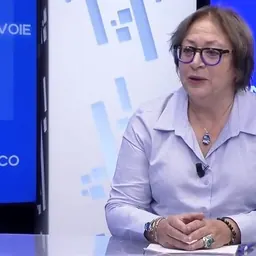
Margaret Frame is a British biologist. She is the Professor of Cancer Biology and Science Director of Cancer Research Centre at the University of Edinburgh. She is also Director of MRC Institute of Genetics & Molecular Medicine. She has made seminal contributions to understanding mechanisms of cell adhesion and motility. She previously served as deputy-director of the Beatson Institute in Glasgow.
Education Frame graduated with a first class honours BSc in Biochemistry, followed by a PhD from the Medical Faculty, at the University of Glasgow.
Career Margaret Frame worked for a brief period in industry, before joining the MRC Virology Unit in Glasgow as a post-doctoral scientist. In 1991 she started work at the Beatson Institute for Cancer Research, first as a post-doc and subsequently as a group leader. In 1995, she was jointly appointed as Professor of Cancer Research in the Faculty of Biological Sciences at the University of Glasgow and the Beatson Institute, where she became Deputy Director in 2002.
Her group has shown that the FERM domain of FAK interacts with key regulators of directional migration and cancer cell polarity, and that tumour progression requires FAK in multiple epithelial cancer types. They have also demonstrated that Src inhibition suppresses metastasis in a genetically engineered mouse model of pancreatic cancer, and have been able to generate extremely useful cells from cancer models that are FAK deficient, and which can be reconstituted with wild-type FAK or signalling mutants. These have allowed the group to determine the role of signalling through FAK, from integrins and from the upstream Src kinases, and via FAK’s kinase activity, in maintaining aspects of the cancer phenotype. These have led to several findings on control of E-cadherin dynamics in vitro and in vivo, and on proliferation in 3-dimensional environments. Perhaps the most striking new finding from their genetic deletion studies (in both cells and animal tissues), has been that integrin signalling through the Src/FAK axis regulates autophagy in advanced cancer cells.
Margaret Frame's research group is now working with Professor Valerie Brunton, extending her research into glioblastoma to find out how these same networks are involved in this complex disease. A major part involves studying glioblastoma stem cells looking for differences in their adhesion networks, how these may play a role in the disease and how glioblastoma stem cells interact with immune cells and influence their surroundings. Through this work, they also hope to reveal new drug targets.
Awards and honours Margaret Frame was awarded the Tenovus Medal in 1999 for her work on Src family kinases, was elected a Fellow of the Royal Society of Edinburgh in 2002, an EMBO Member in 2008 and a Fellow of the Academy of Medical Sciences in 2010.
Don’t just read it —
keep it.
Full-length biographies made to live with: read them, listen on the way to work, watch them tonight.
- E-book
- Audio
- Video
Instant download · yours to keep · every purchase keeps this site free
Important facts
Related people
Same field, nearest in time




Contemporaries
People whose lives overlapped Margaret Frame's


Frequently asked questions
Who is Margaret Frame?
Professor of Molecular Cell Biology
When was Margaret Frame born?
Margaret Frame was born in 2000.
What is Margaret Frame's occupation?
Margaret Frame is a biologist and researcher.
Sources & further reading
· DBpedia: Margaret Frame (biologist)
Cite this page
APA: Biography.guide. (2026). Margaret Frame. https://biography.guide/margaret-frame/
MLA: "Margaret Frame." Biography.guide, https://biography.guide/margaret-frame/.
Chicago: "Margaret Frame." Biography.guide. https://biography.guide/margaret-frame/.
Data last updated: 2026-09-20 · Spot an error? Report a correction.
Page generated 2026-09-27 05:02 UTC