
Margaret Foley
American labor organizer, suffragist, and social worker
About Margaret Foley
Lived 1875 – 1957 (aged 82). Margaret Foley was an American suffragist, social worker, sculptor and trade unionist.
Margaret Lillian Foley (February 19, 1873 - June 14, 1957) was an Irish-American labor organizer, suffragist, and social worker from Boston. Known for confronting anti-suffrage candidates at political rallies, she was nicknamed the "Grand Heckler."
Early life
Margaret Foley was born to Peter and Mary Foley on February 19, 1873, in the Meeting House Hill section of Dorchester. She and her sister, Celia, grew up in Roxbury and attended Girls' High School. An aspiring singer, she paid for voice lessons out of her earnings at a hat factory; her Boston Globe obituary describes her as "a singer of note". Family obligations took her to California, where she worked as a swimming and gymnastics teacher. When she returned to Boston she resumed her old job and became active in the trade union movement, eventually serving on the board of the Boston Women's Trade Union League. She also became an outspoken advocate for women's suffrage.
Women's suffrage
Foley was one of the few Irish Catholic suffragists from Boston. Tall and confident, with a powerful, classically trained voice, she was a remarkably effective public speaker. She addressed hundreds of audiences—often as an audience member herself, earning her the title of "The Grand Heckler". If women were given the vote, she argued, they could become a major force in improving working conditions in factories and fighting government corruption.
Inspired by English suffragists such as the Pankhursts, Massachusetts suffragists began making open-air speaking tours in 1909. Most of the speakers were middle- or upper-class women who were ill at ease addressing crowds of mill workers at lunchtime. As a working-class Irish Catholic with a colorful personality, Foley stood out. She often braved male-dominated crowds in settings such as the Boston Stock Exchange and the Chamber of Commerce, speaking and handing out leaflets.
In her most famous confrontation, she took on Timothy Callahan, a speaker at James Michael Curley's Tammany Hall club in Boston. Before a crowd of 1,500 men, the stylishly dressed Miss Foley debated her opponent so successfully that when she was finished, the audience gave three cheers for women's rights and threw their hats in the air. She had difficulty finding regular employment until 1920 when, having been nominated for a position in city government by Irish Catholic Mayor John F. Fitzgerald the year before, she was finally appointed to the Children's Institutions Department by Mayor Andrew James Peters. She died at Carney Hospital on June 14, 1957.
Don’t just read it —
keep it.
Full-length biographies made to live with: read them, listen on the way to work, watch them tonight.
- E-book
- Audio
- Video
Instant download · yours to keep · every purchase keeps this site free
Important facts
People in Margaret Foley's life
Named in this biography and alive at the same time

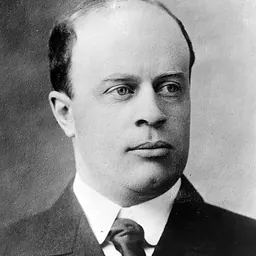
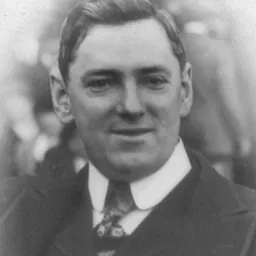
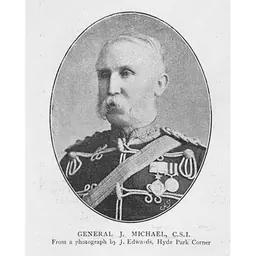


Related people
Same field, nearest in time

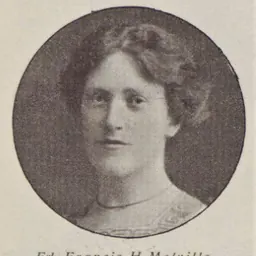
Contemporaries
People whose lives overlapped Margaret Foley's

Frequently asked questions
Who was Margaret Foley?
American labor organizer, suffragist, and social worker (1875-1957)
When was Margaret Foley born?
Margaret Foley was born on 19 March 1875 in Boston.
When did Margaret Foley die?
Margaret Foley died on 14 June 1957 in Boston.
What was Margaret Foley's occupation?
Margaret Foley was a suffragist, social worker, sculptor and trade unionist.
What nationality was Margaret Foley?
Margaret Foley was American.
Sources & further reading
· DBpedia: Margaret Foley (suffragist)
Cite this page
APA: Biography.guide. (2026). Margaret Foley. https://biography.guide/margaret-foley-suffragist/
MLA: "Margaret Foley." Biography.guide, https://biography.guide/margaret-foley-suffragist/.
Chicago: "Margaret Foley." Biography.guide. https://biography.guide/margaret-foley-suffragist/.
Data last updated: 2026-09-20 · Spot an error? Report a correction.
Page generated 2026-09-27 05:24 UTC