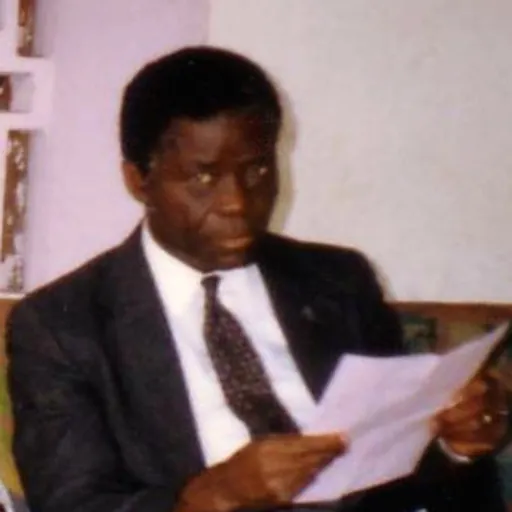
About Marcel Lihau
Lived 1930 – 1999 (aged 68). Marcel Lihau was a Congolese politician, lawyer, university teacher and judge.
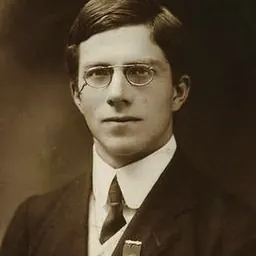
Marcel Antoine Lihau or Ebua Libana la Molengo Lihau (29 September 1931 – 9April 1999) was a Congolese jurist, law professor and politician who served as the inaugural First President of the Supreme Court of Justice of the Congo from 1968 to 1975, and was involved in the creation of two constitutions for the Democratic Republic of the Congo.
Lihau attended the Catholic University of Leuven in Belgium with the help of sympathetic Jesuit educators, becoming one of the first Congolese to study law. While there he encouraged Congolese politicians to form an alliance that allowed them to secure the independence of the Congo from Belgium. He served briefly as a justice official and negotiator for the Congolese central government before being appointed to lead a commission to draft a permanent national constitution. He was made dean of law faculty at Lovanium University in 1963. The following year he helped deliver the Luluabourg Constitution to the Congolese, which was adopted by referendum.
In 1965, Joseph-Desiré Mobutu seized total control of the country and directed Lihau to produce a new constitution. Three years later Lihau was appointed First President of the new Supreme Court of Justice of the Congo. He retained the position, advocating for judicial independence, until 1975, when he refused to force a harsh sentence upon student protesters. Lihau was summarily removed from his post by Mobutu and placed under house arrest. Becoming increasingly opposed to the government, he helped found the reform-oriented Union for Democracy and Social Progress. Mobutu responded by suspending his rights and banishing him to a rural village. His health in decline, Lihau sought refuge from political persecution in the United States in 1985, accepting a job as a professor of constitutional law at Harvard University. He continued to advocate for democracy in the Congo and returned to the country in 1990, to discuss political reform. He went back to the United States to seek medical treatment and died there in 1999.
Early life and education
Marcel Lihau was born on 29 September 1931 in Bumba, Équateur Province, Belgian Congo, (According to Michel Luka of the newspaper Le Phare, Lihau was born in Lisala.) By the following January, he had become one of the first Congolese to receive a law degree, earning it with distinction.
Career and political activities Early activities On the eve of the Belgo-Congolese Round Table Conference in Brussels in January 1960, Lihau advised the Congolese political delegations to form a "Front Commun". They did, and the decision significantly strengthened their bargaining position with the Belgian government. Lihau attended the political portion of the conference as an observer on behalf of the AGEC. While there, he presented two papers compiled by the AGEC. The first, entitled "The Congo Before Independence", led the president of the conference to create one commission to discuss the future of the Congo's political institutions and another to address the upcoming elections. The second paper, entitled "The Internal Political Organisation of the Congo", compared the merits of Federalism and Unitarianism and proposed that the Congolese adopt one system or the other to ensure the future integrity of their country. Before the conference dissolved, the Front Commun accepted the offer of the independence of the "Republic of the Congo" on 30 June 1960. In April and May, Lihau participated in the conference that addressed the Congo's planned economic transition.
Justice and judicial work
Shortly after independence, a widespread mutiny in the army and the secession of several provinces resulted in a domestic crisis. Conversely, Pistone and Kashamura write that Lihau was opposed to killing Lumumba. Hoskyns writes, "Though the authorities in Léopoldville certainly carried a moral responsibility for the [death], there is no reason to suppose that they ordered the [murder]. This is confirmed by the fact that the Commissariat of Justice went on preparing documents for Lumumba's trial till some time after his transfer, but a few days before the official announcement of his escape officials were ordered to close the files." The college was dissolved on 9February, and replaced by a new government under Prime Minister Joseph Iléo. Lihau was made Secretary of State for Justice. During this time he frequently worked with Belgian advisers.
Lihau traveled to Katanga in November 1960 to negotiate with the rebellious province's leaders. He assisted in organising and subsequently took part in the Léopoldville Conference in January 1961 to discuss political compromise and reform. He also participated in the Tananarive Conference in March and the following Coquilhatville Conference in April on behalf of Iléo to try to bring about a reconciliation among the dissident factions in the Congo. As result of the latter conference, Iléo created a commission to prepare a new constitution for the Congo and appointed Lihau to chair it. Lihau played a key role in the drafting process from that point forward. In June he joined Cyrille Adoula and Jean Bolikango in negotiating with the representatives of the Stanleyville government. Their meetings continued into July and resulted in the reconvening of Parliament and the Stanleyville government agreeing to disband. On 2August the Iléo Government was replaced by a new government under Adoula. In January 1963, Lihau was hired to be professor and dean of the faculty of law at Lovanium University (later the National University of Zaire). He was officially installed in the position on 23 November. In his inaugural speech, Lihau requested "the scrupulous respect of all the authorities of the Republic the status of the magistracy guaranteeing independence in the exercise of its functions." Two years later he became editor of the new law journal La Revue Congolaise de Droit and also served as general delegate to the Office Nationale de la Recherche et du Developpement for its judicial, political, and social research division. Marcel Lihau soon adopted the name Ebua Libana la Molengo Lihau, as per the encouraged Africanisation in accordance with Mobutu's policy of Authenticité. As a judge, he believed that the term "law" applied "not only to legislative acts, but also to regulatory acts which are at least not illegal, as well as international treaties and ratified agreements". In 1971, Lihau was inducted into the executive committee of the state-sanctioned party, Mouvement Populaire de la Révolution (MPR). Three years later he was made a commissioner of its political bureau. That year, a new constitution was promulgated that concentrated the government's authority in Mobutu as president. Lihau supported the independence of the judiciary and, despite Mobutu's centralisation, interpreted the document as only veiling such autonomy, not eliminating it. He explained that the constitution's references to the "Judicial Council" (a section of the MPR) in place of the previous term "Judicial Power" were, though obfuscating, done only for political reasons and signified no real change. He surmised, "he attributions of courts and tribunals have remained the same as in the past, even if the spirit in which they declare the law will necessarily be different." However, this interpretation ran contrary to Mobutu's ideals. In June 1975, Lihau refused to enforce a harsh sentence levied against student protesters. He was subsequently dismissed from the Supreme Court, removed from his teaching position, and placed under house arrest.
Opposition to Mobutu Lihau joined opposition deputies in interrupting a government meeting at the Hotel InterContinental (pictured) in 1983. In 1980, 13 members of Parliament published a letter criticising Mobutu's regime and were arrested for "aggravated treason". Lihau testified on their behalf during the ensuing trial. Two years later he joined them in founding the Union pour la Démocratie et le Progrès Social (UDPS) as an opposition party to Mobutu; Lihau soon became the new party's president. The following year Lihau founded a political conference with the goal of democratising the Congo.
First meeting of the Union Sacrée de l'Opposition Radicale in Kinshasa in 1991. Lihau is seated in the first chair in the front row. In April 1990, Mobutu announced he would accommodate multi-party politics. Lihau, who was at the time presiding over a meeting of exiled politicians in Brussels, demanded that before opposition elements returned to the country Mobutu's government guarantee the tolerance of a genuine multi-party system, agree to organise a round table conference for political reconciliation, and begin disbanding state security forces. On 22 May, he visited the United States Department of State in Washington D.C. Lihau returned to the Congo and became one of four directors of the UDPS under a reformed leadership model. He joined the UDPS in endorsing the formation of a "Conference Nationale Souveraine" to discuss political reform in the country. One soon convened, but Lihau protested the large number of delegates summoned by Mobutu to participate, accusing him of trying to stack the representation in his own favor. Throughout the conference's existence Lihau chaired its constitutional commission. At one point during the conference, he denounced the perceived Baluba dominance of the UDPS and joined the Alliance des Bangala (ALIBA), a party with financial support from Mobutu that promoted politicians from Équateur. Eventually the constitutional commission produced a draft recommendation of a federal system that was intended to maintain the national integrity of the Congo while respecting its diversity. The conference disbanded in December 1992 having greatly reinvigorated democratic thought in the country but ultimately failing to enact significant institutional change. Lihau went back to the United States to receive medical treatment.
In June 1993, Lihau delivered a speech on television and radio, denouncing the Kasaian ethnic dominance of the UDPS and Tshisekedi's leadership. The UDPS then labeled him a "traitor" for his association with ALIBA and announced that it interpreted his statements as a resignation from the party. Kasaians close to Tshisekedi were incensed by Lihau's comments and considered assassinating him and fixing blame on Mobutu and Prime Minister Faustin Birindwa.
Personal life and death
Lihau married future politician Sophie Kanza on 26 December 1964. They had six daughters: Elisabeth, Anne, Irene, Catherine, Rachel and Sophie. In 2019, National Deputy Dismas Mangbengu declared that Kalokola was not Lihau's son, and Kalokola responded by threatening to sue Mangbengu. The Lihau family issued a statement requesting Mangbengu not to involve himself in a private family matter.
Lihau died on 9 April 1999, in Boston, seven days after the death of his wife in Kinshasa. He was initially buried in a Boston cemetery before his body was exhumed and entombed in Gombe, Kinshasa, on 12 May.
John Dickie and Alan Rake described Lihau as "reserved and rather uncommunicative" but in possession of an "excellent legal mind". According to diplomat Jean-Claude N. Mbwankiem, he was "one of the best constitutionalists that the [Congo] has ever known". In 2009, a ceremony was held in memory of Lihau in Kinshasa during which a courtroom was dedicated in his name. Three of Lihau's and Kanza's daughters organised a mass of thanksgiving in their parents' honor in Gombe on 28 March 2015. Several prominent politicians attended the ceremony, including Léon Kengo wa Dondo and José Endundo Bononge.
Explanatory notes
Don’t just read it —
keep it.
Full-length biographies made to live with: read them, listen on the way to work, watch them tonight.
- E-book
- Audio
- Video
Instant download · yours to keep · every purchase keeps this site free
Important facts
Family & relationships
People in Marcel Lihau's life
Named in this biography and alive at the same time






Related people
Same field, nearest in time



Contemporaries
People whose lives overlapped Marcel Lihau's
Frequently asked questions
Who was Marcel Lihau?
Congolese politician (1930-1999)
When was Marcel Lihau born?
Marcel Lihau was born on 29 September 1930 in Lisala, Bumba.
When did Marcel Lihau die?
Marcel Lihau died on 9 April 1999 in Boston.
What was Marcel Lihau's occupation?
Marcel Lihau was a politician, lawyer, university teacher and judge.
What nationality was Marcel Lihau?
Marcel Lihau was Congolese.
Sources & further reading
Cite this page
APA: Biography.guide. (2026). Marcel Lihau. https://biography.guide/marcel-lihau/
MLA: "Marcel Lihau." Biography.guide, https://biography.guide/marcel-lihau/.
Chicago: "Marcel Lihau." Biography.guide. https://biography.guide/marcel-lihau/.
Data last updated: 2026-09-23 · Spot an error? Report a correction.
Portrait: Wikimedia Commons · author & licence
Page generated 2026-09-27 05:08 UTC