
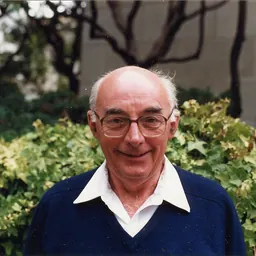
Marc A. Edwards
Civil engineer and academic researcher
About Marc A. Edwards
Born 1964. Marc A. Edwards is an American civil engineer, engineer, university teacher and professor.
Marc Edwards (born 1964) is an American civil and environmental engineer. He is a University Distinguished Professor in the Charles E. Via Jr. Department of Civil and Environmental Engineering at Virginia Tech. An expert on water treatment and corrosion, Edwards's research on elevated lead levels in Washington, D.C.'s municipal water supply gained national attention, changed the city's recommendations on water use in homes with lead service pipes, and caused the Centers for Disease Control and Prevention to admit to publishing a report so rife with errors that a congressional investigation called it "scientifically indefensible." He is considered one of the world's leading experts in water corrosion in home plumbing, He is also one of the whistleblowers in the Flint water crisis, along with Dr. Mona Hanna.
Edwards was named a MacArthur Fellow in 2007. The program cited him for "playing a vital role in ensuring the safety of drinking water and in exposing deteriorating water-delivery infrastructure in America’s largest cities."
Biography Edwards, a native of the Buffalo, New York area, received a Bachelor of Science degree in biophysics from the State University of New York at Buffalo in 1986. He delivered Virginia Tech's Graduate School Commencement address on December 19, 2008.
He lives with his wife Jui-Ling and their two children in Blacksburg, Virginia.
Lead levels in Washington, D.C. water supply (2003-2010)
Edwards's research in the mid-1990s focused on an increasing incidence of pinhole leaks in copper water pipes. Homeowners contacted him about the leaks, some of which were occurring 18 months after installation.
A group of Washington, DC homeowners asked Edwards to investigate their corroding copper pipes in March 2003. Suspecting the water, he tested for lead. The accepted limit for lead in drinking water is 15 parts per billion (ppb). Edwards' meter, which could read values up to 140 ppb, showed off-the-scale readings even after he had diluted the sample to ten percent of its original strength. At the hearing, Edwards identified the cause of the readings as monochloramine, a disinfecting chemical that had replaced chlorine in the water supply in March 2000. Edwards also testified that WASA's attempts to replace lead pipes with copper pipes could exacerbate the problem, because the copper increases corrosion of the old lead. their article "Elevated Blood Lead in Young Children Due to Lead-Contaminated Drinking Water," published in the journal Environmental Science and Technology, won that publication's Editor's Choice Award for the best science paper of 2009.
Referring to a study by the Centers for Disease Control and Prevention (CDC) that essentially dismissed the idea of health risks from DC's lead-contaminated water, Edwards wrote to James Stephens, the CDC's associate director of science: "Why is it that every child I have personal knowledge of, who had a strong chance of having elevated blood lead from water, is either deleted or otherwise misrepresented in the data that CDC has and used for this publication?" Edwards did not receive a response until March 2008, when Stephens wrote "We have examined CDC's role in the study and have found no evidence of misconduct." In the wake of the investigation, Edwards called for the CDC paper's senior author to resign. James Elder, former national director of groundwater and drinking water for the EPA, said "Had Edwards not gotten involved, this would never have come out." Following Edwards's recommendation, the DC water authority now warns homeowners with lead water-supply lines to let the tap run for ten minutes before drinking or cooking.
Notable projects (2004-2014) In 2006, Edwards suggested that the EPA testing procedure for lead in tap water could miss elevated levels because it called for homeowners to remove the aerator from their faucet before drawing water for testing. The screen in the aerator, he said, could trap lead particles; if so, water drawn for testing would not reflect the full lead exposure experienced by people drinking from the faucet under normal use.
In 2007, the University of North Carolina at Chapel Hill hired Edwards to investigate water-quality problems in three buildings. When UNC asked its engineering faculty for guidance, their response was "We have two words for you—Marc Edwards." He found "low-grade and fixable" lead contamination, which he blamed on "lead-free" brass plumbing fixtures. According to Edwards, Federal regulations permit up to 8 percent lead in "lead-free" brass fixtures, which can leach from the fixtures if the water is corrosive. "In some cases, you can take a single glass of water," he said, "and if you're unlucky, and it has that piece of lead in it, you can get a very high dose of lead, similar to that which you could obtain by eating lead paint chips." Energy-conscious households may set their water heater's thermostat to , but that temperature encourages the growth of microbes such as mycobacteria.
Edwards has also warned about the unintended effects of state-of-the-art water conservation techniques being used in new buildings. Systems such as rainwater capture and water recycling, he says, may reduce the flow of water from the city's system so much that the water remains in the plumbing for as much as three weeks before use. This can cause the water to pick up lead and grow bacteria.
Flint water crisis (2015-present)
In September, 2015, after receiving a call from Flint, Michigan citizen, LeeAnne Walters, Edwards formed a water study team and traveled to Flint, Michigan to perform a study that uncovered high levels of lead in potable water. The city's water source had been switched from the Detroit water system to the Flint River in 2014, exposing over 100,000 people to high lead levels and affecting up to 12,000 people with lead poisoning.
Edwards' initiative inspired Mona Hanna-Attisha, a Flint public health advocate and pediatrician, to perform her own study on Flint’s children that found that the lead levels in their blood increased as a result of the water source switch. Edwards and Hanna-Attisha's results caused the City of Flint, the State of Michigan and the United States to declare a state of emergency.
In early 2016, Edwards testified twice before the United States House Committee on Oversight and Government Reform on the crisis, and was appointed to Michigan Governor Rick Snyder's Flint Water Interagency Coordinating Committee, to alleviate problems related to the water crisis.
In 2016, Edwards gave an interview to The Chronicle of Higher Education arguing for scientists to work in the public interest.
In July 2018, Edwards filed a $3 million defamation lawsuit against Flint mother Melissa Mays and two other activists Paul Schwartz and Yanna Lambrinidou. The lawsuit came in the wake of the Flintcomplaints.com letter, signed by over 60 Flint residents, expressing certain grievances with Edwards. On March 19, 2019, the case was dismissed by Judge Michael F. Urbanski, the Chief Judge for the Western District of Virginia, ruling that Edwards could not use litigation to silence criticism and advance scientific claims. The ruling noted, "the Flint water crisis is a paradigmatic example of a matter of public concern where the freedom to call for an ‘investigation’ into the activities of those in positions of significant persuasive power and influence is essential.”
On November 7, 2019, Edwards was interviewed on Detroit's NPR station, WDET in Season 2 of the station's podcast series titled, "Created Equal," which focused on the people involved with the Flint Water Crisis.
Notable projects (2019-present) In 2019, Edwards headed a Virginia Tech research team to investigate elevated salt levels in water wells on 100 farms in Fishers Landing, New York.
Awards and honors 1989 Outstanding MS Thesis award. Water Pollution Control Federation 1990 H.P. Eddy Medal. Outstanding Paper in Journal Water Pollution Control Federation 2016 Association of Environmental Engineering and Science Professors (AEESP) Award for Outstanding Contribution to Environmental Engineering and Science Education 2016 The American Society of Civil Engineers (ASCE) 2016 President’s Medal 2016 Dr. Marc Edwards and Dr. Mona Hanna-Attisha presented the commencement address at Virginia Tech on May 13, 2016 in Lane Stadium, in Blacksburg, VA. 2016 Dr. Marc Edwards and Dr. Mona Hanna-Attisha were named to Time magazine's list of 'The 100 Most Influential People '. They are listed in the 'Pioneers' section. 2016 Dr. Marc Edwards and Dr. Mona Hanna-Attisha were named as one of 10 finalist for Time magazine's annual 'Person of the Year ' award. 2016 Smithsonian Magazine's American Ingenuity Award for Social Progress. 2017 Dr. Marc Edwards and Shuhai Xiao were named Virginia Outstanding Scientists for 2017 by the Science Museum of Virginia and Virginia Governor, Terry McAuliffe on February 9, 2017. 2017 Dr. Marc Edwards and Dr. Mona Hanna-Attisha received the inaugural Disobedience Award from the MIT Media Lab on July 21, 2017, for their work in the Flint water crisis. 2017 Engineering News-Record Award of Excellence for his work in Flint, Michigan. 2018 Scientific Freedom and Responsibility Award from the American Association for the Advancement of Science (AAAS). 2019 Hoover Humanitarian Medal presented at the American Society of Civil Engineers annual meeting on Oct. 12, 2019 in Miami, Florida. He is the 71st recipient of the award.
Don’t just read it —
keep it.
Full-length biographies made to live with: read them, listen on the way to work, watch them tonight.
- E-book
- Audio
- Video
Instant download · yours to keep · every purchase keeps this site free
Important facts
People in Marc A. Edwards's life
Named in this biography and alive at the same time








Related people
Same field, nearest in time

Contemporaries
People whose lives overlapped Marc A. Edwards's



Frequently asked questions
Who is Marc A. Edwards?
civil engineer and academic researcher
When was Marc A. Edwards born?
Marc A. Edwards was born in 1964 in Buffalo.
What is Marc A. Edwards's occupation?
Marc A. Edwards is a civil engineer, engineer, university teacher and professor.
What nationality is Marc A. Edwards?
Marc A. Edwards is American.
Sources & further reading
· DBpedia: Marc Edwards (professor)
Cite this page
APA: Biography.guide. (2026). Marc A. Edwards. https://biography.guide/marc-a-edwards/
MLA: "Marc A. Edwards." Biography.guide, https://biography.guide/marc-a-edwards/.
Chicago: "Marc A. Edwards." Biography.guide. https://biography.guide/marc-a-edwards/.
Data last updated: 2026-09-25 · Spot an error? Report a correction.
Page generated 2026-09-27 05:10 UTC